
Waymo Halts Freeway Rides Nationwide After California DMV Ban
A construction-zone encounter with zero injuries was enough to trigger a state ban and a nationwide Waymo pause, exposing how fast a permit can outrank a product.
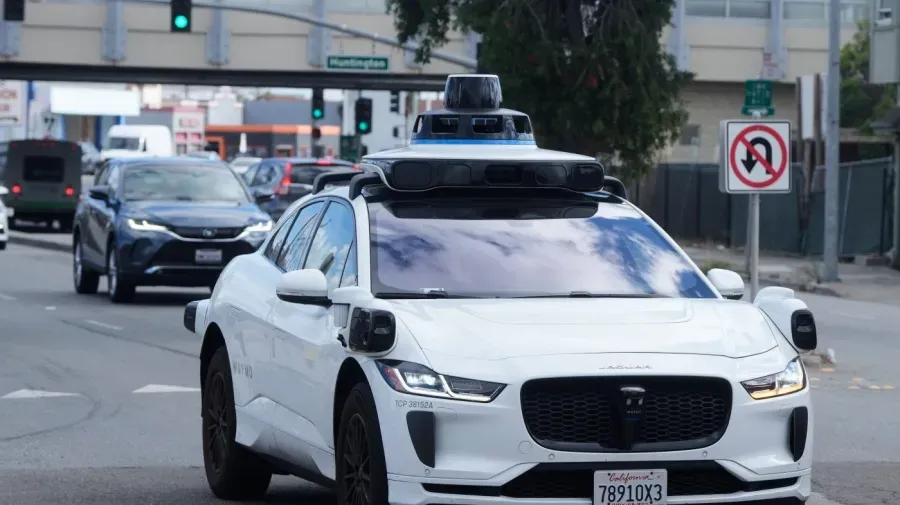
Waymo suspended driverless freeway rides across the U.S. after California's Department of Motor Vehicles temporarily barred its vehicles from highways, following what the company called "recent freeway construction zone encounters" that caused no injuries or collisions. For operators and boards, the episode shows that regulatory permission, not technical capability, is the binding constraint on scaling autonomous services.
Waymo has taken its driverless cars off American freeways, and the trigger was not a crash. The robotaxi company suspended freeway rides nationwide after California temporarily barred its vehicles from highways, a sequence Waymo confirmed to The Hill. The company cited "recent freeway construction zone encounters" on a California highway. No injuries. No collisions. Just encounters, in Waymo's own words, and that was enough to pull the most economically valuable miles in the autonomous business off the board. The California Department of Motor Vehicles, the state agency that oversees autonomous vehicle deployment, moved first with a temporary ban; Waymo's nationwide pause followed. A single state's temporary action produced a coast-to-coast operational retreat.
The asymmetry is the story. California is one of the largest and most closely watched robotaxi markets, but it is not the only one, and Waymo's decision to stop freeway rides everywhere, not just inside the state line, tells you how the company is pricing regulatory risk right now. When a temporary restriction in one jurisdiction can halt a service line across the country, the constraint is not the road. It is the permit. For every operator building a driverless business, that is the lesson worth underlining: the technology and the license are two different products, and the license can be pulled faster than any model can be retrained.
For context on why freeways matter so much: highway miles are where robotaxi unit economics are supposed to improve. Longer trips, steadier speeds, fewer pedestrians, fewer cyclists, fewer unprotected left turns. City streets are where the edge cases live; freeways are where revenue per vehicle hour is meant to climb. Airport runs, suburban commutes, cross-metro trips, the rides customers pay the most for and that fleets can serve with the least idle time, all of them lean on highway access. Take freeways away and the service narrows into a denser, slower, shorter-trip business. That is a real product, but it is a smaller one, and it is a harder one to make the math work on.
Construction zones are the specific failure mode named here, and they are a well-known hard problem for automated driving. Work zones are temporary by design: lanes shift, cones appear and disappear, speed limits change, and human flaggers direct traffic in ways that do not always match the map. A system trained on the road as it usually is has to reason about the road as it is this week. Waymo says the encounters caused no injuries and no collisions, which matters. It also means the intervention was preemptive, driven by a regulator's read of risk rather than by a documented harm. Preemptive grounding is, in some ways, the harder outcome to manage, because there is no incident report to point to and no obvious threshold to clear.
California has historically been the proving ground for autonomous vehicles in the United States, and its Department of Motor Vehicles has been the gatekeeper that operators court and occasionally clash with. The state's framework allows for temporary restrictions, and a temporary restriction is a signal: it implies a review, a set of questions, and a path back that has to be earned. How long the nationwide freeway pause lasts is now the open question. Waymo's public framing, that this followed construction zone encounters with no injuries or collisions, is also its argument for a quick return.
Rivals are watching closely. Every company chasing driverless miles, from well-funded startups to the autonomy programs inside large automakers, now has a fresh data point about how fast a service line can be switched off. The competitive race has been framed for years as a technology race: who can drive the most miles with the fewest disengagements. This episode reframes it as a regulatory and operational race. The winner may not be the company with the best model. It may be the company with the best relationship with the agencies that decide where that model is allowed to operate.
The second-order effects run wider than one company. Insurers and fleet partners price risk off exactly this kind of event, and a voluntary nationwide pause, even one with no crash behind it, is the sort of thing that surfaces in underwriting conversations. Investors who have been patient with autonomy timelines get another reminder that the bottleneck is not compute. And for executives running any business that depends on a permit, a certification, or a regulator's ongoing comfort, the Waymo episode is a compact case study: build the compliance and government-affairs function with the same seriousness as the product, because the fastest way to lose a market is to lose the right to serve it.
What to watch next: whether California lifts the temporary highway restriction, how Waymo describes the construction zone encounters in more detail, and whether other states follow California's lead or stay quiet. The company has the vehicles, the miles, and the backing. What it needs now is the green light, and that is not something engineering can ship.
This story's Key Insights and Take-aways are locked.
Create a free account to unlock Executive Actions for one credit.
Register to UnlockAlways free for Executives Club members. Join the Club
More in Politics

Fifth Circuit Kills Pregnant Workers' Law Over Pandemic Proxy Votes
A procedural ruling, not a policy one, has blocked a federal pregnancy-accommodation law and put every pandemic-era statute in the crosshairs ahead of an expected Supreme Court appeal.

Measles kills a Virginia child under 5, the state's first death of 2026
Virginia's health department confirmed the death but withheld the child's vaccination status, leaving schools, clinics and employers to plan around the one detail that would explain the most.

Former Brazilian President Bolsonaro Hospitalized with Intestinal Obstruction
The health status of the former far-right leader raises immediate questions about political stability and the trajectory of Brazil's conservative movement.