
Waymo Pulls Every Driverless Car Off US Freeways, Even in SF and LA
The robotaxi leader still runs in 15 US cities, but its freeway service, live in only a handful including San Francisco and Los Angeles, is off, and the economics of the trips it just gave up are the real story.
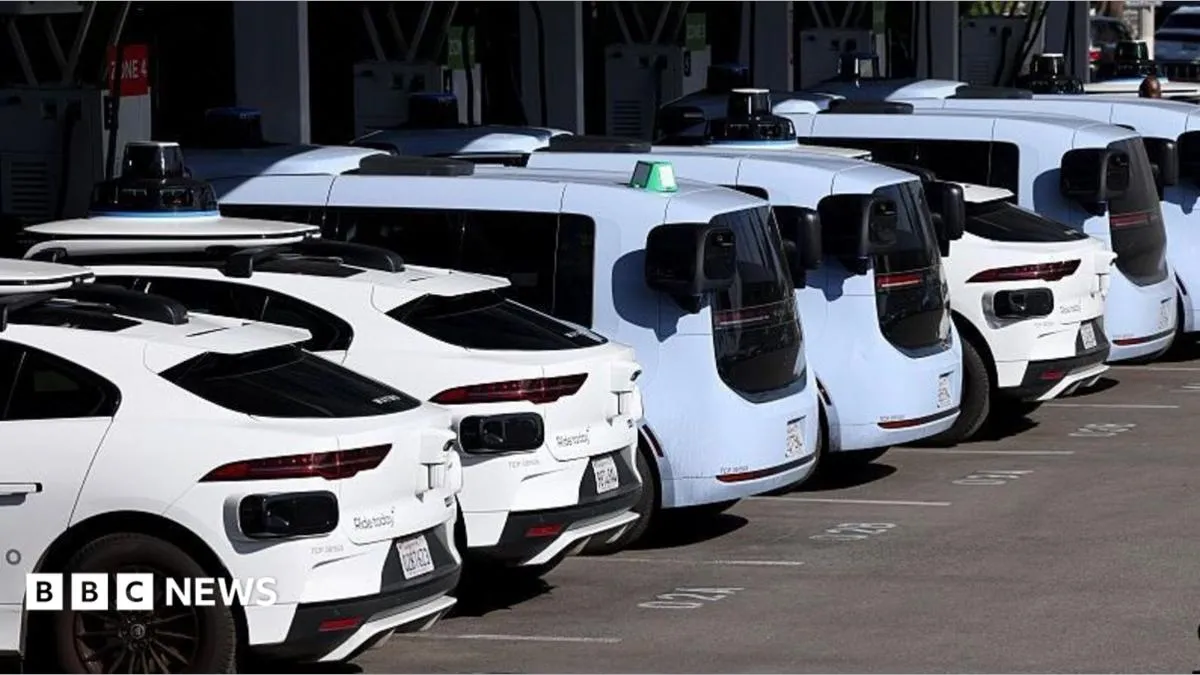
Waymo has pulled all of its driverless cars off US freeways, even though its vehicles still operate in 15 US cities and freeway rides were offered in only a handful of them, including San Francisco and Los Angeles. For decision-makers, the move removes the highest-value slice of the robotaxi model and shifts the burden of proof onto every operator betting on high-speed autonomy.
Waymo has pulled all of its driverless cars off US freeways, a retreat from the fastest roads in its operating network. The company's vehicles still run in 15 US cities, but freeway rides were only ever offered in a handful of them, including San Francisco and Los Angeles. That detail is the first thing to get straight: this is not a shutdown of the robotaxi business. It is the removal of its highest-speed, highest-stakes capability, and it lands hardest in the markets where Waymo had pushed furthest ahead of the field.
The reporting does not spell out a reason for the pullback, and that silence is worth sitting with. In autonomous driving, the decision to stop running a given road type is rarely about one variable. Freeways are a different problem from city streets: traffic moves faster, stopping distances stretch, merges and exits stack decisions on top of one another, and the consequences of a single error are far more severe. An operating domain, the industry term for exactly where and when a vehicle is permitted to drive, is typically the first thing narrowed when a company wants to cut risk while it investigates, retrains, or waits on a regulator. Pulling freeways while keeping city service is the classic shape of that move.
Freeways are also where the money is. A robotaxi that can only work a dense urban grid is limited in trip length, and trip length is what drives revenue per ride. Highway miles let an operator serve airport runs, suburban commuters, and cross-metro trips, the kind of journeys that carry higher fares and fill seats that city loops leave empty. They also improve fleet utilization: one vehicle covering longer, more valuable trips can generate more revenue per hour than the same vehicle circling downtown. Strip out freeways and the network does not stop working, but the ceiling on unit economics drops, and it drops precisely where investors have been told the growth story lives.
Scale is the counterweight. Fifteen cities is a genuine commercial footprint, and freeway service in only a handful of them means highway driving was never the bulk of the business. So the immediate financial hit is contained. What is not contained is the signal. Waymo has been the operator that other companies point to when they argue driverless cars are ready for prime time. When the most advanced player in the category voluntarily gives back road, the burden of proof shifts onto everyone else, and regulators get a fresh reason to ask harder questions about the domains they have already approved.
The regulatory backdrop makes that sharper. In the US, autonomous vehicles are typically overseen by a patchwork rather than a single authority: federal safety regulators set and enforce vehicle standards and can open investigations, while states and cities control permits, testing rules, and where commercial service is allowed. That structure means one incident, one complaint, or one internal safety review can trigger scrutiny in several jurisdictions at once, and companies often respond by shrinking their operating domain before anyone forces them to. For context, the pattern across the sector has been to retreat to the safest, best-understood routes first, then re-expand once the data supports it. Freeways are the last place an operator wants to be re-expanding from.
What to watch now is disclosure and duration. A short pause with a clear technical explanation reads as discipline. A long pause with no explanation reads as a capability problem, and the market tends to price those two outcomes very differently. Watch whether the freeway suspension spreads to additional markets, whether the 15-city city-street service holds steady, and whether airport and highway-adjacent routes quietly disappear from the product. Each of those is a tell about how deep the issue runs.
For executives and boards with autonomy exposure, the lesson is about concentration. If a roadmap assumes highway capability, that assumption just got more expensive to defend. The questions worth asking are unglamorous: how much of the revenue model depends on trips that require freeway access, what the insurance and liability exposure looks like when speeds rise, how fast the company can detect and respond to an operating-domain failure, and whether the expansion plan has a fallback that still works if the fastest roads stay closed. Waymo just showed that the leader in the category is willing to give back ground to protect the whole. That is a harder call than it looks, and every competitor now has to make it too.
This story's Key Insights and Take-aways are locked.
Create a free account to unlock Executive Actions for one credit.
Register to UnlockAlways free for Executives Club members. Join the Club
More in Business

S&P 500 Enters Correction, Down 10% From Its High on AI Worries
The index's slide past the 10 percent line is a symbolic verdict on investor mood, and the AI trade that powered the rally is now the thing testing it.

Dow and S&P 500 enter correction as Nasdaq logs worst week since 2020
All 11 S&P 500 sectors fell more than 1% in the same week for the first time since April 2025, a breadth signal that matters more than any single index level.

Chip stocks lose $2.3 trillion in a week, worst run in 25 years
A $2.3 trillion weekly wipeout in semiconductors is forcing every board with an AI story to ask whether it owns a thesis or just a crowded trade.