
Waymo Pulls Robotaxis From Every US Freeway Days After California Ban
One state regulator just redrew the map for Alphabet's self-driving unit, and city-street service in Las Vegas, Dallas and Denver is suddenly the whole business case.
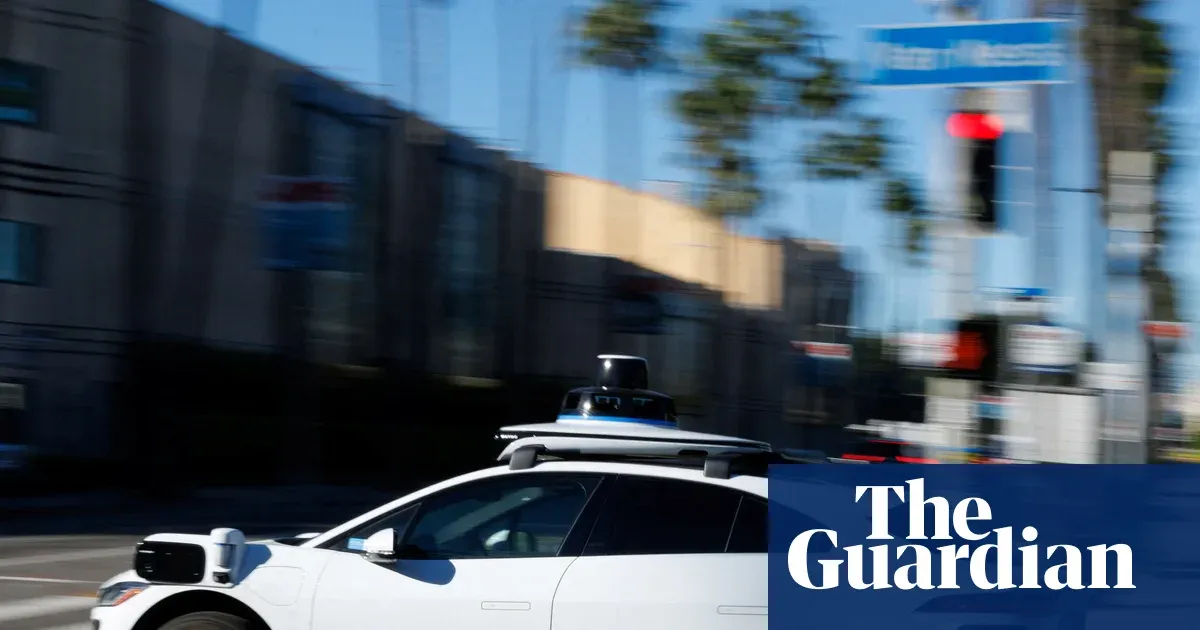
Alphabet's Waymo has suspended driverless taxi rides on freeways across the US indefinitely, days after California banned the vehicles from its own freeways in response to recent traffic incidents. The retreat shows executives how fast a single state regulator can compress the addressable market of a capital-intensive autonomy bet.
Waymo has stopped offering driverless taxi rides on freeways across the United States indefinitely, pulling its robotaxis off highways nationwide days after California banned the vehicles from its own freeways. The ban came in response to recent traffic incidents, and Alphabet's self-driving subsidiary complied nationally rather than fight it state by state. That is the part worth pausing on. The company did not lose freeway access in California alone. It gave up freeway service everywhere.
The freeway rides had been available in five markets: the San Francisco Bay Area, Los Angeles, Phoenix, Miami and Austin, where riders could hail a robotaxi for highway trips. Waymo still runs driverless service on city streets in many other areas, including Las Vegas, Dallas and Denver, and those rides are unaffected. But the freeway layer is the connective tissue of a ride-hail network. It is how a robotaxi gets you to the airport, from the suburbs into the city core, and across a metro area without a transfer. Strip it out and the product narrows sharply.
Why freeways were the prize. For context, highway miles are typically the most valuable trips in any ride-hail network. They are longer, they carry higher fares, and they are where an autonomous vehicle's cost advantage over a human driver compounds, because a machine does not clock out after a long haul. Highway driving is also, in many ways, easier for software than a dense city grid: fewer pedestrians, fewer double-parked cars, more predictable traffic. Historically, the industry has treated freeway capability as the line between a science project and a real transportation business. Waymo crossed that line, and now it has stepped back over it.
California is the template. The state regulates autonomous vehicles through a patchwork that includes the DMV and the CPUC, and it has been the industry's most important launchpad. When California moves, other states typically watch, and sometimes copy. The striking thing here is the speed of the cascade: incidents, then a state ban, then a national compliance decision inside of days. Waymo chose uniformity over a state-by-state patchwork, which is what a company does when it believes the regulator's logic will travel.
The Cruise precedent looms. For context, in 2023 a rival GM-backed robotaxi operator lost its California permits after a pedestrian incident in San Francisco. Its driverless service was suspended and the company never regained its footing. Every operator in this sector has since been working under that lesson: one state regulator can switch off a business line overnight, and the reputational damage arrives faster than the legal one. Waymo's preemptive national pullback reads as that lesson internalized. If the freeway ban were confined to California, a slower, more surgical response might have been possible. The company did not wait to find out.
Alphabet does not break out ride-level economics for Waymo, so the immediate revenue hit is not publicly quantifiable. Waymo sits inside Alphabet's Other Bets, the reporting line that houses the company's long-horizon, capital-hungry ventures. That structure matters for how boards should read this. A regulatory retreat on a marquee capability does not show up as a clean number in a quarterly filing. It shows up later, as a slower path to the trip density and utilization that make unit economics work.
The strategic stakes are bigger than one company. For any business whose product requires a permission slip, this is the case study of the week. Waymo built a genuinely impressive operation and still watched a state agency redraw the boundary of what it could sell. Rivals including Tesla and Amazon's Zoox are chasing the same driverless future, and each now has to answer a harder question: does freeway approval get easier or harder from here, and who owns that risk on the org chart?
The practical read for operators and boards: regulatory risk is no longer a line item to be managed by legal. It is a gating factor that can redefine a product roadmap in a week. The companies that absorb it are the ones that design for the strictest plausible regulator, keep a city-street fallback that still delivers value, and refuse to build a P&L that depends on a permission they do not control. Waymo still runs driverless service on city streets in Las Vegas, Dallas, Denver and other markets. The indefinite pause applies to freeways, and indefinite is doing a lot of work in that sentence.
This story's Key Insights and Take-aways are locked.
Create a free account to unlock Executive Actions for one credit.
Register to UnlockAlways free for Executives Club members. Join the Club
More in Technology

Anthropic mathematician claims Claude helped crack the Riemann hypothesis
If the proof holds, AI has toppled math's most famous open problem; if it does not, it is a case study in announcing breakthroughs before anyone verifies them.

AI's $4 Trillion Wipeout Erases Nasdaq's Gains for the Year
A brutal week took roughly $4 trillion off the AI sector and left the Nasdaq flat for the year, and the damage ran the full length of the supply chain.

Anthropic mathematician says AI proved the Riemann hypothesis. Verification will take time.
A single unverified claim from inside Anthropic now sits against more than 160 years of open mathematics, and the gap between asserting a proof and surviving peer review is the entire story.