

White House fires cyber-security chief after tech outages shake Miller's confidence
The official responsible for federal cyber defense is out after a run of tech outages and lost confidence from new chief of staff Stephen Miller, per reports, raising the immediate question of who owns resilience next.
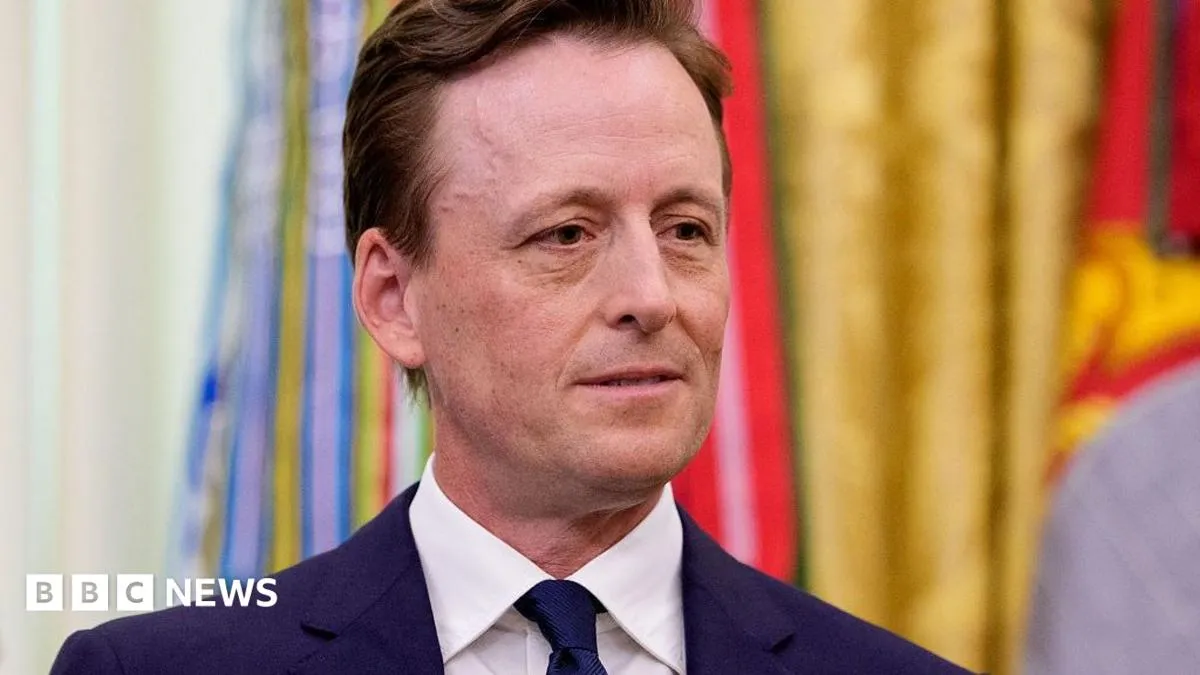
The White House cyber-security chief has been fired after losing the confidence of new White House chief of staff Stephen Miller, according to reports, following a series of technology outages. For executives and boards, the removal is a live case study in how outage visibility, not breach severity, drives accountability at the top of a security organization.
The White House cyber-security chief is out. He has been fired after losing the confidence of new White House chief of staff Stephen Miller, according to reports, following a series of technology outages. That is the whole of what has been reported so far, and it is more than enough to matter: the person whose job is to keep federal networks standing is gone at the exact moment those networks were visibly wobbling.
The sequence is the story. First came the outages, a series of them, the kind that knock services offline and turn "the cloud" from an abstraction into a customer-service problem. Then came the confidence question, answered by the new chief of staff, and then came the exit. Inside a White House, the chief of staff is the gatekeeper: the person who controls who reaches the president, which agenda item lives or dies, and which official is treated as a solution versus a liability. Losing that person's confidence is rarely survivable. Miller, newly installed in the role, has now signaled where he intends to set the bar.
Start with what the job actually is. The White House cyber-security post sits at the intersection of policy, intelligence, and operations. Typically, the official in that seat coordinates the federal response to breaches, brokers information-sharing between agencies and private companies, and speaks for the administration when a hack or an outage makes headlines. It is a job measured in minutes during a crisis and in years otherwise. Historically it has also been a job with a short shelf life, because cyber chiefs get blamed both for attacks that succeed and for the visibility of attacks that fail. The role is public-facing in a way most national-security jobs are not, which means its occupants absorb political damage that originates in code they never wrote.
Why would a run of tech outages be a firing offense? Because outages are the most legible failure in modern infrastructure. A breach can hide in a log file for months. An outage is public in seconds, with users locked out, services dark, and phones ringing. For an administration that wants to project competence, that is not a technical footnote, it is a headline with a timestamp. The chain of causation usually runs through concentration: when hundreds of agencies and companies depend on a handful of cloud and security vendors, a single bad configuration or bad update can propagate everywhere at once. The official left holding that is the cyber chief.
Second-order effects matter here. The private sector reads personnel moves as policy signals. Contractors, chief information security officers, and cloud providers will parse this removal for what it says about how the White House weighs vendor reliability against resilience, and about who gets the blame when the stack fails. They will also ask whether the replacement inherits more authority, more budget, or simply more exposure. A firing can signal seriousness, meaning accountability runs to the top. It can also signal scapegoating, meaning someone had to go and the org chart decided who. Which one this turns out to be depends entirely on what comes next, not on the announcement itself.
Meanwhile, the operational gap is real. A departure at the top of a cyber apparatus leaves a vacuum in relationships. Incident response runs on trust built in advance: the agency CIO who calls the White House at three in the morning, the counterpart in an allied government, the executives at companies that run critical infrastructure. Those relationships do not transfer with a desk. An acting replacement inherits the title but not the Rolodex, at least not immediately. In cyber, where the clock starts the moment an outage is detected, that lag is not a bureaucratic inconvenience. It is risk.
So what should you watch? Three things. Who gets named to replace him, and whether that person comes from inside the administration or from industry. Whether the administration publishes anything about the causes of the outages, because silence usually means the diagnosis is unresolved. And whether any oversight body, including Congress, starts asking questions. Each answer tells you whether this is housekeeping or the opening of a broader reckoning over federal cyber resilience. Adversaries watch these transitions closely, and they read a leadership vacuum as a window.
Here is the part that travels. If you run a company with government contracts, regulated data, or critical infrastructure exposure, treat this as a prompt, not a news item. Your own cyber leadership is probably one incident away from the same conversation in your boardroom. The lesson is not that the White House fired someone. It is that a series of outages was allowed to accumulate until it became someone's job. Boards that wait for the third outage before asking who owns resilience are running the exact same play, with the same ending.
This story's Key Insights and Take-aways are locked.
Create a free account to unlock Executive Actions for one credit.
Register to UnlockAlways free for Executives Club members. Join the Club
More in Technology

Anthropic mathematician claims Claude helped crack the Riemann hypothesis
If the proof holds, AI has toppled math's most famous open problem; if it does not, it is a case study in announcing breakthroughs before anyone verifies them.

AI's $4 Trillion Wipeout Erases Nasdaq's Gains for the Year
A brutal week took roughly $4 trillion off the AI sector and left the Nasdaq flat for the year, and the damage ran the full length of the supply chain.

Anthropic mathematician says AI proved the Riemann hypothesis. Verification will take time.
A single unverified claim from inside Anthropic now sits against more than 160 years of open mathematics, and the gap between asserting a proof and surviving peer review is the entire story.