

White House swaps national cyber director after chaotic week of outages
Sean Cairncross is out and Pentagon CIO Kirsten Davies steps in on an acting basis, leaving the government's top cyber coordination seat without a Senate-confirmed occupant.
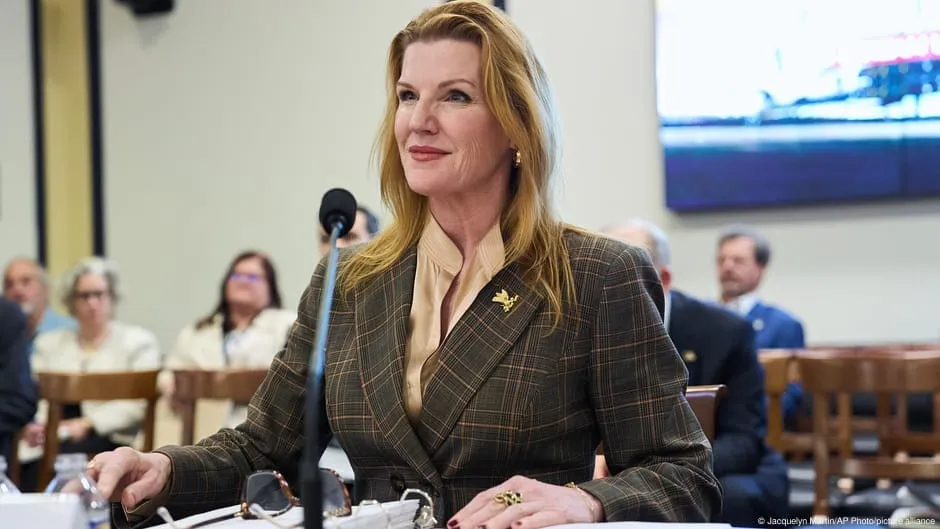
Sean Cairncross is leaving his role as national cyber director after a chaotic week of tech outages, and Kirsten Davies, the Pentagon's chief information officer, will assume the position in an acting capacity. For executives and boards, the move puts the federal government's main cyber coordination seat in temporary hands at the exact moment technology failures are dominating the news cycle.
Sean Cairncross is out as the White House's national cyber director, leaving the role after what the reporting describes as a chaotic week of tech outages. Kirsten Davies, currently the Pentagon's chief information officer, will take the job in an acting capacity. That is the public record so far: a departure, a stopgap, and a week in which technology failures made national headlines. The reason for the exit was not detailed, and neither were the specific outages involved. What is clear is the shape of the move. The government's top cyber coordination seat changes hands at the moment the topic is hottest, and it changes hands without a permanent, Senate-confirmed occupant.
The word "acting" is doing a lot of work here. The national cyber director is a Senate-confirmed post, and that confirmation is what gives the office its standing to convene agencies, push back on budgets, and speak with authority to the private companies that run most of the country's critical infrastructure. An acting director can do the job day to day. What an acting director typically cannot do is make the long-horizon commitments that require the implicit backing of a confirmed mandate: multi-year strategy, hard calls on regulation, and the kind of public pressure that makes a Fortune 500 chief executive pick up the phone. Historically, acting stints in national security roles have stretched from weeks into months, and every month of drift is a month that rivals and adversaries read as a gap.
Context for anyone who has not tracked the office: the Office of the National Cyber Director was created by Congress in the 2021 defense authorization act and sits inside the Executive Office of the President. Its job is coordination, not operations. It does not run the NSA, CISA, or the FBI's cyber division. It is supposed to make them pull in the same direction, set the government's cyber strategy, and act as a single point of contact for an industry that has long complained about talking to six agencies and getting six different answers. That is a soft-power job, and soft power depends on the person holding it being seen as the president's pick.
The timing is the story. A week of tech outages is precisely the scenario the office exists to manage: cascading failures that start with one vendor, one bad update, or one cloud region and end with airlines, hospitals, banks, and government services offline. The reporting does not name the outages, and it does not draw a line between them and Cairncross's exit. Readers should be careful about connecting dots that have not been connected. But the sequence matters politically. When systems fail visibly, the question that lands in the briefing room is always the same: who is in charge? A vacancy, even a temporary one, is a bad answer.
Davies arrives with a resume that fits the moment. As the Pentagon's chief information officer, she has run technology for the largest employer on earth, an organization whose annual tech spending runs into the tens of billions and which treats network defense as a warfighting function rather than a back-office cost. That is operational credibility of a kind the cyber director's office has not always had. The open question is bandwidth. The reporting says she will assume the position in an acting capacity; it does not say whether she keeps the Pentagon job. If she does, she is effectively double-hatted across two of the most demanding technology roles in government, and the cyber director's office risks becoming a second job. If she does not, the Pentagon has its own vacancy to fill, and the same succession problem simply moves one building over.
For the private sector, the practical effects show up in unglamorous places. Companies under active incident response want a single federal contact who can cut through agency turf. Regulated industries want clarity on reporting timelines and enforcement posture. Defense contractors want to know whether acquisition cyber requirements will keep moving on schedule. None of that stops dead because a director leaves. All of it slows, because the person who signs off is new, acting, and still learning which levers actually move.
The broader lesson for executives is about key-person risk at the top of any security function. Boards spend a lot of time asking whether the CISO has a succession plan and almost none asking whether the person above them does. The White House just demonstrated how fast a critical seat can turn over, and how quickly the word "acting" enters the conversation. The same dynamic plays out inside companies: a departure during a live incident forces everyone below to improvise, and improvisation during a crisis is how small failures become reputational ones. The organizations that handle these transitions well are the ones that wrote the plan before they needed it.
Watch three things from here. First, whether the White House names a permanent nominee, and how quickly. Second, whether Davies keeps both titles, which would tell you how seriously the administration is treating the coordination role. Third, whether the outages of the past week produce any policy response at all, because a chaotic week that ends with only a personnel change is its own kind of signal.
This story's Key Insights and Take-aways are locked.
Create a free account to unlock Executive Actions for one credit.
Register to UnlockAlways free for Executives Club members. Join the Club
More in Politics

Fifth Circuit Kills Pregnant Workers' Law Over Pandemic Proxy Votes
A procedural ruling, not a policy one, has blocked a federal pregnancy-accommodation law and put every pandemic-era statute in the crosshairs ahead of an expected Supreme Court appeal.

Measles kills a Virginia child under 5, the state's first death of 2026
Virginia's health department confirmed the death but withheld the child's vaccination status, leaving schools, clinics and employers to plan around the one detail that would explain the most.

Former Brazilian President Bolsonaro Hospitalized with Intestinal Obstruction
The health status of the former far-right leader raises immediate questions about political stability and the trajectory of Brazil's conservative movement.