
Xi Slams U.S. Trade Policy, Then Hugs Trump at APEC
Beijing's split screen at the summit: attack the trade policy, embrace the president. Here is what that means for anyone carrying China exposure.
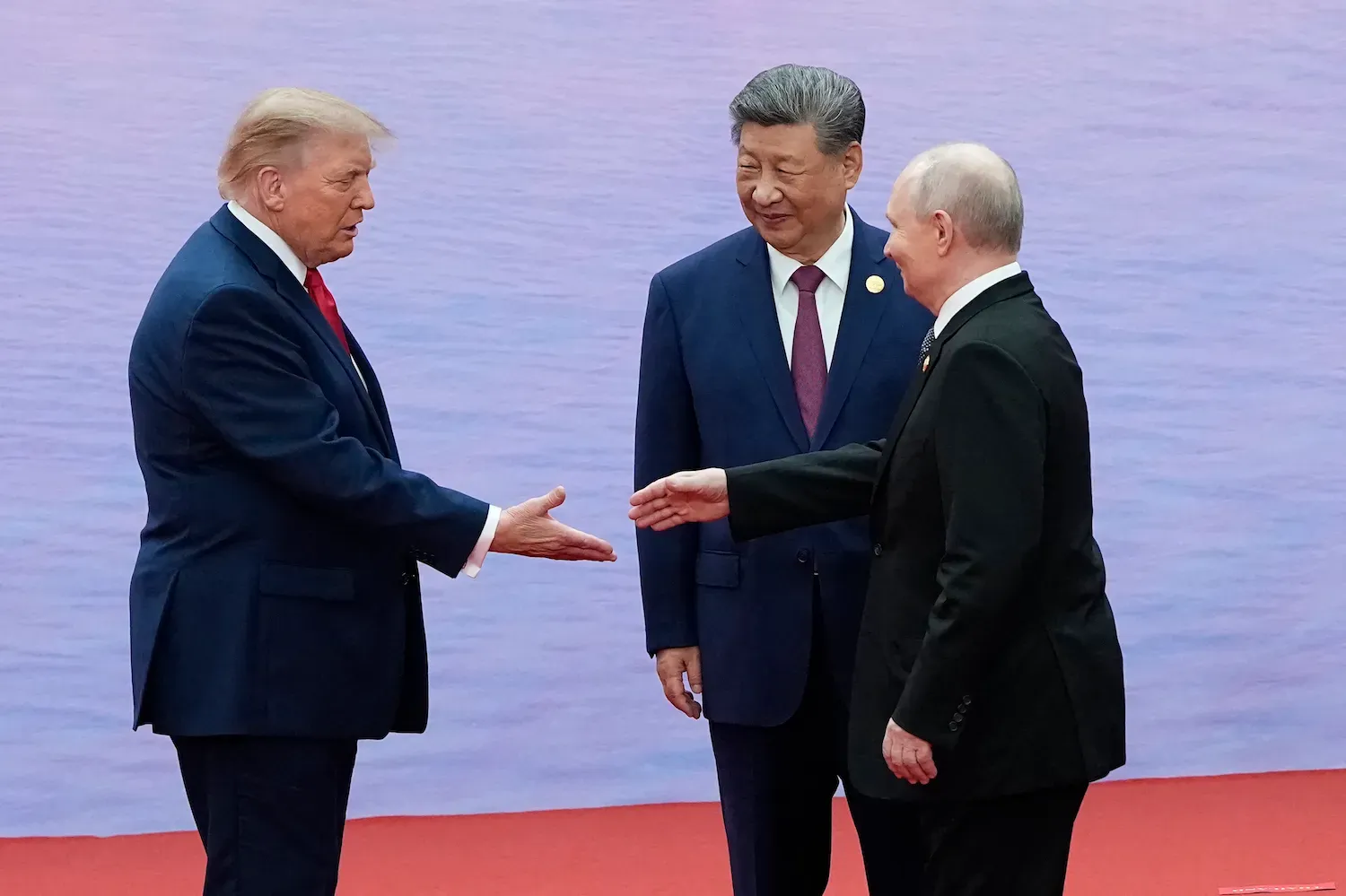
Chinese President Xi Jinping criticized U.S. trade policy and then hugged U.S. President Donald Trump, roughly a minute apart, at the APEC summit. For executives with China exposure, the sequence signals a two-track Beijing strategy, hard on the trade file and warm on the personal relationship, that should shape scenario planning but not trigger changes to tariffs, sourcing, or compliance until something concrete is signed.
Xi Jinping criticized U.S. trade policy. Then he hugged Donald Trump. The two moments landed roughly a minute apart at the APEC summit, and the contrast is the whole story. China's president, standing in a room full of Asia-Pacific leaders, chose to publicly poke at Washington's trade posture and then, without missing a beat, wrap the U.S. president in an embrace. No speech text, no joint statement, and no tariff announcement can compete with that image for clarity about how Beijing is playing its hand.
For executives with China exposure, the split screen is the signal. The criticism says Beijing is not backing off its objections to U.S. trade policy. The hug says it is not walking away from the relationship either. That combination, hard on the file and warm on the person, is a deliberate two-track approach, and it is the thing to watch as you model tariffs, sourcing, licensing, and market access into next year. If you only saw the hug, you would read a thaw. If you only saw the criticism, you would read a freeze. Xi is running both at once.
APEC is an easy forum to underestimate. Founded in 1989 and now spanning 21 member economies around the Pacific, it runs on consensus and produces commitments that are not binding. There is no enforcement mechanism, no dispute panel, no penalty for ignoring the closing communique. What APEC reliably delivers is proximity: a few days when the leaders of the world's most consequential trading economies are in the same building, with bilateral meetings stacked around a plenary agenda. That is why the side conversations typically matter more than the main session, and why a hug caught on camera can travel further than a paragraph of agreed language.
The gap between warm optics and hard policy is where money is made and lost. Summits have historically produced handshakes that outrun the underlying paperwork. Leaders embrace; negotiators keep fighting over the same tariff lines, export controls, and market access rules. For context, the U.S.-China trade relationship has been through several cycles of exactly this pattern over the past decade: public warmth at the top, followed by the slow grind of technical talks that either deliver or quietly stall. Xi's one-minute pivot fits that mold. It tells you the personal channel is open. It does not tell you that any specific tariff, restriction, or screening rule has changed.
"Plays the field" is the right frame. APEC is not a bilateral venue, and Xi was not only talking to Washington. The forum gathers economies from both sides of the Pacific, including many of the countries now being asked to weigh how closely they align with U.S. trade policy against the benefits of hedging. Criticizing U.S. trade policy in a room of 21 economies is a message that travels well beyond the person it is aimed at, and it costs nothing to send. Hugging Trump in the same room is a second message to a second audience: the relationship is personal, manageable, and not a crisis. Both signals are aimed at the same group of onlookers, and both are cheap.
What would actually change the picture? Something concrete. A scheduled follow-up meeting between the two governments. A pause, rollback, or carve-out on a specific measure. A signed agreement, even a narrow one. A shift in how either side describes the other in official documents. None of that is in the sequence reported from APEC. The hug is atmospherics. Atmospherics are not nothing, especially in a relationship where the personal channel has often mattered more than the formal one. But atmospherics are also not a policy change, and treating them as one is how companies get caught flat-footed.
So the practical instruction for boards and operating teams is to hold two things at once, exactly as Xi did. Keep the relationship assumptions warm: assume dialogue continues and that neither side currently wants a full rupture. Keep the policy assumptions cold: assume the tariffs, controls, and review processes you are planning around stay in place until you see them change in writing. Scenario-plan for a genuine thaw and for a renewed freeze, and make sure your sourcing, pricing, and compliance functions can survive either. The most useful thing about the APEC moment is not the hug. It is the reminder that a leader can hold two contradictory messages at once, and that your planning has to be able to do the same.
This story's Key Insights and Take-aways are locked.
Create a free account to unlock Executive Actions for one credit.
Register to UnlockAlways free for Executives Club members. Join the Club
More in Politics

Fifth Circuit Kills Pregnant Workers' Law Over Pandemic Proxy Votes
A procedural ruling, not a policy one, has blocked a federal pregnancy-accommodation law and put every pandemic-era statute in the crosshairs ahead of an expected Supreme Court appeal.

Measles kills a Virginia child under 5, the state's first death of 2026
Virginia's health department confirmed the death but withheld the child's vaccination status, leaving schools, clinics and employers to plan around the one detail that would explain the most.

Former Brazilian President Bolsonaro Hospitalized with Intestinal Obstruction
The health status of the former far-right leader raises immediate questions about political stability and the trajectory of Brazil's conservative movement.