

Your brain may remember every infection, then brace your body for the next
Nature reports the brain might decode pathogens, store illness memories and pre-empt future threats, which would make how sick you feel a brain output, not just an immune one.
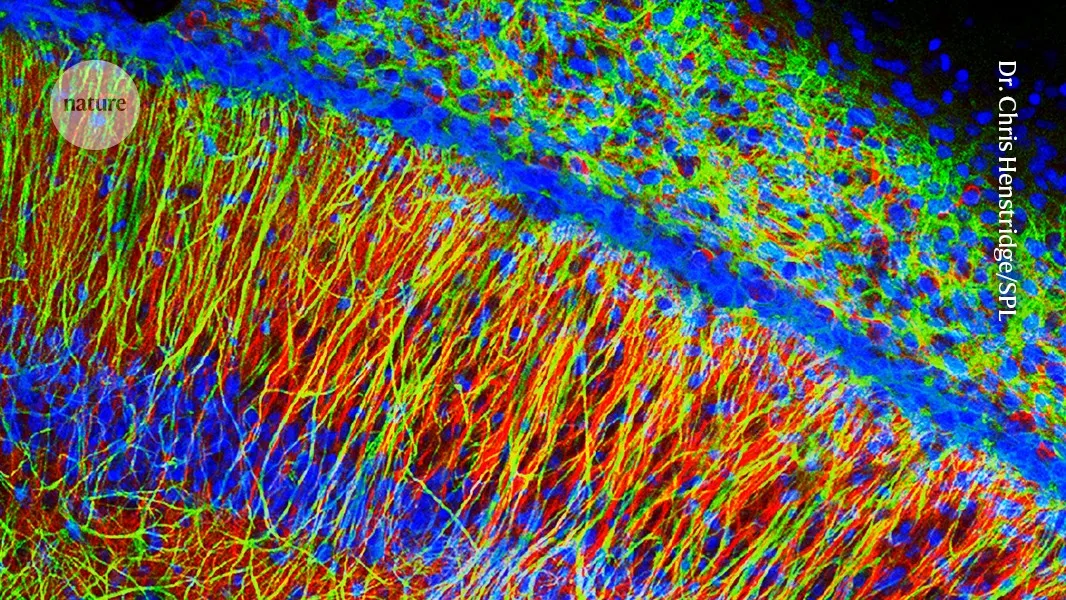
Neuroscientists studying the brain-immune interface are converging on a claim, reported by Nature on 19 November 2026, that the brain might decode pathogens, store memories of previous illnesses and prepare the body for future threats. For decision-makers, that reframes illness, recovery and workforce health as partly brain-mediated, with knock-on effects for drug development, clinical trial design and how companies manage outbreaks.
The feeling of being ill may be less a symptom than a forecast. In a news report published online on 19 November 2026, Nature lays out a research direction that reframes sickness: the brain might decode pathogens, store memories of previous illnesses and prepare the body for future threats. That is a large claim, and it is stated as a possibility, not a settled mechanism. But if it holds even partly, the border between immunology and neuroscience stops being a border and starts being a handshake.
Start with what the claim overturns. The textbook version of getting sick runs one way: a pathogen triggers the immune system, immune cells release signaling molecules, and the brain reacts downstream. Fever, aches, exhaustion, loss of appetite, the urge to crawl into bed, what researchers call sickness behavior, get filed as collateral damage. The Nature report points at something more interesting. The brain may be doing some of the decoding itself, reading pathogen signals, keeping a record of past encounters, and staging defenses before the next threat arrives. Under that framing, how ill you feel is partly a computation, not just a consequence.
Unpack the three verbs and the story sharpens. Decode: the body does not hand the brain a neat report. Immune signals travel along routes that include the vagus nerve, the long cranial nerve running from the gut and chest to the brainstem, and the brain has to interpret them. Remember: this is where it gets strange. Work going back decades, much of it in animals, has shown that immune responses can be conditioned, the way a reflex can, when a neutral cue is repeatedly paired with something that alters immune function. If the brain keeps something like a memory of previous illness, then your history is part of your biology. Prepare: a brain that can anticipate a threat can pre-position the response, which is efficient when it is right and expensive when it is wrong.
For anyone running a team, the practical edge is uncomfortable. If symptom severity is partly brain-mediated, two people with the same infection can have very different experiences of it, and the difference is not toughness or weakness. It is biology with a memory. That has implications for how companies handle outbreaks, return-to-work and the quiet culture of pushing through. It also changes how you read your own bad week. Whether stress, sleep debt and prior exposure feed into the same machinery is exactly the kind of question this research direction opens, and it is not yet answered.
The caveat matters as much as the claim. Nature's report says the brain might do these things. Might. Neuroimmunology is a field full of elegant mechanisms that get complicated fast when you move from animal models to humans, and the tools are still catching up: imaging that can watch inflammation in the brain, genetic and single-cell methods that can sort immune and neural cell types, and animal work that can be manipulated in ways human studies cannot. The honest read is that this is a research direction with real momentum, not a finished map. Treat anyone selling certainty here the way you would treat a founder selling a market that does not exist yet.
Now the second-order effects, which is where this stops being a science story and starts being a business one. Drug development is the obvious one. If the brain is not merely reacting to inflammation but helping generate the experience of illness, then therapies that only suppress peripheral inflammation may be treating half the problem, and compounds that reach the central nervous system become a differentiated class. Clinical trials are the second. Symptom burden is often measured by asking patients how they feel, which is precisely the variable this research says is brain-mediated. That does not make patient-reported outcomes wrong; it makes them data about the brain as well as the body. Workplace health policy is the third. Absence and disability models built purely on diagnosis codes may miss the part of illness generated centrally, and therefore may misprice both risk and recovery.
What to watch next is specific. Which circuits are involved, and whether the brain's illness memory is durable or fades. Whether the preparatory response can be trained, dampened or disrupted, which is the difference between a curiosity and a therapeutic target. And whether the effect is large enough to show up in humans outside a lab, where sleep, stress, age and prior exposure all pile on top of each other. Those are the questions that decide whether this becomes a textbook chapter or a footnote.
For now, the useful move is to hold two ideas at once. The immune system still does the fighting. But the brain may be running the intelligence operation: reading the threat, remembering the last one, and bracing for the next. If that is even half right, the way we think about illness, recovery and performance needs an upgrade, because the organ doing the feeling has been paying attention all along.
This story's Key Insights and Take-aways are locked.
Create a free account to unlock Executive Actions for one credit.
Register to UnlockAlways free for Executives Club members. Join the Club
More in Science

Anthropic's I.P.O. Made Rank-and-File Researchers Worth Tens of Millions
Researchers who joined just a few years ago are now worth tens of millions, and the windfall resets the pay benchmark for every private A.I. lab still paying in paper.

NASA's Mars relay lost a wheel, and Perseverance lost both radios
Odyssey's backup wheel stopped spinning with only months of hydrazine left, while Perseverance's primary and backup radios are both sidelined, pausing science on the surface.
Three Hours With Elizabeth Holmes, and Not One Question About the Fraud
Nathan Fielder's 'You Can See Everything' bets that eye contact can out-truth a fraud conviction, and the Guardian's critic argues that is an insult to objective truth.