
101 Donated Brains Reveal a PTSD Signature Depression Does Not Share
A Cell Reports study of 302 postmortem brains found PTSD-specific DNA methylation concentrated in the prefrontal cortex, while depression's signal surfaced in the amygdala - and a blood test is the long game.
Researchers led by psychologist Frances Champagne at the University of Texas at Austin compared DNA methylation across 302 donated brains - 101 with PTSD, 101 with major depressive disorder and 100 controls - and found PTSD carries distinct molecular marks that differ from both healthy brains and depressed ones. The finding gives psychiatry its first region-by-region map of where PTSD and depression diverge in tissue, a prerequisite for any blood-based diagnostic or treatment-guided test.
Start with the tissue. Scientists compared 302 donated human brains: 101 from people diagnosed with PTSD, 101 from people with major depressive disorder, and 100 from people with no diagnosed psychiatric disorder. The study, published Friday, Nov. 20, in the journal Cell Reports, found that the PTSD brains carried molecular marks not present in brains without the condition - and, just as importantly, not the same marks seen in depression. The researchers also had access to each donor's medical records.
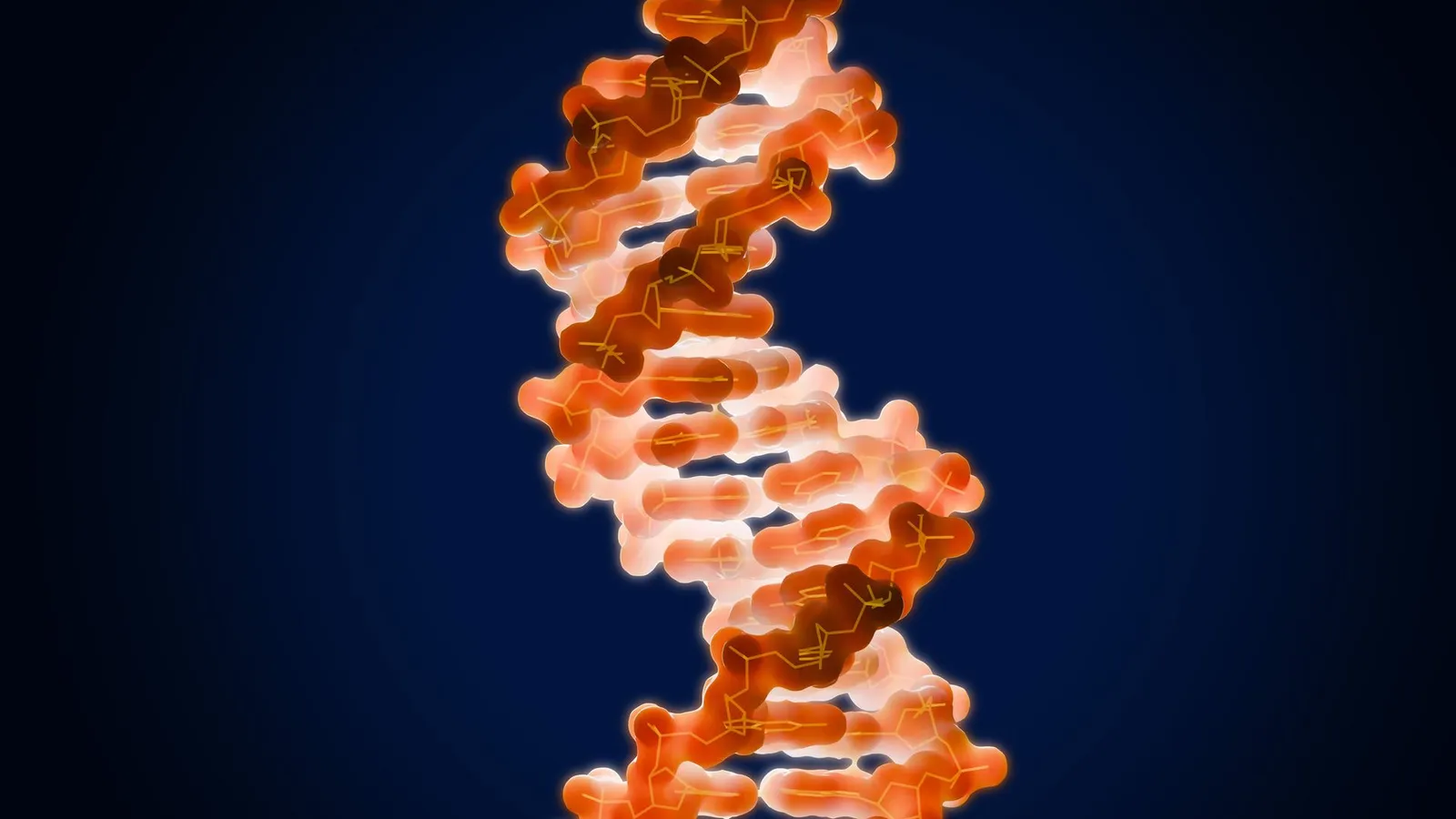
Those marks are epigenetic. Environment and experience do not rewrite the genetic code itself; they change which genes can be switched on. One such change, called methylation, attaches chemicals to DNA molecules and alters their structure, working like a dimmer switch for genes or even blocking them outright. "These epigenetic features of the brain are important for shaping the way the brain functions," study co-author Frances Champagne, a psychologist at the University of Texas at Austin, told Live Science. "This can give us some insight into why individuals with PTSD develop PTSD, or how [their brains] are different from a healthy brain."
The team zoomed in on three regions, each with a distinct job. The prefrontal cortex handles cognitive functions like planning and decision-making. The amygdala is a major hub for emotional processing. The hippocampus is key for memory and learning. Against the brains of people with no disorders, the PTSD brains showed different methylation patterns in the prefrontal cortex in particular. In major depressive disorder, by contrast, the amygdala stood out as the region with distinct methylation. "The goal of our study was to look at the epigenetics of the PTSD brain and ask how [it] is different from that of an individual who does not have PTSD," Champagne said, "or who comparatively has another diagnosis, like major depressive disorder."
The contrast went deeper than geography. In depression, the observed methylation differences tended to affect the same set of genes across different regions of the brain - a consistent signal. In PTSD, that was not the case: the findings showed more inconsistency in which specific genes were involved. The PTSD methylation patterns also appeared to vary depending on other factors, including patients' sex, ethnicity and the age at which they experienced trauma. That variability is one reason the study reads as a map rather than a verdict.
It is also not a diagnostic tool yet. Seyma Katrinli, an investigator in the Grady Trauma Project, a large PTSD study, at Emory University School of Medicine, called the results a valuable resource. The findings cannot be used to help diagnose PTSD today, said Katrinli, who was not involved in the new work. But down the line, this line of research could let scientists correlate changes measurable in a person's blood with changes in the brain. If that bridge holds, blood tests could help guide the diagnosis and treatment of PTSD.
The study's limitations are worth stating plainly, because they bound how far the conclusions travel. The scientists analyzed postmortem brains, so they relied on medical reports rather than assessing the subjects directly. Both PTSD and major depressive disorder are associated with substance use, which itself causes DNA methylation, and this potential confounding factor was not accounted for. And at this point there is no way to tell what triggered the observed differences: the variations could be a consequence of PTSD, a risk factor for it, or a downstream effect of other things that co-occur with it.
Champagne frames the work as groundwork. The research sets the stage to "help us ask better questions," she said. Her team is now looking to investigate factors - sex, the timing of traumatic experiences, or history of substance use - that may be driving the variation within PTSD. "It's a very exciting foray into epigenetic profiling in the brain," she said.
Why this matters beyond the lab: psychiatric diagnosis still runs largely on reported symptoms, and there is no blood-based test for PTSD in clinical use. A molecular signature that separates PTSD from depression in tissue is the first link in a chain that would have to run from brain to blood to clinic. For anyone funding or building in mental health, the study marks where the biology actually diverges - and how much of the hard translation work is still ahead. This article is for informational purposes only and is not meant to offer medical advice.
This story's Key Insights and Take-aways are locked.
Create a free account to unlock Executive Actions for one credit.
Register to UnlockAlways free for Executives Club members. Join the Club
More in Science

Anthropic's I.P.O. Made Rank-and-File Researchers Worth Tens of Millions
Researchers who joined just a few years ago are now worth tens of millions, and the windfall resets the pay benchmark for every private A.I. lab still paying in paper.

Sea Lion Culling Strategy Fails: New Model Says Killing Them Won't Save Salmon
The latest research from AAAS overturn a long-held conservation assumption, forcing policymakers to rethink critical resource allocation in marine ecosystems.

Microplastics do more than pile up: they react with water to damage cells
Scientists have found that plastic particles can generate highly reactive molecules in water, a mechanism that could explain links to heart attacks, strokes, and neurological disorders.