
20 Awá Emerge From Brazil's Rainforest Asking for Food. That Is the Alarm.
A group of 20 uncontacted Awá asked an Indigenous rights group for food, a signal that environmental degradation may have left them with no other option.
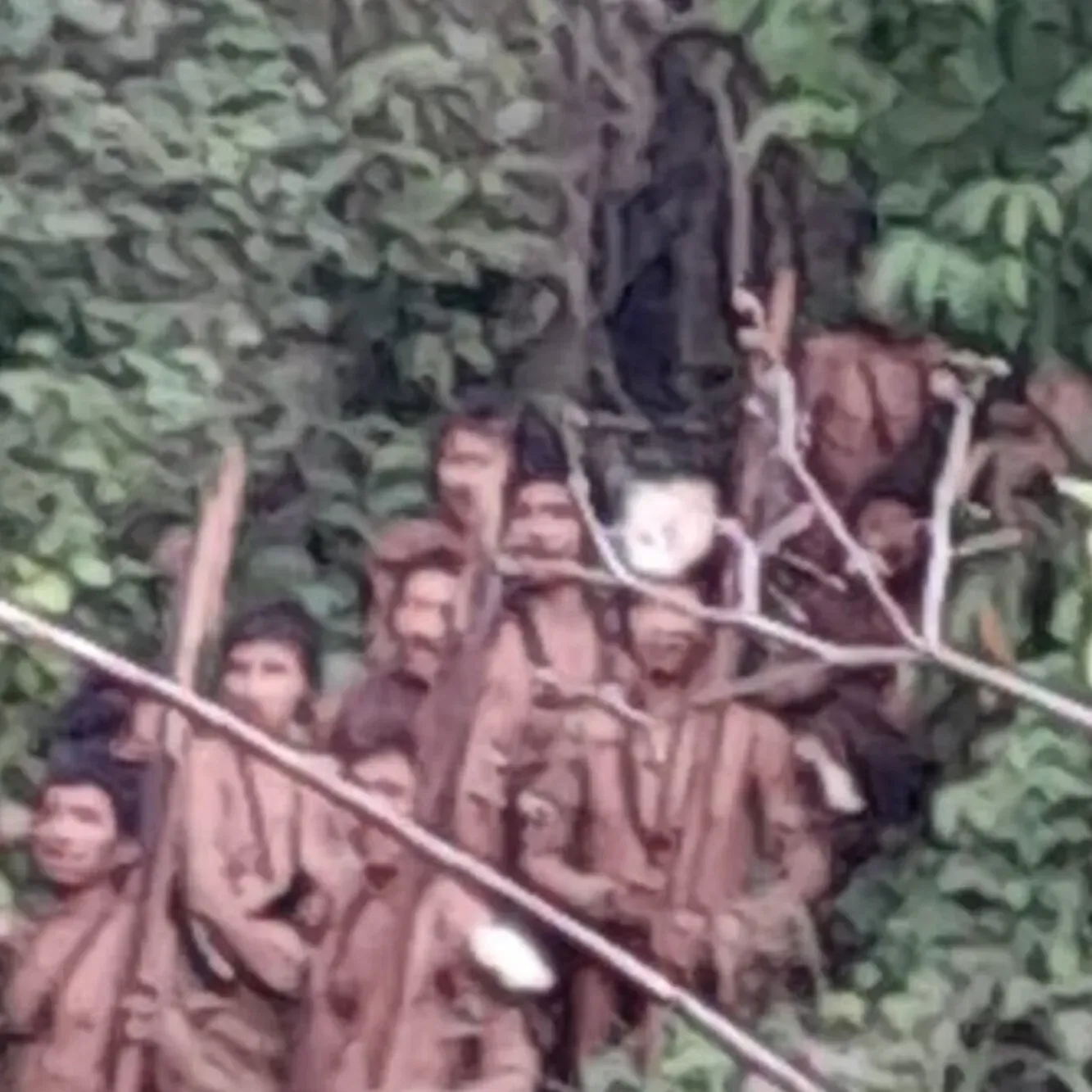
A group of 20 Awá emerged from Brazil's rainforest and asked an Indigenous peoples' rights group for food, the group said, raising fears that environmental degradation had left them with no choice but to reach out. For executives with Amazon-linked supply chains, the event converts abstract deforestation risk into a named, visible test of sourcing controls and disclosure.
Twenty people walked out of the Brazilian rainforest and asked for food. That is the whole event, and it is enough to set off alarms. An Indigenous peoples' rights group said the group of 20 emerged from the forest and requested food, a moment advocates treat as a distress signal rather than a curiosity. The rights group was not named in the account, and the location was not disclosed, a precaution advocates typically take: pinpointing where uncontacted people live can send loggers, miners, and land speculators straight to them.
The fear is not that they came out. It is why. The rights group framed the emergence as evidence that environmental degradation had left the group with no choice but to reach out. For people who have deliberately avoided the outside world, often for generations, contact is not an adventure. It is a last resort. Historically, first contact between isolated Indigenous groups and outsiders has been followed by outbreaks of diseases the group has no immunity to, typically respiratory infections, along with violence from the very industries pushing into their territory. When a group walks toward that risk, the calculation behind it is usually grim.
The Awá are an Indigenous people of Brazil's eastern Amazon, and rights advocates have long described them as among the most threatened Indigenous groups in the country. Their territory sits in a part of the rainforest that has been chewed up for decades by cattle ranching, soy farming, logging, and the roads and settlements that follow. Some Awá have been in contact with the outside world for generations. Others have not, and those are the people whose isolation advocates work hardest to protect. A group of 20 appearing at the edge of that world is the kind of event advocates read as a warning about what is happening deeper in the forest.
Brazil has a legal and policy framework that, on paper, recognizes the right of isolated peoples to remain isolated. The country's federal Indigenous affairs agency has historically been the body responsible for protecting uncontacted groups, mapping their territories, and keeping outsiders out. Enforcement, however, has always been the hard part. The Amazon is vast, the agencies are under-resourced, and the economic pressure to open land is relentless. Protection of uncontacted peoples has typically depended less on law than on whether anyone is physically present to stop a bulldozer.
What drives a group to that edge is rarely one thing. Deforestation in the Amazon is typically the product of overlapping pressures: land grabbing, cattle, soy, illegal mining, and the infrastructure that makes all of it cheaper to move. Each one shaves the buffer between an isolated group and the outside world. Cut enough forest and the game a group depends on thins out, the water changes, and the distance to the nearest farm or road shrinks. At some point the choice becomes hunger inside the forest versus risk outside it. The rights group's account suggests that for these 20 people, that point has arrived.
That is where this stops being a distant story. Amazon deforestation sits at the center of global supply chains. Beef, soy, timber, and minerals move from the region into international markets, and the companies that buy, trade, finance, or insure those goods carry the reputational and regulatory exposure. European rules on deforestation-linked imports, investor pressure on nature risk, and lender policies on Amazon-linked credit have all tightened in recent years. A first-contact event is exactly the kind of headline that turns an abstract supply chain risk into a named, undeniable one. Boards with exposure to Brazilian land use should expect harder questions, not softer ones.
Watch three things. First, whether the group returns to the forest or stays near settlements, which would tell us how bad conditions are inside. Second, whether Brazilian authorities respond with protection, which historically has meant physical presence on the ground rather than a statement. Third, whether this becomes a pattern. One group emerging can be an anomaly. Several groups emerging in the same region within a short window is a trend, and trends in first contact tend to end badly for the people making contact.
The uncomfortable part is the asymmetry. Twenty people asked for food. The rest of the world gets to decide whether that request is treated as a humanitarian emergency, a supply chain footnote, or a line item in a quarterly sustainability report. The rights group's warning is that environmental degradation left them no choice. If that is right, then the choice was made long before anyone walked out of the trees, by the roads, the ranches, the mines, and the buyers at the far end of those supply chains. The Awá who emerged are the visible end of a chain that runs straight into boardrooms. That is why this belongs on an executive's desk and not only in a science section.
This story's Key Insights and Take-aways are locked.
Create a free account to unlock Executive Actions for one credit.
Register to UnlockAlways free for Executives Club members. Join the Club
More in Science

Anthropic's I.P.O. Made Rank-and-File Researchers Worth Tens of Millions
Researchers who joined just a few years ago are now worth tens of millions, and the windfall resets the pay benchmark for every private A.I. lab still paying in paper.

Sea Lion Culling Strategy Fails: New Model Says Killing Them Won't Save Salmon
The latest research from AAAS overturn a long-held conservation assumption, forcing policymakers to rethink critical resource allocation in marine ecosystems.

Microplastics do more than pile up: they react with water to damage cells
Scientists have found that plastic particles can generate highly reactive molecules in water, a mechanism that could explain links to heart attacks, strokes, and neurological disorders.