
30,000-patient review finds Lexapro and Cymbalta may hold up better than Prozac
A major review puts two named antidepressants ahead of Prozac for keeping depression improvements in place, but thin long-term data means no one can yet call a winner.
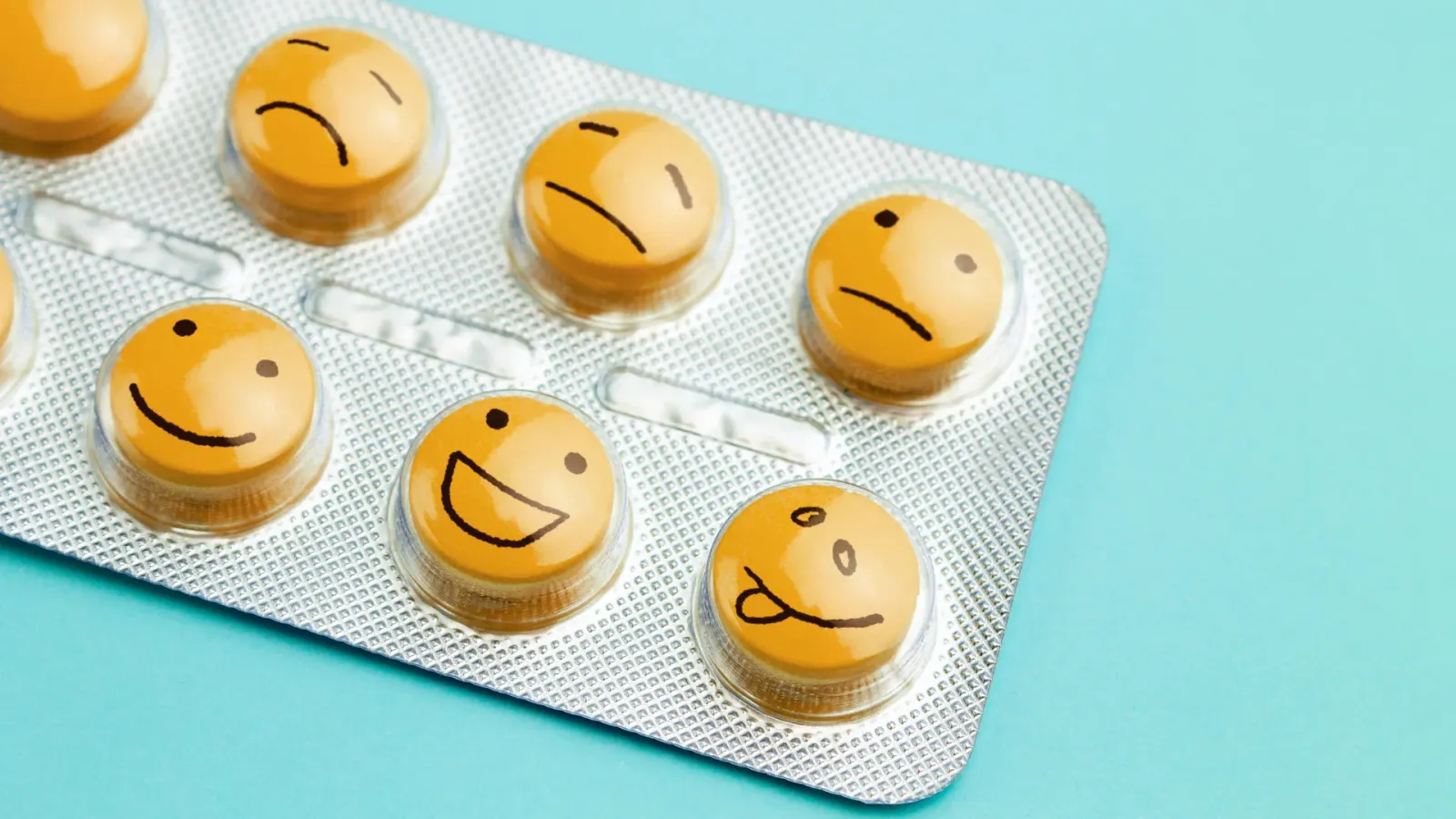
A review covering more than 30,000 people found that three antidepressants, including Lexapro and Cymbalta, may be more effective than Prozac at maintaining improvements in depression symptoms. The review's own limitations and the absence of truly long-term data mean prescribers, payers, and benefits leaders still cannot say which antidepressant is best, only that the maintenance phase deserves far more scrutiny than it gets.
A review covering more than 30,000 people has landed on a finding that will surprise anyone who assumes the most famous antidepressant is also the most durable one: three antidepressants, including Lexapro and Cymbalta, may be more effective than Prozac at maintaining improvements in depression symptoms. The review names Lexapro and Cymbalta explicitly; the third drug is not identified in the summary of the work. Prozac, the SSRI that became a household name, is the comparison point. That is the headline. Here is what keeps it honest: the same review flags limitations in the underlying research and a shortage of truly long-term data, which means scientists still cannot say which antidepressant is best.
To see why that distinction matters, split depression treatment into two jobs. The first is getting someone out of an acute episode, which is what most trials and most headlines measure. The second is keeping them out, the maintenance phase, where the goal is preventing relapse over months and years. This review is about the second job. That is the harder, less glamorous, and arguably more consequential half of the problem, because relapse is where the human and financial costs compound: lost work, emergency care, repeated medication changes, and the slow erosion of a patient's confidence that anything will hold.
Maintenance evidence is thin for structural reasons, not lazy ones. Head-to-head trials that follow patients for a year or more are expensive, slow, and hard to recruit for, and the design questions are genuinely tricky. Do you keep everyone on drug and compare outcomes, or withdraw some patients to placebo and watch who relapses? Dropout rates run high either way. The commercial incentive is also weak. All three drugs in this comparison are available as generics, which means no company has a patent-driven reason to fund the definitive trial. Historically, the money has flowed toward getting new molecules approved, not toward ranking old ones that already work.
The three drugs are not interchangeable, either. Lexapro, escitalopram, and Prozac, fluoxetine, are both SSRIs, or selective serotonin reuptake inhibitors, which raise serotonin availability in the brain. Cymbalta, duloxetine, is an SNRI, a serotonin and norepinephrine reuptake inhibitor, which brings a second neurotransmitter into the mix. They differ in side effect profiles, in how they interact with other medications, and in how long they linger in the body. Fluoxetine's long half-life is a well-known clinical consideration. None of that makes one drug universally better. It makes the choice of a starting drug a decision with downstream consequences.
For patients and prescribers, the practical read is narrow and important. This is a population-level signal, not a personalized prescription. It does not say anyone should switch medications, and it does not say Lexapro or Cymbalta will work for any given person. What it does suggest is that the question of which drug to start with may deserve more weight than it usually gets, because the answer could shape how well someone stays well. That is a conversation to have with a clinician, not a conclusion to draw from a review summary.
The second-order effects land on payers and employers. Formularies and prior authorization rules quietly steer millions of prescriptions, and they are typically built around unit cost and short-term outcomes rather than long-term relapse data. If maintenance performance genuinely differs across drugs, then the cheapest option at the pharmacy counter is not automatically the cheapest option over two years. Employers and health plans that manage depression as a line item, rather than as a chronic condition with a maintenance phase, tend to pay for it later in absenteeism, disability claims, and turnover.
What would settle the question is not another review. It is long-term, head-to-head data, ideally paired with real-world evidence from registries and claims, where millions of patients are already generating the follow-up that trials never captured. Until that exists, the honest position is the one the researchers took: three antidepressants, including Lexapro and Cymbalta, may outperform Prozac at maintaining improvement, and no one can yet crown a winner.
For executives, the strategic takeaway is about how to hold uncertainty rather than resolve it. A single review should not rewrite a benefits strategy or a clinical guideline, but it should change what you ask for. If you run a health plan, a benefits team, or a mental health company, the durable signal here is that maintenance is under-measured relative to what it costs when it fails, and that the evidence gap is also a market gap. The organizations that build the long-term data nobody has bothered to fund will be positioned to answer the question this review could only raise.
This story's Key Insights and Take-aways are locked.
Create a free account to unlock Executive Actions for one credit.
Register to UnlockAlways free for Executives Club members. Join the Club
More in Science

Anthropic's I.P.O. Made Rank-and-File Researchers Worth Tens of Millions
Researchers who joined just a few years ago are now worth tens of millions, and the windfall resets the pay benchmark for every private A.I. lab still paying in paper.

Sea Lion Culling Strategy Fails: New Model Says Killing Them Won't Save Salmon
The latest research from AAAS overturn a long-held conservation assumption, forcing policymakers to rethink critical resource allocation in marine ecosystems.

Microplastics do more than pile up: they react with water to damage cells
Scientists have found that plastic particles can generate highly reactive molecules in water, a mechanism that could explain links to heart attacks, strokes, and neurological disorders.