
A 100,000-year lag: stone blades existed long before the world adopted them
New evidence from Israel shows early humans made advanced blades 100,000 years before they caught on, and the gap is a warning about invention versus adoption.
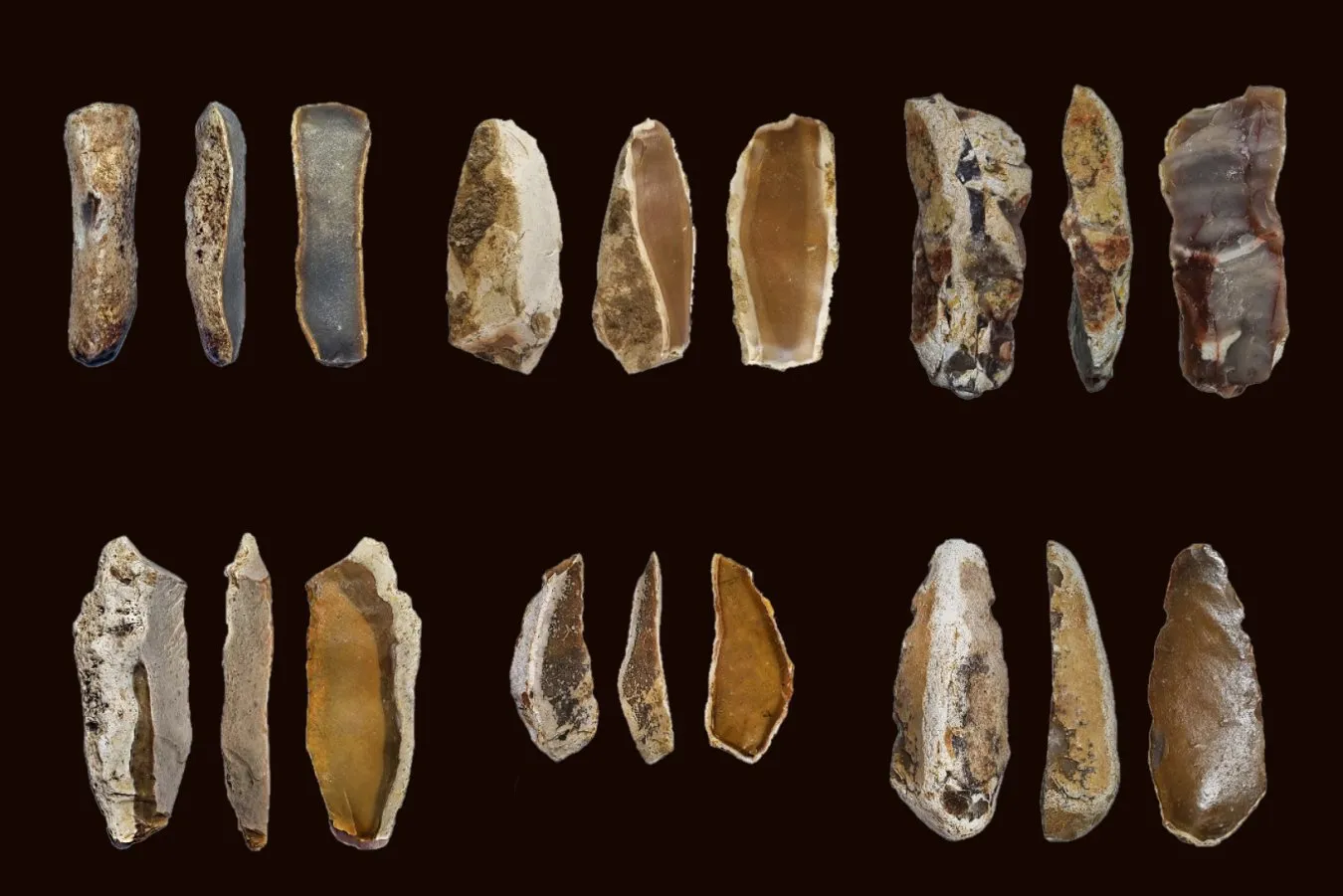
Ancient humans in the eastern Mediterranean, with tools recovered in Israel, were producing advanced stone blades 100,000 years before the technology became widely used, according to research reported by New Scientist. The finding reframes innovation as a two-part problem, invention and adoption, and warns leaders that superior technology does not spread on merit alone.
Ancient humans in the eastern Mediterranean were producing advanced stone blades 100,000 years before those blades became widely used, according to research reported by New Scientist. The tools come from Israel, and the gap between first production and broad adoption is the real headline. The technology existed. It was, by the standards of the period, advanced. And for something on the order of a hundred millennia, most communities did not use it.
That number is the whole story. Not the blades themselves, which archaeologists have studied for generations, but the lag. A hundred thousand years is longer than the entire history of agriculture. It is longer than every city, every empire, every written language, every coin, every corporation. If a genuinely better tool can sit on the shelf for that long, the comfortable assumption that good technology spreads on its own merit takes a direct hit.
Blades are long, thin flakes struck from a prepared stone core, and archaeologists typically treat them as a marker of planning and control. You have to shape the core first, then strike it with precision. Compared with the chunkier flakes that came before, blades generally deliver more cutting edge per kilogram of stone, which matters enormously when you are carrying your entire toolkit across a landscape. They are, in the broad arc of human prehistory, one of the technologies that signals a step change in how people made things.
What the eastern Mediterranean evidence indicates is that the invention and the adoption were separate events, separated by an enormous span of time. Communities in the region had the technique. Their neighbours, and in many cases their descendants, largely did not use it. New technologies, in other words, were not automatically adopted by communities. That is the sentence that should stop you, because it is the opposite of how most of us narrate progress.
Archaeology has wrestled with this problem for a long time. Adoption is rarely a function of quality alone. Historically, it has depended on population size, on how reliably skills pass from one generation to the next, on whether a group is mobile or settled, and on whether the existing toolkit is already good enough to get the job done. A blade that demands more skill to produce is a liability if the number of people who know how to make it is small and the learning is fragile. A simpler tool that everyone can make beats a superior tool that only a few can.
The modern parallel is uncomfortable and obvious. Companies ship products that are technically better and watch them stall for years while a worse product with better distribution eats the market. Standards lose to habits. Superior engineering loses to a training programme. The stone record suggests this is not a quirk of modern marketing but something much older and more structural about how human groups absorb new capabilities.
The finding also complicates the phrase "cultural evolution," which is the frame the research raises questions about. Cultural evolution is often drawn as a ladder: invention, then spread, then the next invention. The eastern Mediterranean case suggests something messier. A community can hold a capability for a very long time without it becoming common, and the interesting question shifts from who invented what to who copied whom, and when, and why the copying stalled. Progress, on this reading, is less a slope than a series of long plateaus punctuated by sudden, uneven jumps.
For anyone running an organisation, the implication is blunt. Being early is not the same as being right, and being right is not the same as being adopted. The 100,000-year gap is the most extreme version of a problem every operator faces: the distance between the thing you built and the thing your people actually do. That distance is not closed by the quality of the invention. It is closed by teaching, repetition, incentives, and time.
The strategic stakes for leaders are straightforward. If a tool as durable and as obviously useful as a stone blade could wait a hundred thousand years for its moment, then no product, process, or platform should be assumed to spread because it is better. Diffusion is a discipline in its own right, with its own budget, its own owners, and its own metrics. The eastern Mediterranean evidence is a reminder from deep prehistory that the hardest part of a new technology has never been making it. It has always been getting everyone else to pick it up.
This story's Key Insights and Take-aways are locked.
Create a free account to unlock Executive Actions for one credit.
Register to UnlockAlways free for Executives Club members. Join the Club
More in Science

Anthropic's I.P.O. Made Rank-and-File Researchers Worth Tens of Millions
Researchers who joined just a few years ago are now worth tens of millions, and the windfall resets the pay benchmark for every private A.I. lab still paying in paper.

Sea Lion Culling Strategy Fails: New Model Says Killing Them Won't Save Salmon
The latest research from AAAS overturn a long-held conservation assumption, forcing policymakers to rethink critical resource allocation in marine ecosystems.

Microplastics do more than pile up: they react with water to damage cells
Scientists have found that plastic particles can generate highly reactive molecules in water, a mechanism that could explain links to heart attacks, strokes, and neurological disorders.