
A 1207 B.C. eclipse could redate Ramesses the Great's reign
Cambridge researchers say a biblical 'sun stand still' passage is an annular eclipse from Oct. 30, 1207 B.C., a fixed timestamp that would shift Egypt's pharaonic chronology by about three years.
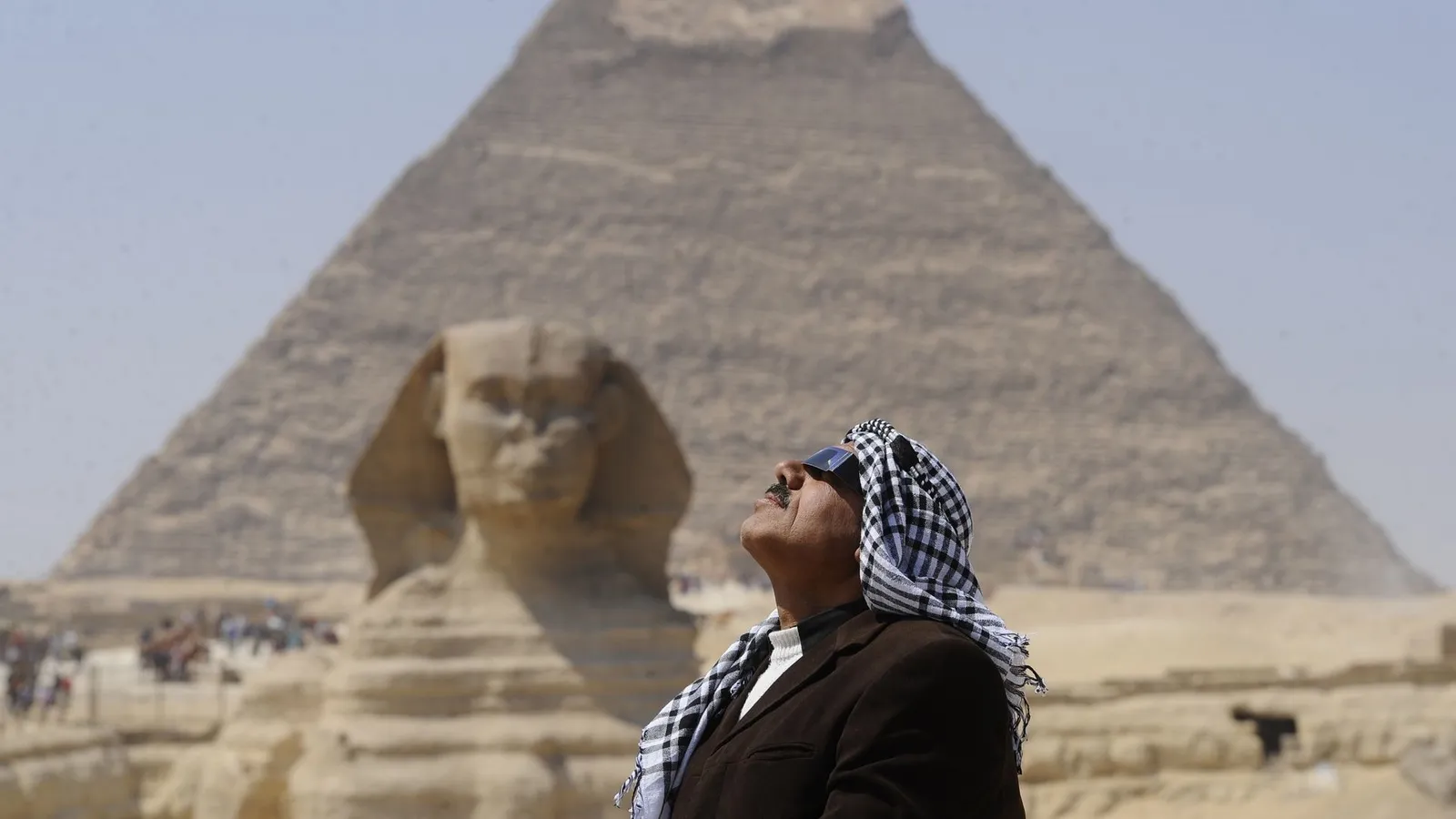
Colin Humphreys and Graeme Waddington of Cambridge University argue in 2017 research that an annular eclipse over Canaan on Oct. 30, 1207 B.C. is the event behind the book of Joshua's 'sun stand still' passage, which would date Ramesses II's reign to roughly 1276 to 1210 B.C. rather than the British Museum's conventional 1279 to 1213 B.C. For anyone working with contested timelines, the case shows how one hard astronomical timestamp can unsettle a chronology built from archaeology and interpretation, and why the interpretation, not the math, is the fragile part.
A solar eclipse on the afternoon of Oct. 30, 1207 B.C. may be the oldest one ever identified in a written record, and if two Cambridge researchers are right, it also moves Ramesses the Great. Colin Humphreys and Graeme Waddington, both at Cambridge University in the U.K., argued in research published in 2017 that an annular eclipse was visible from Canaan for five minutes that afternoon, and that it is the event described in the Old Testament book of Joshua, where the sun appears to stand still over Gibeon. Their payoff is a date: they propose Ramesses II reigned from approximately 1276 to 1210 B.C., with an uncertainty of about a year, against the conventional 1279 to 1213 B.C. used by the British Museum.
That is roughly a three-year shift on a reign that ended more than 3,200 years ago, and it is the kind of claim that turns an astronomy paper into an argument about the foundations of Egyptian chronology. The mechanism is simple and ruthless. The solar system is a clock that can be run in both directions. We know the motions of Earth and the moon well enough to predict eclipses centuries ahead, which is why we already know that on Aug. 2, 2027 a total solar eclipse will sweep across Egypt, pass directly over Luxor, and plunge some of ancient Egypt's greatest surviving monuments into darkness. According to Time and Date, totality begins in Luxor at approximately 1:02 p.m. EEST and lasts 6 minutes 22 seconds.
Run the same clock backward and eclipses become one of nature's most precise timestamps. Astronomers can reconstruct where the moon's shadow fell thousands of years ago even when nobody left a record of it. But a calculation is not a witness. Using an eclipse to date history requires evidence that someone actually saw it and wrote it down, and that the text says what the researcher needs it to say.
That is where the Merneptah Stele comes in. Now in the Egyptian Museum in Cairo, it is a large inscribed granite monument written in the fifth year of Pharaoh Merneptah's reign, successor to Ramesses II. It was discovered in 1896 at Merneptah's mortuary temple on the west bank of the Nile, opposite modern-day Luxor, and it describes an Egyptian military campaign in Canaan and mentions Israelites. Egyptologists generally date Merneptah's reign to around 1213 to 1203 B.C., which places his fifth year around 1209/1208 B.C. That means the Israelites were already living in Canaan by then. If the Joshua passage does describe the 1207 B.C. eclipse, Humphreys and Waddington proposed it occurred during the second, third or fourth year of Merneptah's reign, giving historians a fixed astronomical point to hang a disputed sequence of kings on.
The weak link is the text itself. The book of Joshua describes the sun and moon as if they stopped in the sky. After leading the people of Israel into Canaan, modern-day Israel and Palestine, Joshua prayed: "Sun, stand still at Gibeon, and moon, in the Valley of Aijalon. And the sun stood still, and the moon stopped, until the nation took vengeance on their enemies." Ancient Gibeon is about six miles (10 kilometers) northwest of Jerusalem. Humphreys and Waddington claim this could refer to the annular eclipse of Oct. 30, 1207 B.C., a controversial interpretation that depends on exactly how the ancient Hebrew is translated. Marinus Anthony van der Sluijs has challenged it directly, arguing in a paper that the biblical narrative places the sun over Gibeon and the moon over the Valley of Aijalon simultaneously, which would not be an eclipse at all.
There is an older candidate that shows how high the bar is. Astronomical calculations say a total solar eclipse swept across northern Egypt on April 1, 2471 B.C., during the age of the great pyramid builders. In research published in 2025, archaeoastronomer Giulio Magli at the Polytechnic University of Milan proposed the eclipse may help explain why Pharaoh Shepseskaf broke with tradition and built a huge rectangular tomb at South Saqqara instead of a pyramid. It is a tantalizing hypothesis, but no surviving Egyptian text records the eclipse, so it stays a hypothesis. Calculation without a witness does not date anything.
Ramesses II is the prize because so much rests on him. He reigned for 66 years during Egypt's New Kingdom, commissioned Abu Simbel, made major additions to Karnak and Luxor Temple, and lived to be over 90. His reign marked the final peak of ancient Egyptian imperial power. According to the BBC, he is the "Jupiter" of the pharaonic system. Karnak's Great Hypostyle Hall, one of ancient Egypt's most visited monuments, was built under Seti I and completed during the reign of his son, Ramesses II. Historians reconstruct the precise dates of that reign from a combination of archaeological, historical and astronomical evidence, which is exactly why a single new timestamp matters: it does not sit quietly, it tugs at everything downstream.
On Aug. 2, 2027, there will be no such ambiguity. We already know where the moon's shadow will cross Egypt, when it will reach Luxor, and how long the darkness will last. Almost 4,500 years separate that eclipse from the one that crossed Egypt in 2471 B.C., and 3,233 years from 1207 B.C. All three are movements of the same celestial clock. Run it forward, and it predicts the future. Run it backward, and occasionally an eclipse of the sun can put a date on history, provided the humans who watched it left something behind.
This story's Key Insights and Take-aways are locked.
Create a free account to unlock Executive Actions for one credit.
Register to UnlockAlways free for Executives Club members. Join the Club
More in Science

Anthropic's I.P.O. Made Rank-and-File Researchers Worth Tens of Millions
Researchers who joined just a few years ago are now worth tens of millions, and the windfall resets the pay benchmark for every private A.I. lab still paying in paper.

Sea Lion Culling Strategy Fails: New Model Says Killing Them Won't Save Salmon
The latest research from AAAS overturn a long-held conservation assumption, forcing policymakers to rethink critical resource allocation in marine ecosystems.

Microplastics do more than pile up: they react with water to damage cells
Scientists have found that plastic particles can generate highly reactive molecules in water, a mechanism that could explain links to heart attacks, strokes, and neurological disorders.