
A Bill to Speed Clean Energy Is Splitting the Environmental Movement
Faster permits could help fight global warming, but many environmentalists fear the bill's other provisions go too far, and the fight is now inside the movement itself.
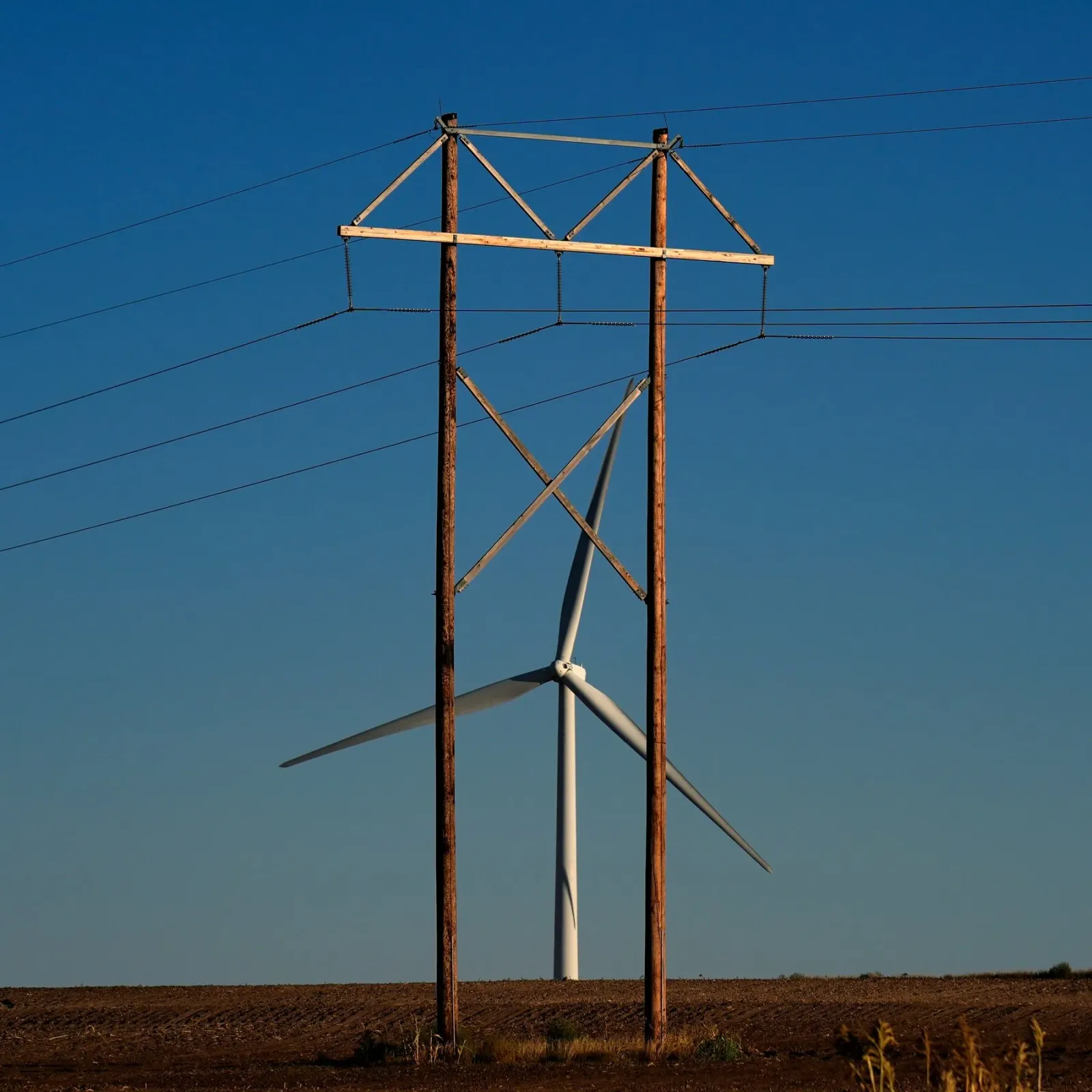
Lawmakers advancing a permitting bill that would speed approvals for clean energy have hit an unexpected obstacle: a split environmental movement, with many groups warning the bill's other provisions go too far. For developers, investors, and boards, the fight turns project timelines into a political variable rather than a purely technical one.
A bill meant to speed up permits for clean energy is doing something climate politics rarely manages: splitting the environmental movement against itself. The legislation would accelerate approvals for clean energy projects, a change its supporters say could help fight global warming by getting low-carbon power built faster. But many environmentalists fear the bill's other provisions go too far, and that fear has turned what sounds like a technical debate about paperwork into an argument about what the movement is willing to trade away.
The split is the story. The same bill that could speed the energy transition is being questioned by the people who want that transition most. The disagreement is not over whether climate change is a threat. It is over whether faster approvals are worth the price of the other provisions, and whether a movement that has spent decades using environmental review to stop projects can accept a law that makes some of them harder to stop.
For context on why anyone would fight about permits at all: in the United States, large energy projects typically need federal approvals and environmental reviews before construction, and those reviews can stretch for years before a single turbine goes up. Developers have long argued that the timeline, not the technology or the cost of capital, is what kills projects. A wind or solar farm that clears financing can still sit in queue while agencies study it, and opponents can use the process to slow or block it. Speeding that process up is, in theory, one of the cheapest ways to get more clean energy onto the grid.
That theory runs straight into the objection. Many environmentalists fear the bill's other provisions go too far, meaning the trade is not just faster clean energy but also changes they see as weakening protections. Environmental review has historically been one of the few formal channels ordinary people have to challenge a project, whether the concern is a wetland, a watershed, or a neighborhood that already carries a heavy pollution load. Loosen the process, and the leverage shifts toward whoever is building. That is a real cost, and it tends to land on the same communities that already bear the downside of energy development.
Politically, a split coalition is a weakened one. Environmental groups are typically a core constituency for lawmakers who back climate action, and when those groups publicly disagree, the bill's path gets narrower. Opponents of climate policy do not need to win the argument; they only need the argument to keep going. The result is a familiar pattern in climate politics: a proposal that polls well in the abstract gets bogged down once the details are on the table, and the delay itself becomes the outcome.
This is not the first time the movement has fractured over means rather than ends. Debates over nuclear power, natural gas, carbon pricing, and large-scale renewables have all divided environmentalists who agree on the destination but not the route. What makes this fight sharper is that it is about process, the unglamorous machinery that determines whether anything gets built at all. Process fights are hard to compromise on because every side can claim the same goal: a faster transition, or a fairer one.
For operators, developers, and the investors behind them, the practical read is that permitting risk has become political risk. A project's schedule now depends partly on an argument happening inside a movement, not just on engineering, land, or capital markets. If the bill advances, developers gain something they rarely get: predictability. If it stalls, the queue stays long and the cost of waiting keeps compounding. Either way, the smart move is to map which provisions, beyond faster permits, are driving the opposition, because those are the ones that will decide the bill's fate.
The stakes go beyond one bill. How this resolves will shape whether the environmental movement is seen as a coalition that can say yes to building, or one that mainly says no. For anyone watching energy, money, and policy, the thing to track is not the headline vote but the coalition: which groups stay at the table, which walk away, and what they extract in exchange for coming back. That is where the real terms of the transition get written.
This story's Key Insights and Take-aways are locked.
Create a free account to unlock Executive Actions for one credit.
Register to UnlockAlways free for Executives Club members. Join the Club
More in Science

Anthropic's I.P.O. Made Rank-and-File Researchers Worth Tens of Millions
Researchers who joined just a few years ago are now worth tens of millions, and the windfall resets the pay benchmark for every private A.I. lab still paying in paper.

Sea Lion Culling Strategy Fails: New Model Says Killing Them Won't Save Salmon
The latest research from AAAS overturn a long-held conservation assumption, forcing policymakers to rethink critical resource allocation in marine ecosystems.

Microplastics do more than pile up: they react with water to damage cells
Scientists have found that plastic particles can generate highly reactive molecules in water, a mechanism that could explain links to heart attacks, strokes, and neurological disorders.