
A "Mysterious" Message Landed Aardman Its First Pokémon Deal. It Airs on Disney+ Next Year
The studio behind Wallace & Gromit is handing its hand-built stop-motion house style to someone else's franchise for the first time, and the resulting Sirfetch'd and Pichu series tells you how prestige animation is now bought.
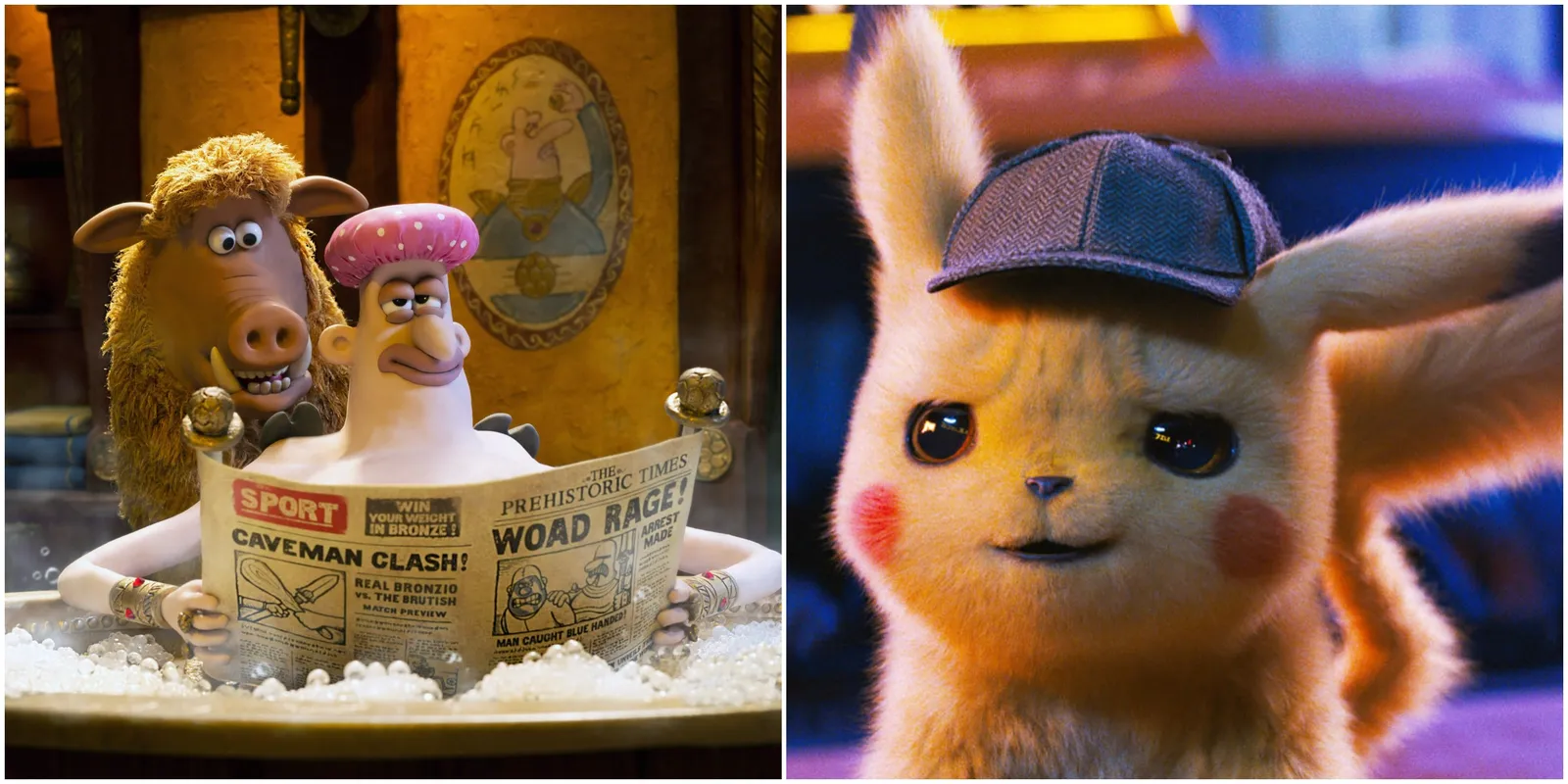
Aardman's creative chief told a London audience that a "mysterious" message kickstarted the studio's team-up with Pokémon on Pokémon Tales: The Misadventures of Sirfetch'd & Pichu, arriving next year on Disney+. The deal is Aardman's first time applying its stop-motion approach to a third party's property, a signal that franchise owners are now shopping for auteur craft rather than volume.
Aardman's creative chief walked a London audience through the origin story of the studio's team-up with Pokémon, and the opening scene is unusually low-tech: a "mysterious" message. That message is what kickstarted the pairing, which has become Pokémon Tales: The Misadventures of Sirfetch'd & Pichu, a series landing next year on Disney+. The creative chief laid out the inception of the project on stage, and confirmed the detail that makes it more than another licensing announcement: this is Aardman's first time taking its stop-motion approach to a third party's franchise.
That last point is the whole story. Aardman built one of the most recognisable identities in animation on characters it owns or co-owns, from Wallace & Gromit to Shaun the Sheep to Chicken Run. Those are properties where the studio controls the look, the pacing, the jokes and the upside. Handing the house style to somebody else's universe is a different business entirely, and it is the kind of move a studio makes when it wants to prove its craft travels. Stop-motion is slow, expensive and stubbornly analogue: every frame is physically built, lit, touched and shot. That makes it the opposite of a licensing factory, and it makes a third-party commission a real statement of intent from both sides.
The choice of characters is a tell. Sirfetch'd and Pichu are not the obvious merchandise engines. Sirfetch'd is the leek-carrying warrior bird; Pichu is the small electric mouse that eventually becomes Pikachu. Pairing them is a creative bet on comedy and character rather than a straight toy-shelf calculation. It reads like a project built for tone, which is exactly what a stop-motion studio is best at: physical comedy, timing, tiny handmade expressions that no render farm produces.
For Pokémon, the logic runs in the other direction. The franchise is one of the most valuable in entertainment, and value at that scale has a problem: familiarity can flatten into wallpaper. Pairing a globally known property with a studio whose entire identity is tactile imperfection is a way to buy differentiation. It also buys a specific kind of prestige. Stop-motion is craftsmanship you can see, and craftsmanship is one of the few things a streaming service can still market as not-generated-by-a-machine. The Disney+ placement matters for the same reason: it puts the project inside a subscription wall where distinctive, recognizable, family-friendly titles do heavy retention work.
The part the audience did not get, at least from the reported account, is the content of that "mysterious" message, or who sent it. That gap is itself instructive. Inbound pitches from franchise owners to boutique studios have become a normal way for big IP to acquire taste quickly. A studio with a signature does not have to chase work; if the signature is strong enough, the message arrives. Aardman's creative chief telling the story as a mystery, rather than as a strategy deck, is also good positioning: it frames the deal as something that found the studio, not something the studio needed.
What should peers take from it? First, that owned IP and commissioned IP are not an either/or. Aardman keeps its own universe and rents out its craft. Second, that the scarcest asset in animation right now is a look you cannot confuse with anything else. Volume is cheap; a house style is not. Third, that the distribution partner matters as much as the collaborator. Landing on Disney+ next year puts the project in front of a subscriber base that already pays for family content, and it puts Aardman's name in front of an audience that may never have sat through a Wallace & Gromit short.
The second-order effects are where this gets interesting for anyone running a creative business. A successful third-party stop-motion series turns Aardman from a beloved British studio into a proven vendor for global franchises, which is a different and larger addressable market. It also hands the studio an argument in every future negotiation: we did it once, on someone else's crown jewels, and it worked. For Pokémon's handlers, the test is whether a boutique treatment produces something the mainline animation pipeline cannot. For Disney+, the bet is that handmade beats algorithmically smooth when a household is choosing what to watch on a Sunday.
Watch three things. Whether the mystery stays a mystery, or whether Aardman eventually tells the full story of who knocked on the door. Whether this becomes a template, with other franchise owners following the same playbook of hiring signature studios for limited-run projects. And whether next year's Disney+ launch is treated as a one-off special or the opening of a longer pipeline. The message that started it all may have been mysterious, but the strategy behind it is now plainly visible.
This story's Key Insights and Take-aways are locked.
Create a free account to unlock Executive Actions for one credit.
Register to UnlockAlways free for Executives Club members. Join the Club
More in Entertainment

GTA 6 banks $3.8bn in one day, torching every launch record
One game just out-earned every video game launch and every single-day film box office haul in history, and the fallout lands on every media CEO's forecast.

GTA VI Racked Up $3.79 Billion in a Single Day, Topping Every Film Ever
A 13-year wait produced a $3.79 billion day, more than any movie has made in its entire run, and it resets the launch math for every studio, streamer, and brand chasing the same attention.

GTA 6 sells 32.5M pre-sales and $3.79B day one, torches 13-year record
Rockstar's sequel didn't just beat Grand Theft Auto V's 13-year-old benchmark; it reset what a launch can be, with 32.5 million pre-sale copies and $3.79 billion in a single day.