

Aaron Sorkin explains why Jesse Eisenberg skipped Zuckerberg: “Has his problems with the guy”
Jeremy Strong replaces Eisenberg as Mark Zuckerberg in the sequel to Social Network for reasons Sorkin framed as personal.
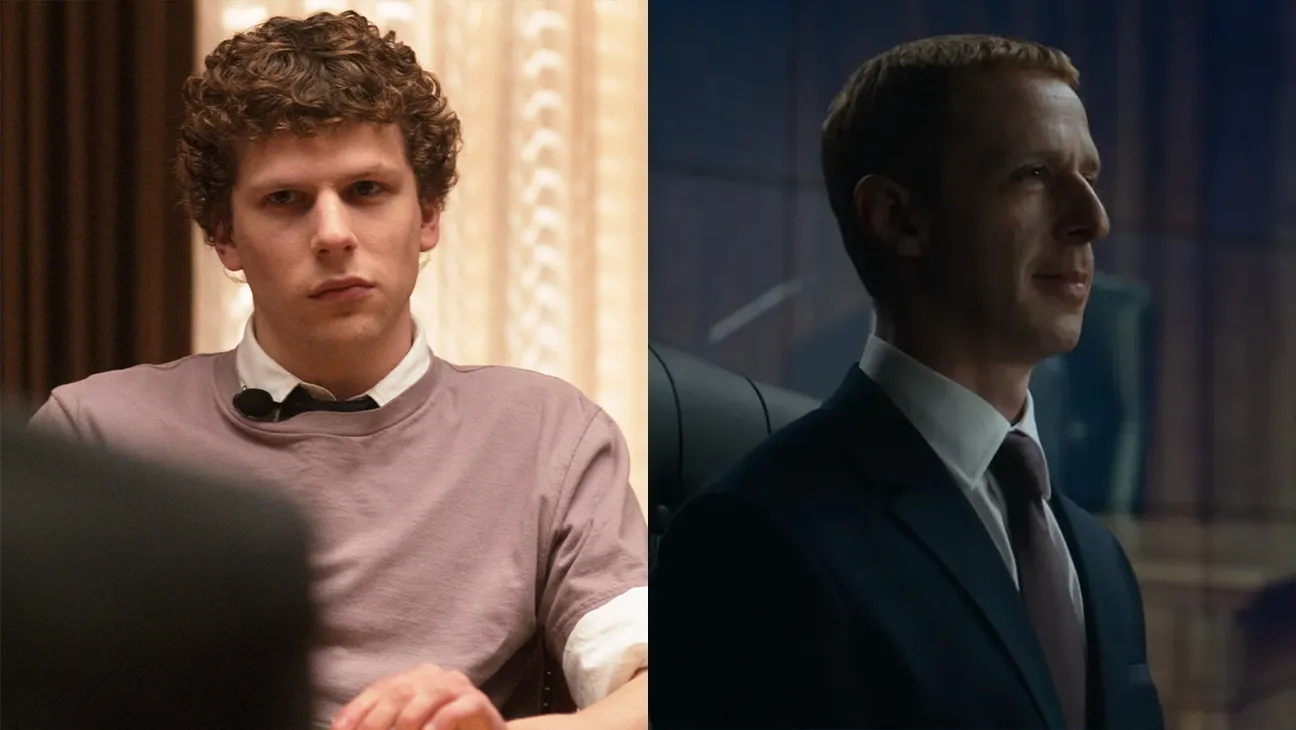
Aaron Sorkin addressed why Jesse Eisenberg did not return as Mark Zuckerberg for the sequel to the 2010 Oscar-winning film Social Network. He said Eisenberg “has his problems with the guy,” while Jeremy Strong took over the founder role.
Aaron Sorkin gave the short version of a casting choice that matters more than movie trivia: Jesse Eisenberg did not return as Mark Zuckerberg for the sequel to the 2010 Oscar-winning film Social Network. In explaining the absence, Sorkin pointed to the relationship inside the story itself, saying Eisenberg “has his problems with the guy.”
And yes, that “guy” is still Mark Zuckerberg. But the sequel moves forward with a different Zuckerberg actor, Jeremy Strong, who took over the Facebook founder role for the continuation of a franchise built on the idea that one person’s choices can ripple across an entire industry.
If you are an executive, the headline is still about incentives, not casting. Social Network was never just a biography. It was a snapshot of how a founder’s personal and professional conflicts can become the raw material for public narratives, legal scrutiny, and institutional responses. When a sequel changes the face of a founder character, it effectively changes how audiences will interpret those incentives, the character’s internal logic, and even the emotional framing of accountability.
In practical terms, the shift from Eisenberg to Strong is a mechanics change with brand consequences. The original 2010 film won Oscars and set expectations for how audiences should “see” Zuckerberg and the people around him. A sequel has to honor that recognition while also telling a next chapter that feels earned. Casting is part of that. The replacement signals that the sequel is not just continuing a timeline; it is re-centering the founder role with a new screen interpretation of power, stress, and decision-making.
Sorkin’s explanation about Eisenberg matters because it connects character relationships to the story’s underlying theme: who is willing to align, who is willing to push back, and what happens when “problems” with a person become the driver of outcomes. Even though the quote is delivered in the context of acting, the logic maps neatly onto boardrooms and leadership teams. Problems with the “guy” are rarely just feelings. They tend to become process, communication patterns, and the kinds of compromises that show up later as governance issues.
There is also a broader industry reason this particular casting talk keeps drawing attention. The world has spent years watching tech platforms collide with regulation, public scrutiny, and institutional oversight. When governments tighten rules, companies do not only adjust products. They adjust narratives, disclosures, and strategy. Films like Social Network occupy a weird but real middle ground: they influence how people emotionally understand the founder era of big platforms, and that understanding can shape how audiences interpret modern accountability.
So when Sorkin says Eisenberg did not return because of “his problems with the guy,” the sequel’s production choice becomes more than a behind-the-scenes detail. It sets a tone for the sequel’s take on Zuckerberg as a contested figure rather than a simple protagonist. That tone matters because it decides what the audience will treat as normal friction and what they will treat as a structural failing.
Finally, Strong taking over the founder role creates a second-order effect for anyone who has to lead in eras of scrutiny. In leadership, the message is that roles evolve. The same title can demand different behavior at different stages, and the “face” of leadership in public becomes part of how stakeholders judge stability. A sequel has to convince audiences it can move the story forward without breaking the emotional contract the original built. In the same way, boards and executive teams are judged on whether they can adapt without losing credibility.
In short, Aaron Sorkin’s explanation gives you the reason the cast changed, and Jeremy Strong’s takeover tells you what the sequel decided to prioritize: continuity of stakes, not continuity of the actor playing the founder. For decision-makers, that is the lesson hidden inside a movie update. When the pressure environment changes, the leadership story changes too. And the people tasked with carrying it have to match the moment.
This story's Key Insights and Take-aways are locked.
Create a free account to unlock Executive Actions for one credit.
Register to UnlockAlways free for Executives Club members. Join the Club
More in Entertainment

Russell Brand's accuser 'bewildered and confused' as he denies 7 sex charges
The criminal case against the comedian is a live test of how media companies manage talent risk when serious allegations go public.

'It's a Magic Trick': Ballet Experts Say Rosalía's SNL Pose Is Impossible
Three ballet experts tell Rolling Stone Rosalía's gravity-defying SNL stillness shouldn't be possible - and why the debate is now part of the show.

Activision CMO: GTA 6 Will Boost Call of Duty, Not Bury It
Activision's top marketer says Rockstar's blockbuster will drive players back to consoles and into Modern Warfare 4, even as the company admits its recent strategy failed.