
AI that nails brain-activity tests may be solving them the wrong way
A new discovery suggests strong neural-prediction scores do not prove a model works like the brain, a warning for labs, neurotech investors, and anyone selling brain-like AI.

Researchers report that AI models can closely predict brain activity while relying on internal processes the brain does not use, undermining the assumption that accurate prediction equals brain-like computation. For decision-makers in AI, neurotech, and research funding, the finding means benchmark wins can no longer be treated as evidence of mechanism.
Being right is not the same as being right for the right reasons. That is the uncomfortable takeaway from a new discovery that undercuts one of the most popular assumptions in modern brain science: that when an artificial intelligence system predicts brain activity accurately, it must be computing something like the brain does. Researchers found the opposite can be true. Even AI models that closely predict brain activity may rely on internal processes the brain does not use, a result that raises pointed questions about how much neuroscience should trust them.
The finding lands as a direct challenge to a research strategy that has quietly become standard. For years, labs have used AI models as stand-ins for the brain. The logic is intuitive: feed a model the same images, sounds, or words a person saw or heard, compare the model's internal representations against recorded neural responses, and if the match is tight, treat the model as a candidate explanation for how the cortex actually computes. Under that logic, prediction accuracy becomes a proxy for understanding. The new work says that proxy is leakier than the field assumed.
Here is the problem in plain English. Two systems can produce identical outputs through completely different internal routes. A chess engine and a human grandmaster both pick the same move; they are not running the same mental software. The same gap applies to neural prediction. A model can hit the same targets on a brain-activity benchmark while relying on internal machinery the brain does not have. So a strong score on a prediction leaderboard is not evidence of a shared mechanism. It is evidence that the model captured something correlated with brain activity, which is a weaker and more ambiguous claim.
That distinction matters because the field has been drifting toward treating benchmark wins as theory. Historically, when a model climbs a neural-prediction ranking, it gets cited as a step toward a mechanistic account of perception, language, or memory. Papers, funding proposals, and press releases follow. The new result suggests that chain of inference has a broken link. If prediction can be achieved without brain-like internal processes, then a high score tells you the model is a good predictor, not that it is a good model of the brain.
The stakes extend well beyond academic methodology. AI systems are increasingly marketed as approximations of human cognition, and that framing carries commercial and regulatory weight. Neurotechnology programs, brain-computer interface efforts, and cognitive-AI research all lean on the premise that a model which predicts neural data is capturing something real about how minds work. If that premise is shakier than advertised, the claims built on top of it need re-examination, from product pitches to safety arguments that assume a system's internals resemble ours. The discovery does not say AI is useless for neuroscience. It says the field's most convenient shortcut needs a second look.
The practical fix is methodological. If output-level prediction cannot distinguish between brain-like and brain-unlike computation, researchers need tests that probe internal process instead. That typically means perturbing a model and seeing whether it breaks the way a brain breaks, checking whether the same internal features drive both systems, and demanding converging evidence from multiple methods rather than a single accuracy number. It is slower, less headline-friendly work. It is also the only way to tell a genuine theory of the brain from a very good curve fit.
For decision-makers, the lesson generalizes past neuroscience. Benchmark performance is not understanding, in AI or anywhere else. Investors evaluating neurotech and cognitive-AI claims should ask what evidence exists beyond prediction accuracy. Research funders should ask whether a model's success rests on mechanism or correlation. Executives at AI labs that lean on brain-inspired marketing should expect sharper questions about what "brain-like" actually means in their architecture. And anyone building on the assumption that a model which mimics an output also mimics the process behind it should stress-test that assumption now, before a competitor or a regulator does it for them.
What to watch next: whether the field adopts process-level tests as a standard requirement, and whether the models currently cited as brain-like survive them. The uncomfortable possibility is that some of the most celebrated matches between AI and neural data were coincidences of correlation all along. The useful possibility is that neuroscience now has a cleaner way to separate the models that explain the brain from the ones that merely echo it.
This story's Key Insights and Take-aways are locked.
Create a free account to unlock Executive Actions for one credit.
Register to UnlockAlways free for Executives Club members. Join the Club
More in Science
Scientists Want to Test Whether a Clock Can Run on Two Flows of Time
An atomic-clock experiment has been proposed to catch a never-observed quantum effect, a result that would redraw the boundary between time and gravity.

A star swallowed another star. Webb caught the aftermath in 47 days
Astronomers watched a small star spiral into a giant 18,000 times brighter than the Sun in Andromeda, and Webb's 47-day follow-up is rewriting how stellar mergers get studied.
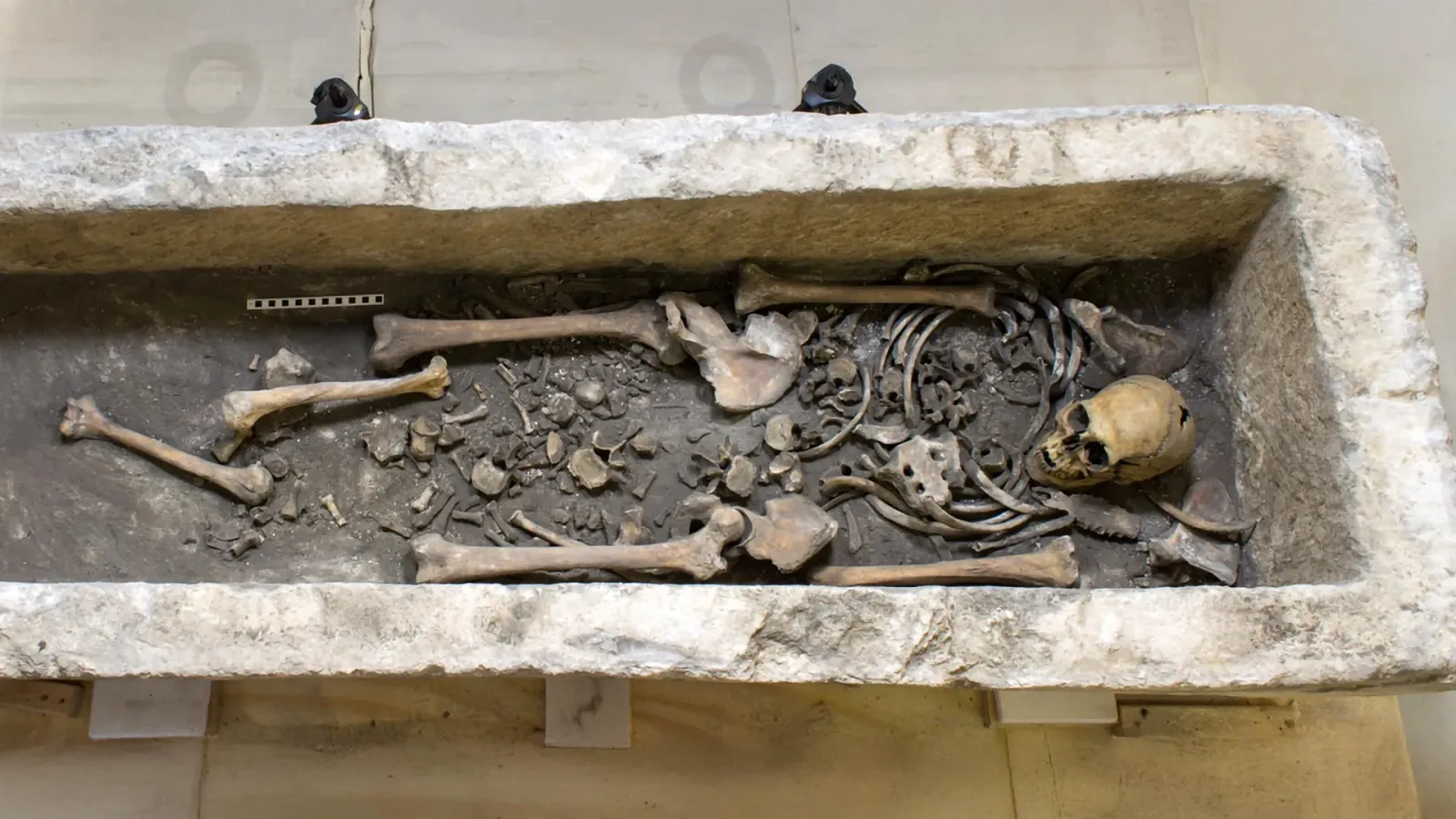
Westminster Abbey's mystery skeleton: new dating points to a medieval abbot
Radiocarbon evidence suggests a high-ranking medieval abbot was buried in a centuries-old recycled Roman coffin, closing a 150-year question at Britain's most famous church.