
Scientists Want to Test Whether a Clock Can Run on Two Flows of Time
An atomic-clock experiment has been proposed to catch a never-observed quantum effect, a result that would redraw the boundary between time and gravity.
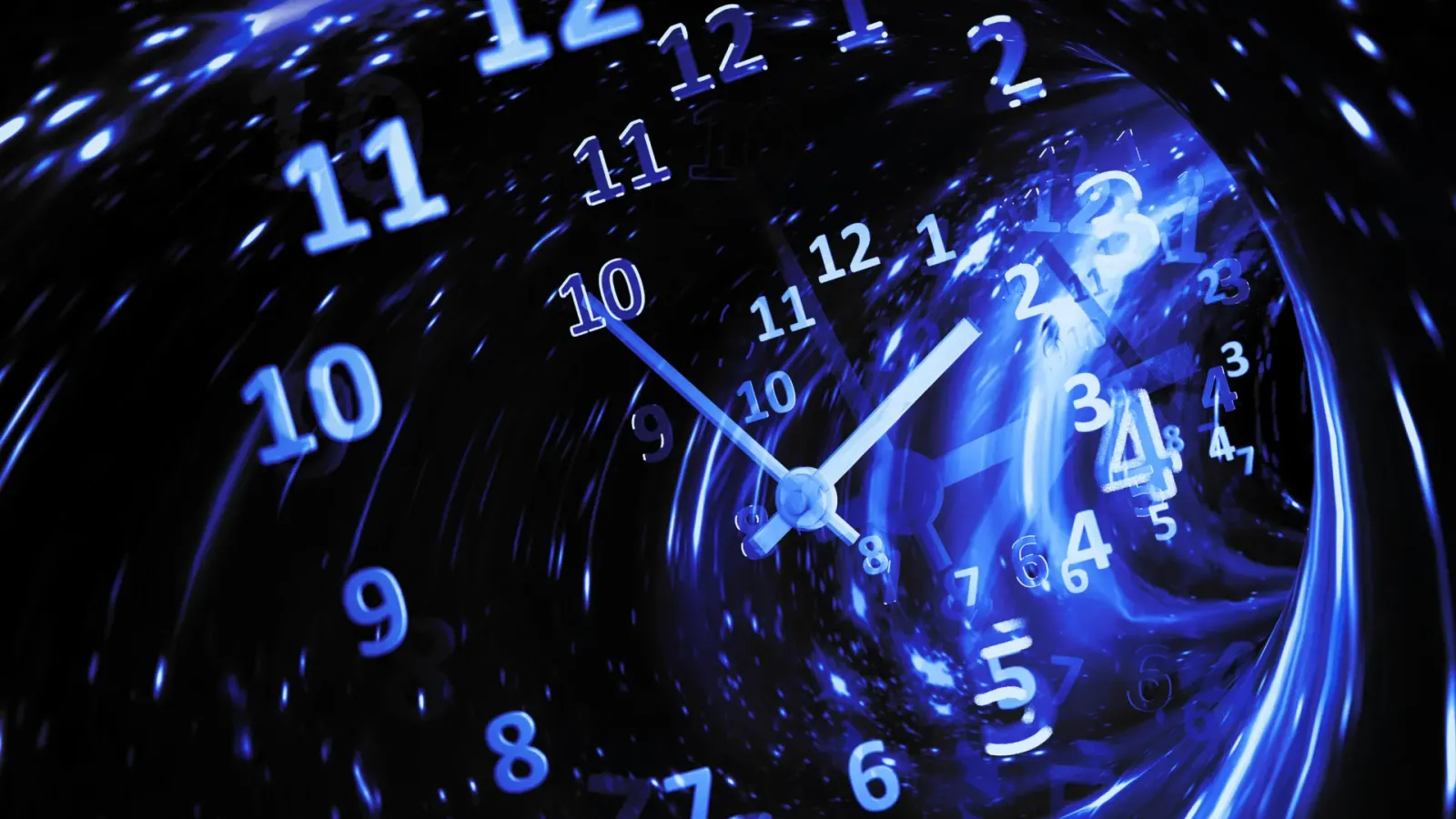
Researchers have proposed using atomic clocks with dramatically enhanced sensitivity to detect a clock experiencing multiple flows of time simultaneously. If the never-observed quantum effect is found, it would reshape the relationship between time and gravity and put fresh weight on precision timing as an industrial capability.
The pitch is almost absurdly clean: build atomic clocks sensitive enough to catch a single clock experiencing more than one flow of time at once. That is the proposal researchers have now laid out, as reported by ScienceDaily, a detection strategy aimed at a quantum effect that has never been observed. Note what is and is not being claimed. Nobody has seen this happen. No clock has been caught running on two flows of time. What exists is a plan, built on atomic clocks with dramatically enhanced sensitivity, for how you would know if it did. If it works, the payoff is not a better wristwatch. It is a possible rewrite of how physics connects time to gravity.
Start with why the idea is not as crazy as it sounds. Quantum mechanics has a long, well-tested habit of letting systems exist in combinations of states that classical intuition says are mutually exclusive. A particle can sit in two places, or two energy levels, until you look. The open question here is whether something similar can hold for time itself, whether a clock can be carried into a superposition of different proper times, each ticking at its own rate, simultaneously. The researchers' proposal is essentially an experimental blueprint for catching that condition rather than assuming it away.
The tool doing the catching is the atomic clock, which is not a clock in the ticking-gears sense at all. It counts the oscillations of atoms transitioning between energy levels, and because those transitions are governed by quantum mechanics, they are extraordinarily stable. Atomic clocks are, by a wide margin, the most precise instruments humans have built, and they quietly underpin a startling amount of modern life: satellite navigation, telecommunications, financial time-stamping, power grid synchronization. Push that precision up, dramatically, and the instrument stops being a timekeeper and starts being a sensor, alive to effects that were previously buried in noise. That sensitivity upgrade is the hinge the whole proposal swings on.
Then there is gravity, which is where this stops being an abstract philosophy seminar. In general relativity, clocks do not tick at a universal rate. A clock deeper in a gravitational field runs slower than one higher up, and the effect is measurable, not metaphorical. That part is standard, repeatedly verified physics. What is not settled is how the picture behaves when quantum mechanics is in the room, because the two frameworks have never been made to fit together cleanly. A clock that can be placed in a quantum superposition of time flows would probe exactly that seam. It is a rare kind of experiment, the sort that could either confirm a prediction or expose a crack theorists have been arguing about for decades.
The hard part is not building the clock. It is reading it. Measurement in quantum mechanics is not passive. Interact with a system in superposition and you typically collapse it into one definite state, which is precisely what you are trying to avoid. So the detection scheme has to be indirect: infer the effect from interference patterns or correlations rather than from a needle on a dial, and do it before decoherence, the process by which a quantum system leaks its weirdness into the surrounding environment, wipes the signal out. This is why dramatically enhanced sensitivity matters so much. The effect, if it exists, is expected to be faint enough that only the best clocks, isolated from vibration, thermal noise, and stray fields, have any real chance of seeing it.
Worth being blunt about the timeline. A proposal is not a result. The researchers hope to reveal the effect; they have not revealed it. Experimental physics of this kind tends to run on years, sometimes decades, and the honest probability that any given scheme yields a clean signal is not something anyone can put a number on in advance. The history of precision measurement is littered with proposals that sharpened technique without confirming the headline claim, and that is not a failure. Better clocks stay useful even when the exotic effect keeps hiding.
For anyone outside the lab, the commercial thread is precision timing itself. Economies now run on the assumption that time is a reliable, distributed utility. Position, routing, settlement, and synchronization all lean on it, and the sensitivity curve for atomic clocks has been bending upward for years as quantum sensing matured into something governments and industrial firms actually fund. Illustratively, a clock good enough to register the gravitational difference between one floor of a building and the next is a clock good enough to help map what sits underground without a satellite overhead. That is the practical edge of a story that otherwise reads like pure cosmology.
So treat this as a marker rather than an arrival. The proposal puts a specific, testable question on the table: can time itself be superposed? If the answer is yes, physics gets a new seam to work on and time stops being a mere background parameter. If the answer is no, the null result still tightens the boundaries. Either way, the instruments built to ask the question will outlive the question, and those instruments are the part that tends to leak into industry first.
This story's Key Insights and Take-aways are locked.
Create a free account to unlock Executive Actions for one credit.
Register to UnlockAlways free for Executives Club members. Join the Club
More in Science

AI that nails brain-activity tests may be solving them the wrong way
A new discovery suggests strong neural-prediction scores do not prove a model works like the brain, a warning for labs, neurotech investors, and anyone selling brain-like AI.
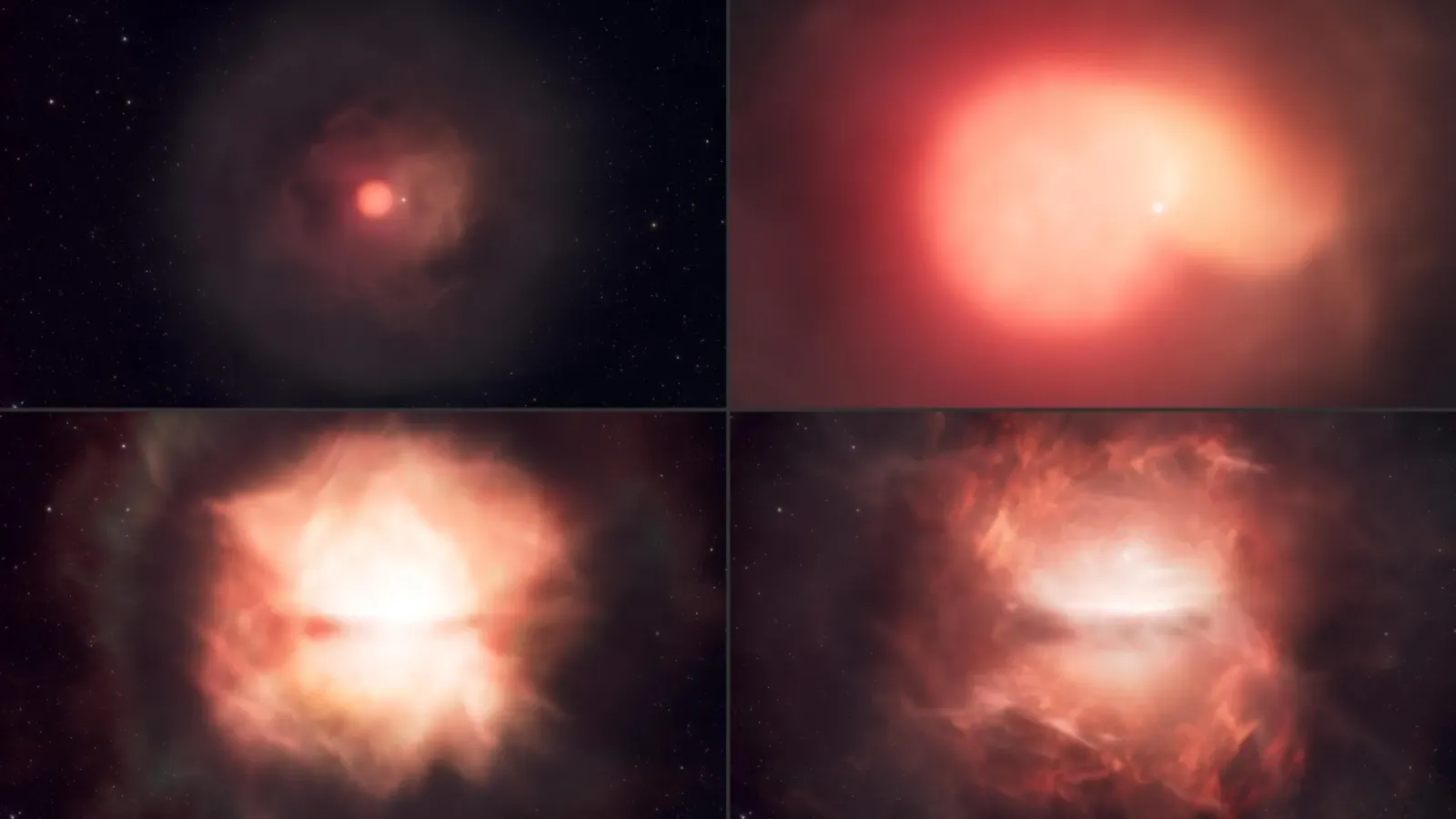
A star swallowed another star. Webb caught the aftermath in 47 days
Astronomers watched a small star spiral into a giant 18,000 times brighter than the Sun in Andromeda, and Webb's 47-day follow-up is rewriting how stellar mergers get studied.
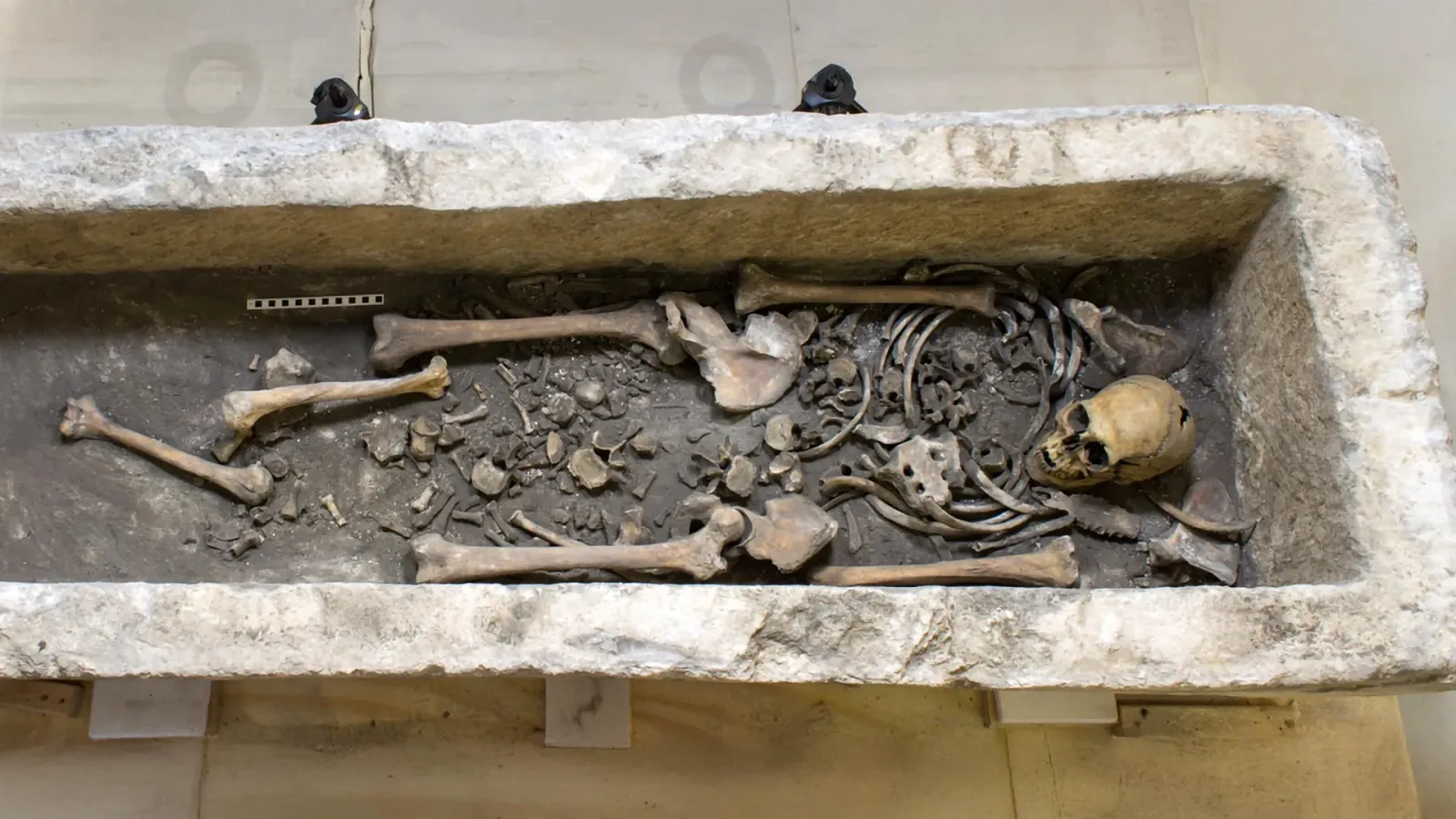
Westminster Abbey's mystery skeleton: new dating points to a medieval abbot
Radiocarbon evidence suggests a high-ranking medieval abbot was buried in a centuries-old recycled Roman coffin, closing a 150-year question at Britain's most famous church.