
An AI researcher is building fusion power. Daniel Ek just backed it.
The Spotify founder's check into Europa Fusion puts a software-native founder at the center of the hardest energy problem there is, and the round's size and reactor design are still undisclosed.
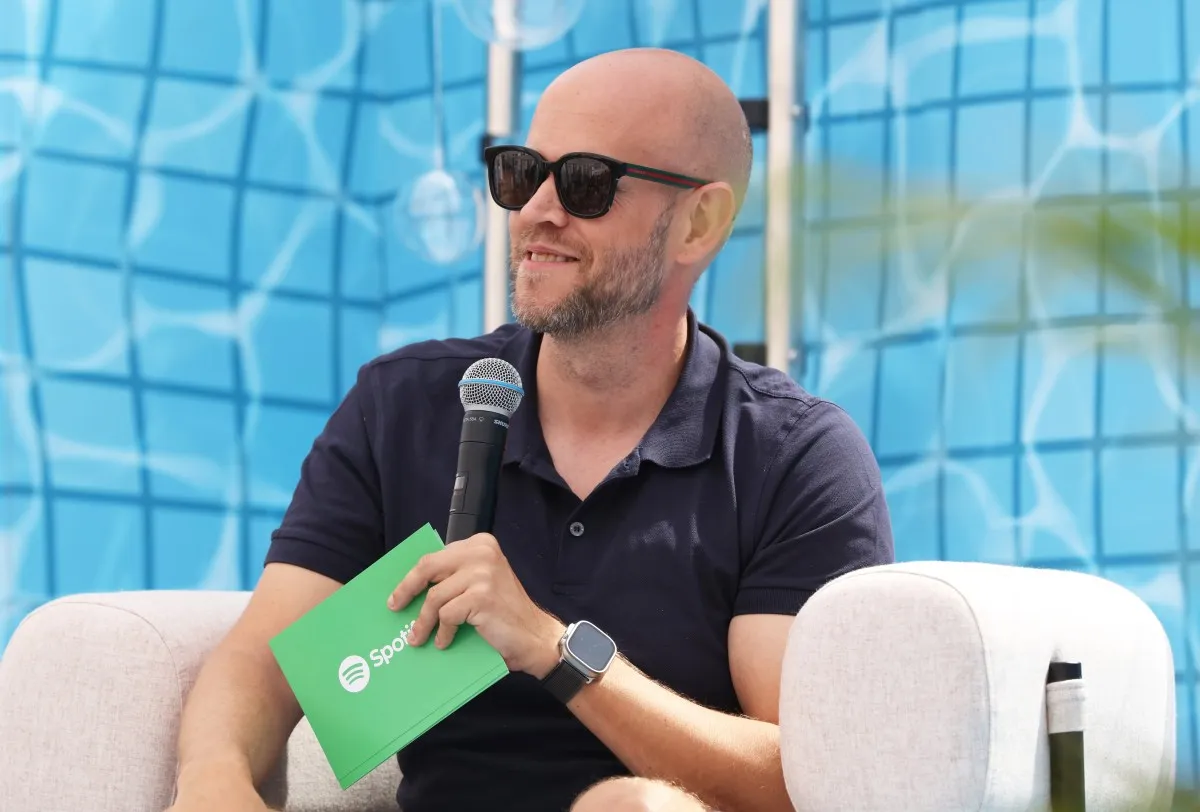
Spotify founder Daniel Ek is backing Europa Fusion, a fusion power startup founded by an AI researcher. The deal signals that elite software talent and private capital are converging on fusion, a sector where control software and simulation may now matter as much as reactor hardware.
Daniel Ek is backing Europa Fusion, a fusion power startup founded by an AI researcher. That is the whole of what has been disclosed so far: the Spotify founder's money, a company built around the promise of fusion energy, and a founder whose background sits in artificial intelligence rather than plasma physics. The size of the check, the valuation, the stage of the round and the specifics of what Europa Fusion is actually building have not been made public. What is public is the pairing, and the pairing is the story.
Strip away the novelty and you have two of the most closely watched bets of the decade colliding in one cap table. Fusion is the long-shot physics problem that, if solved, produces effectively limitless carbon-free power from the same reaction that lights the sun. AI is the technology that has spent the past several years eating every other field's lunch. An AI researcher choosing to spend a career on fusion, and a founder-investor like Ek choosing to fund it, tells you where both camps think the next decade of hard technical progress will come from.
For the busy reader: fusion works by forcing light atomic nuclei together at temperatures hotter than the sun's core, releasing energy in the process. Unlike fission, which splits heavy atoms and leaves behind long-lived radioactive waste, fusion's fuel is typically derived from hydrogen isotopes and its waste profile is far shorter-lived. The catch is engineering. Sustaining a stable, net-energy-positive plasma is one of the hardest control problems humans have ever attempted, because the plasma is unstable, invisible, and responds to inputs in fractions of a second. Historically, that is why fusion has been described as thirty years away for roughly seventy years.
That is exactly where an AI background stops looking like a detour and starts looking like a strategy. Plasma inside a magnetic confinement device is a chaotic, high-dimensional system, and holding it steady in real time is a reinforcement-learning problem in everything but name. Machine learning has already been used in fusion research to predict disruptions before they happen and to tune magnetic fields faster than a human operator could react. For context, the field's hardest bottlenecks are not only physics: they are simulation, materials discovery and control software, all domains where modern AI teams have real leverage.
Ek's involvement matters for a second reason. He is not a specialist energy investor; he is a founder who built Spotify into a global platform and who, like a growing number of successful operators, has turned to backing deep technology. That profile brings a particular kind of patience and a particular kind of impatience: patience for a decade-long technical slog, impatience with anything that cannot be measured. Founders in capital-intensive hardware sectors typically prize investors who have operated something at scale, because the failure modes in a fusion startup, hiring, sequencing, capital allocation under uncertainty, look more like a scaling software company than a government lab.
The backdrop is a private fusion sector that has moved from science-fair curiosity to serious capital allocation. Governments still fund the largest machines, but private companies now pursue smaller, faster designs, and regulators in several jurisdictions have begun drafting frameworks specifically for fusion rather than lumping it in with fission. That distinction matters commercially: fusion plants, if they work, promise no meltdown risk and no long-lived waste, which changes the permitting conversation and the politics of siting. Meanwhile, electricity demand from data centers and electrification is rising after two decades of flat growth in many developed markets, which has made firm, carbon-free baseload power a strategic asset rather than an academic one.
The honest caveat is that no private fusion company has yet delivered commercial power to a grid, and timelines in the sector have a long history of slipping. Backing an AI researcher to run a fusion company is a bet that the bottleneck has shifted from physics to computation, and that bet is not yet proven. It also raises a governance question every deep-tech board should be asking: does a founder with a software and machine-learning background have the bench around them for plasma physics, tritium handling, materials science and the industrial supply chain? The answer is usually hiring, and hiring is where early-stage fusion companies live or die.
For executives and boards watching this space, the signal is less about one startup than about flow. Capital and elite technical talent are converging on energy, and the people writing the checks increasingly come from software. If that pattern holds, the competitive advantage in fusion will belong to whoever can iterate fastest on control systems and simulation, not just whoever can build the biggest magnet. Ek is placing a bet on that thesis early, with a founder whose entire career says computation is the lever. The rest of the market will find out, over the next several years, whether the AI-to-energy pipeline is a genuine arbitrage or just the most fashionable way to fund a very long science project.
This story's Key Insights and Take-aways are locked.
Create a free account to unlock Executive Actions for one credit.
Register to UnlockAlways free for Executives Club members. Join the Club
More in Technology

Anthropic mathematician claims Claude helped crack the Riemann hypothesis
If the proof holds, AI has toppled math's most famous open problem; if it does not, it is a case study in announcing breakthroughs before anyone verifies them.

AI's $4 Trillion Wipeout Erases Nasdaq's Gains for the Year
A brutal week took roughly $4 trillion off the AI sector and left the Nasdaq flat for the year, and the damage ran the full length of the supply chain.

Anthropic mathematician says AI proved the Riemann hypothesis. Verification will take time.
A single unverified claim from inside Anthropic now sits against more than 160 years of open mathematics, and the gap between asserting a proof and surviving peer review is the entire story.