
Antarctica's ice cliffs collapse, then stop: 15,000-cliff study undercuts the worst fear
A 15,000-cliff survey finds the tallest Antarctic walls often stabilize instead of cascading, with underwater ridges, water, and broken ice acting as natural brakes - a reprieve for sea-level models, not an all-clear.
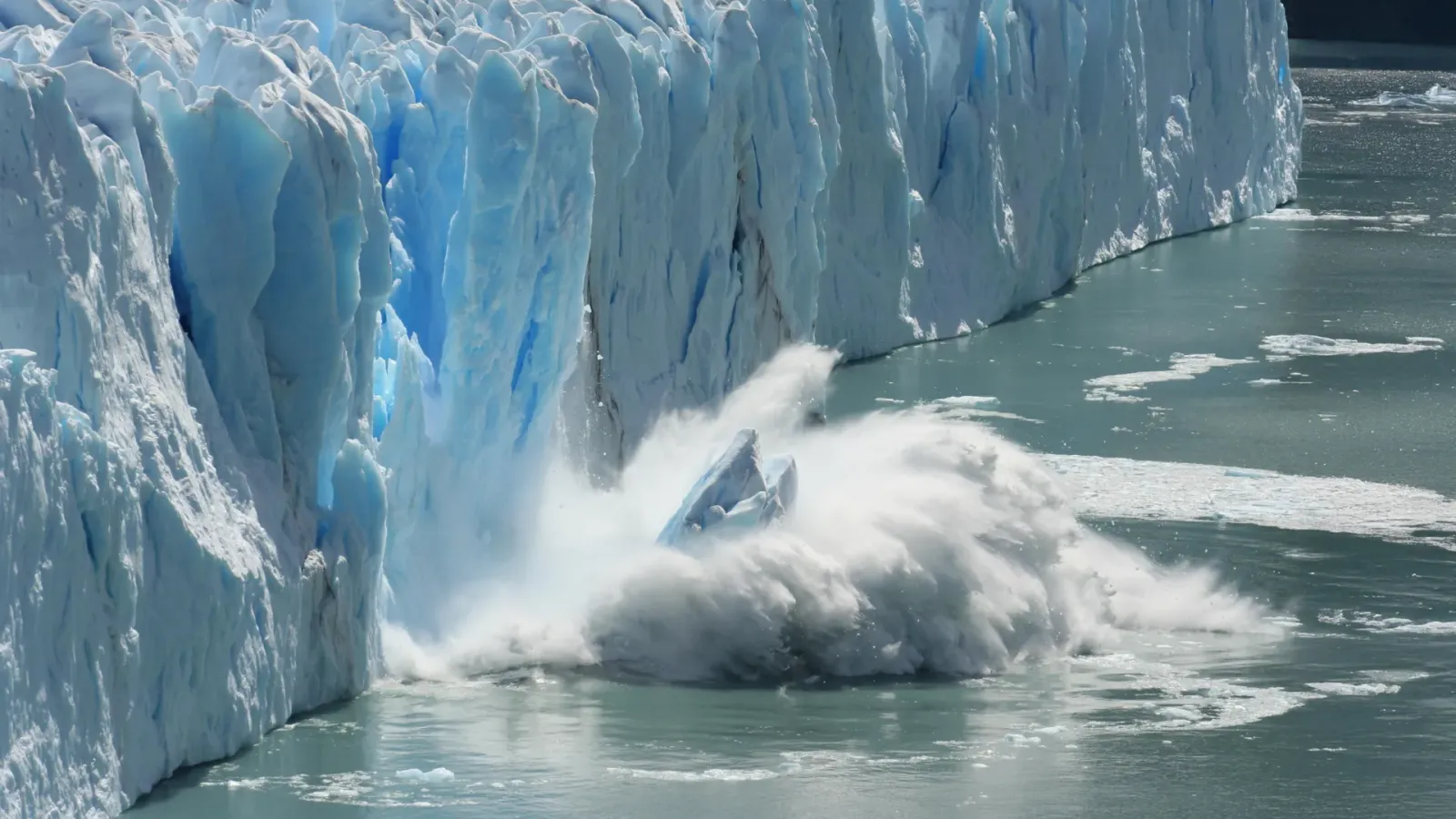
A new study tracking more than 15,000 Antarctic ice cliffs finds that even the tallest walls, which can collapse at alarming speeds, tend to stabilize rather than trigger an unstoppable chain reaction, with underwater ridges, surrounding water, and broken ice acting as natural defenses. For boards, insurers, and infrastructure planners, the finding thins the worst-case tail in sea-level projections without retiring Antarctic risk, which argues for scenario ranges over point estimates.
Antarctica's ice cliffs are not the dominoes scientists feared. A new study that tracked more than 15,000 of them found that even the tallest walls, the ones capable of collapsing at alarming speeds, tend to stabilize rather than trigger an unstoppable chain reaction. That is the twist, and it is a big one. For years, the most frightening sea-level projections rested on a simple and terrifying assumption: that one collapsing cliff would expose the next, which would expose the next, until entire ice basins drained into the ocean. The new survey suggests the real world keeps finding brakes.
Those brakes are physical. Underwater ridges, the surrounding water, and broken ice all appear to provide natural defenses against further collapse, according to the research. In plain English: when a towering face of ice gives way, the debris left behind and the shape of the seafloor beneath it can shore up what remains, and the ocean itself absorbs some of the energy. The result is a landscape that fails loudly and locally rather than unraveling all at once. That distinction, local failure versus cascade, is the difference between a bad century and a catastrophic one.
Why does one study on ice cliffs move anything? Because ice cliffs are the load-bearing assumption in the scariest end of sea-level science. The marine ice cliff instability hypothesis, which entered the climate literature roughly a decade ago, argued that once an ice shelf in front of a glacier breaks apart, the exposed cliff behind it can be too tall to stand, and its collapse can peel the glacier back inland like a zipper. That mechanism is what turns a slow, manageable rise into a fast, expensive one. It is also what pushed worst-case projections for the end of this century into territory that made coastal planners, reinsurers, and infrastructure investors uncomfortable.
The new work does not say the mechanism is imaginary. It says the cascade is not automatic. Tracking more than 15,000 cliffs is a large observational sample, and observation is exactly what this debate has been short on. Models have long treated very tall ice cliffs as mechanically unstable, and from that assumption a chain reaction follows almost by arithmetic. Real cliffs, it turns out, sit on messy seafloors, are surrounded by ocean water, and are often buttressed by their own rubble. Those are not heroic interventions. They are ordinary features of the coastline doing quiet, unglamorous work.
The caveat matters as much as the finding. Stabilization is not immunity. Antarctica remains the largest single uncertainty in sea-level science, and a study that softens one worst-case pathway does not retire the risk, it narrows it. A cliff that stabilizes today can still retreat tomorrow as water warms and buttressing ice thins. The honest read is that the tail of the distribution got thinner, not that it disappeared. Anyone who reprices a coastline on the strength of a single paper is making the same mistake as anyone who bet the farm on the original hypothesis.
Second-order effects are where this gets interesting for decision-makers. Catastrophe modelers and reinsurers price coastal risk on decadal horizons, and their models lean on the same worst-case scenarios that this research complicates. Infrastructure with 50- to 100-year design lives, from ports to power plants to transit tunnels, is planned against those numbers. Municipal and sovereign borrowers in low-lying regions are implicitly underwriting them too. If the upper bound of sea-level rise is lower than assumed, some of that capital is over-insured and some adaptation spending is misallocated. If the finding does not replicate, the opposite is true, and the cost of being wrong is measured in meters.
The strategic move is to hold two truths at once. The catastrophic cascade is less certain than it looked, and Antarctica is still the biggest wildcard on the board. For a board or an investment committee, that argues for scenario ranges rather than point estimates, for watching whether these results replicate across other ice basins, and for resisting the very human urge to hear good news as permission to stop paying attention. The cliffs are not dominoes. They are also not safe.
This story's Key Insights and Take-aways are locked.
Create a free account to unlock Executive Actions for one credit.
Register to UnlockAlways free for Executives Club members. Join the Club
More in Science

Anthropic's I.P.O. Made Rank-and-File Researchers Worth Tens of Millions
Researchers who joined just a few years ago are now worth tens of millions, and the windfall resets the pay benchmark for every private A.I. lab still paying in paper.

Sea Lion Culling Strategy Fails: New Model Says Killing Them Won't Save Salmon
The latest research from AAAS overturn a long-held conservation assumption, forcing policymakers to rethink critical resource allocation in marine ecosystems.

Microplastics do more than pile up: they react with water to damage cells
Scientists have found that plastic particles can generate highly reactive molecules in water, a mechanism that could explain links to heart attacks, strokes, and neurological disorders.