
Avataar AI’s Varya video runs at $0.005 per second, 27x cheaper than rivals
Founder Sravanth Aluru says Avataar AI’s homegrown Varya cuts open-source video generation costs by 27 times, reshaping AI video economics.

Bangalore-based Avataar AI has launched Varya, a homegrown video AI model that generates video for roughly $0.005 per second. Founder Sravanth Aluru claims this is 27 times cheaper than comparable open-source video models, pushing down the practical cost of producing synthetic video.
Avataar AI just put a big, specific number into the AI video pricing fight: Varya generates video for roughly $0.005 per second, or 0.48 rupees. Founder Sravanth Aluru, a former Deutsche Bank investment banker and a Microsoft and IIT Mumbai alum, says that cost is 27 times cheaper than comparable open-source video models.
To understand why executives should care, translate that $0.005-per-second claim into decisions. Video generation is one of the hardest parts of synthetic media to scale economically, because both compute and iteration loops add up fast. If Varya’s cost structure is really that far ahead, it changes the unit economics for anyone building video-powered products, running demos, training internal teams, or testing workflows that need lots of outputs rather than a few polished finals.
Avataar AI is based in Bangalore, and Varya is framed as one of India’s first homegrown video AI models. That matters in a world where “best model” is increasingly a moving target, but “best model your team can actually afford to run” decides what ships. Open-source video models are typically not just benchmarks, they are the tools teams use to prototype, integrate, and experiment. If a homegrown model can credibly undercut comparable open-source options by 27 times, buyers shift from “Can we do this at all?” to “How quickly can we do it, and what do we build on top?”
Aluru links the advantage directly to cost, saying the 27x cheaper figure is relative to comparable open-source video models. That pricing gap is the real story here, because video AI is constrained by economics as much as by capability. Even when models generate impressive results, product teams still face the same practical question: what does it cost to generate enough content to be useful? For many companies, the limiting factor is not a single render, it is volume. Launches, A/B tests, localization variants, different camera angles, and iteration after feedback all require more generations than most people plan for upfront.
This is where the “per second” number becomes a governance and planning input. When pricing is expressed like “$0.005 per second,” it is easier to model budgets, forecasts, and margins than vague efficiency claims. Boards and CFOs tend to like this sort of clarity because it turns AI from an R&D line item into a controllable operating cost, at least in principle. If the cost really holds across typical usage patterns, it could reduce the financial friction that slows video AI commercialization.
There is also an industry angle to the “India’s first homegrown” positioning. Global AI video leadership has often concentrated outside India, so local models can be attractive for teams thinking about data handling, regional developer ecosystems, and deployment realities. For context, the video generation stack touches many layers, from model inference to distribution of outputs. When local teams build and optimize the full pipeline, they can focus on latency, reliability, and cost tradeoffs that matter for real deployments, not just leaderboards. A homegrown provider claiming major cost advantages hints at an optimization push, even if the source only gives the pricing outcomes and the comparison.
At the same time, executives should treat the 27x claim as a starting point for due diligence, not as a final truth without measurement. The source provides the cost estimate and the relative comparison, but it does not enumerate the conditions behind it. In AI video, those conditions can include resolution targets, clip length, sampling settings, and how “comparable” is defined. The practical implication for boards and operators is straightforward: if Varya’s unit cost is as low as described, the biggest next step is to validate performance-per-dollar in the specific way your product needs to use video. Cheap generation is only valuable if it is consistently good enough for your use case.
Still, the strategic stakes are clear. Varya’s launch is a reminder that the frontier in AI video is not only about smarter models. It is also about making generation affordable enough to trigger real adoption. If Avataar AI’s cost advantage sticks, rivals will face pressure not just to match quality, but to narrow the economics gap that determines who can iterate faster, run more experiments, and scale content production without watching margins evaporate.
This story's Key Insights and Take-aways are locked.
Create a free account to unlock Executive Actions for one credit.
Register to UnlockAlways free for Executives Club members. Join the Club
More in Business
Elon Musk became the world’s first trillionaire after SpaceX IPO lifted him past $1T
SpaceX shares jumped, and Musk’s $800B pre-IPO value crossed a trillion, reshaping how investors price “moonshots.”
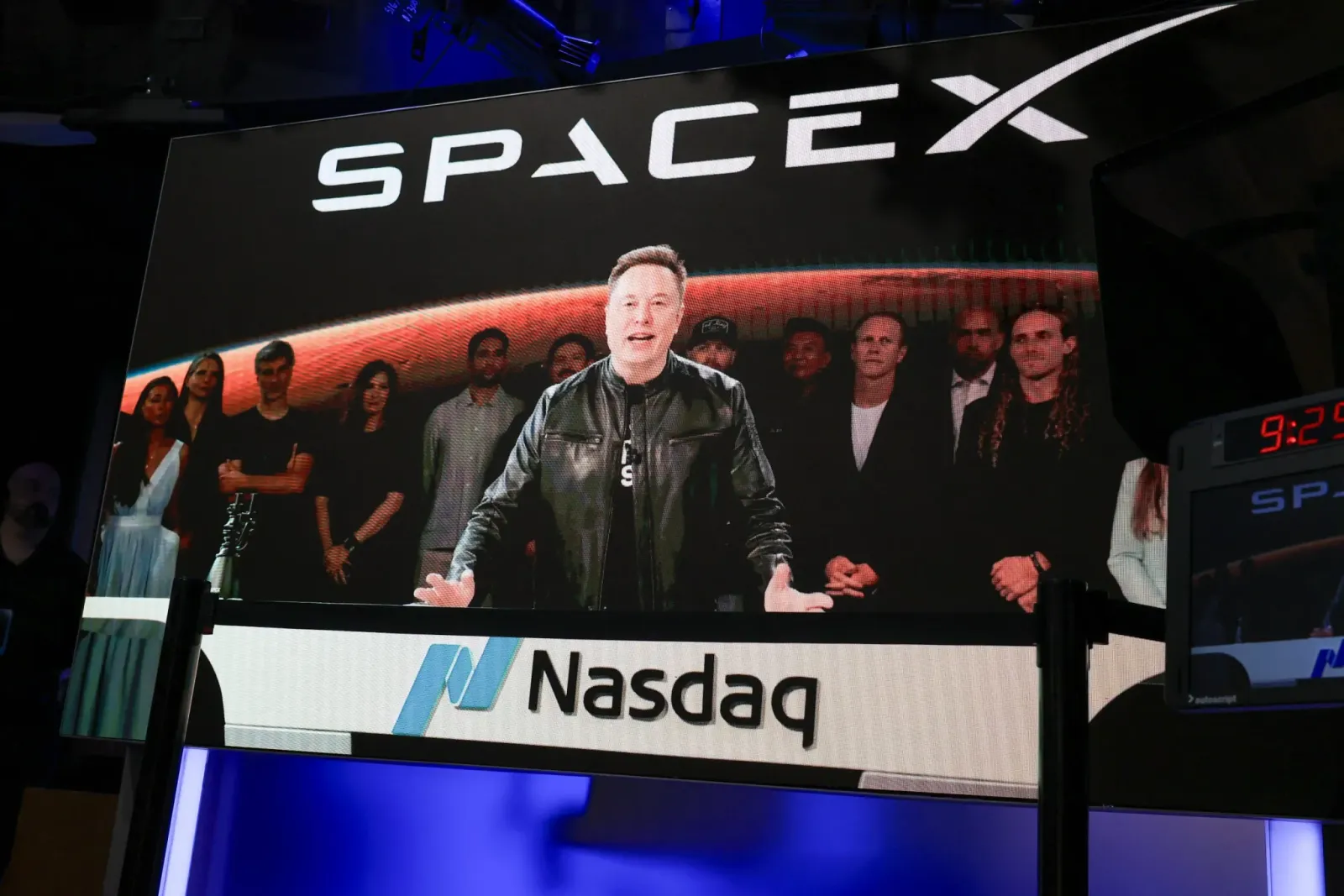
SpaceX stock closes at $161.11 after $2.1T debut valuation shatters expectations
The IPO priced at $135, surged on Nasdaq and Texas, and immediately rewired how executives think about mega-debuts.

SpaceX IPO priced June 12 at $135: Elon Musk crosses $1T as funds pick up the tab
The SpaceX IPO values the company around $1.77T and estimates Musk’s stake at $866.5B, with broad investor ripple effects.