
Baywatch's Erika Eleniak Says OnlyFans at 56 Stopped Her Eviction
The 1989 to 1992 lifeguard says dried-up roles left her facing eviction until a direct-to-fan subscription account put her back in control of her own income.
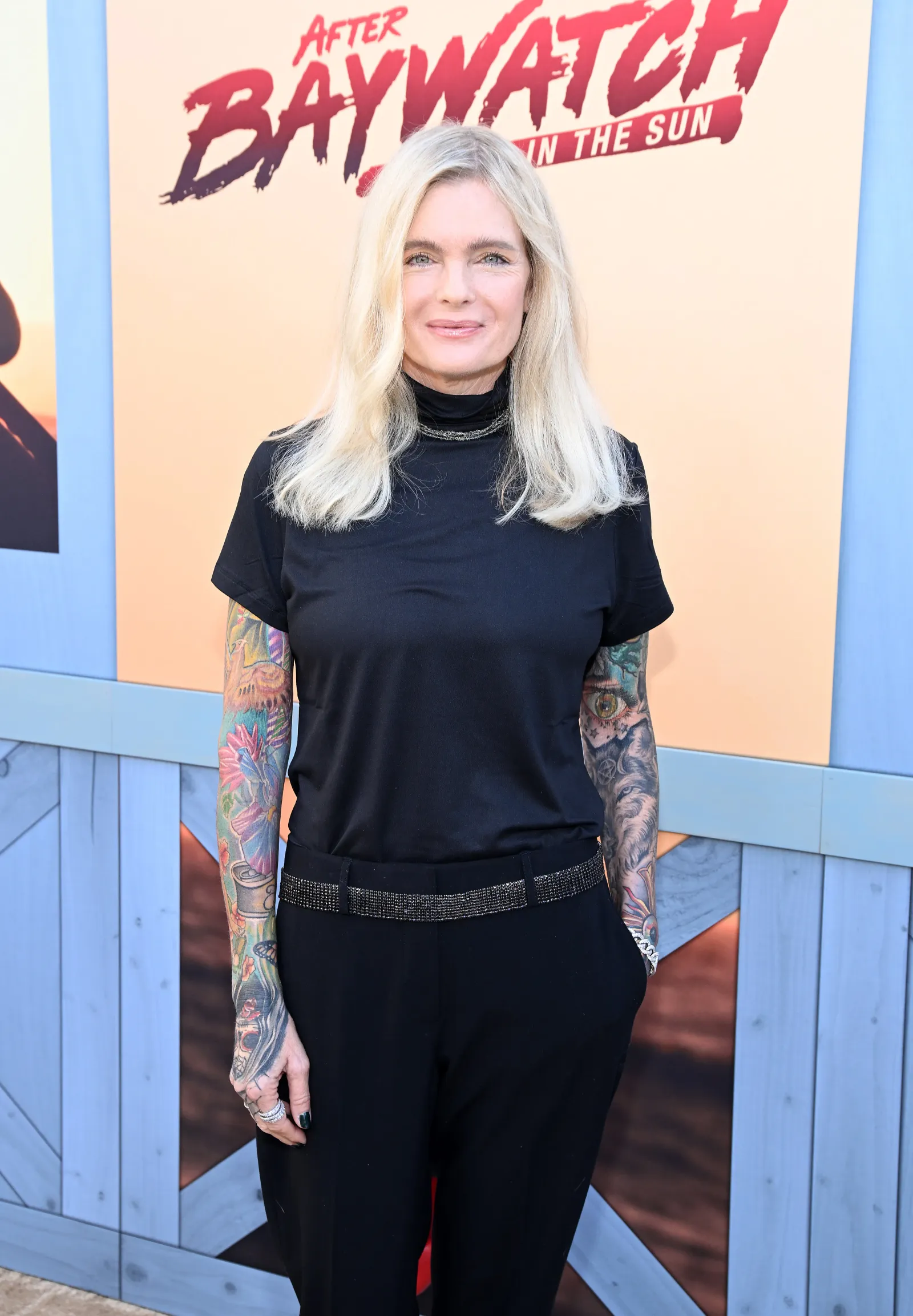
Erika Eleniak, who played Baywatch lifeguard Shauni McClain from 1989 to 1992, said on Rachel Uchitel's "Miss Understood" podcast that launching an OnlyFans account at 56 saved her from "financial stress" and eviction after career opportunities "sort of dried up." The admission is a live case study in how direct-to-fan monetization is rewriting leverage between talent and the gatekeepers who have historically controlled their income.
Erika Eleniak, who played "Baywatch" lifeguard Shauni McClain from 1989 to 1992, says an OnlyFans account she launched at 56 rescued her from "financial stress" and from being evicted. On Rachel Uchitel's "Miss Understood" podcast, the actress described a "really difficult struggle" as career opportunities "sort of dried up," and said the subscription income changed her finances. Her verdict on the pivot: it "feels really good to be in control." That is the entire story compressed into five words. A performer who spent her early twenties as one of the most recognizable faces on television, and her mid-fifties staring down a rent notice, found a revenue line that no network, no agent, and no casting director gets to switch off.
The phrase "dried up" is doing a lot of work. Acting careers, even successful ones, are typically a stack of short contracts rather than a salary. A hit show makes a name; it does not usually make a pension. Residuals from a series that aired in the early 1990s are historically modest, and they thin out as a title ages out of syndication cycles. Meanwhile the roles written for women in their fifties are fewer and narrower than those written for men of the same age, a gap the industry has acknowledged for years without closing it. Eleniak's description of a "really difficult struggle" is not a one-off anecdote. It is the standard shape of a career in a business that pays in visibility and bills in cash.
OnlyFans runs on a different model. Fans pay a creator directly, usually through a recurring subscription, and the platform takes a percentage of that spend. There is no pilot, no greenlight, no network note, and no age bracket on a casting breakdown. For a performer with an existing fan base, that is a rare combination: an audience that already knows the name, plus a payment rail that does not require anyone's permission. Eleniak started at 56, an age at which traditional Hollywood casting has typically stopped calling. The platform did not care.
The word she keeps returning to is control. That is the real product. A subscription business gives a creator something a studio contract never does: the customer list. You can see who pays, speak to them directly, and adjust what you make. When a platform changes its algorithm or a studio cancels a show, the audience stays yours. For someone who spent decades being chosen, the shift from being picked to being paid is not only financial. It is structural, and it is the part of this story that travels far beyond one actress.
The stigma is moving too. OnlyFans was once a career risk that publicists worked to bury. It is increasingly treated as one more line in a creator's revenue mix, alongside brand deals, live appearances, and merchandise. That normalization matters, because it changes the calculation for everyone standing behind the creator. Agents, managers, and business managers who once would have talked a client out of it now have to model it, price it, and defend it to the same brands that would have walked away a few years ago.
The second-order effects run further than one career. Every former star with a recognizable name and a thin bank account is now running the same math. The creator economy has spent a decade building infrastructure that lets a single person monetize a fan base without a studio, a label, or a publisher. What is new is who is using it. This is no longer a story about influencers. It is a story about the middle and upper middle of the entertainment labor market finding a second act that actually pays, and doing it without asking permission from the people who used to decide whether they worked.
For executives, the lesson is about where leverage now sits. Media companies have historically captured value by owning distribution and controlling access to audiences. Direct-to-fan platforms invert that. They hand the relationship to the individual, and the individual keeps it. Any business whose model depends on talent needing a gatekeeper should assume that assumption is decaying. The same logic applies to brand partnerships: a creator with a direct paying audience has pricing power that a famous name alone does not.
There is a harder edge here as well. Platform income is concentrated risk. A creator who builds on one company's rails is exposed to that company's policy changes, its payment processors, and public mood. Eleniak's story is a win, and it is also a reminder that the safety net she found is rented, not owned. The durable version of what she built is a direct relationship with fans that survives whichever app comes next. That is the part worth copying, and the part most people will miss.
This story's Key Insights and Take-aways are locked.
Create a free account to unlock Executive Actions for one credit.
Register to UnlockAlways free for Executives Club members. Join the Club
More in Entertainment

GTA 6 banks $3.8bn in one day, torching every launch record
One game just out-earned every video game launch and every single-day film box office haul in history, and the fallout lands on every media CEO's forecast.

GTA VI Racked Up $3.79 Billion in a Single Day, Topping Every Film Ever
A 13-year wait produced a $3.79 billion day, more than any movie has made in its entire run, and it resets the launch math for every studio, streamer, and brand chasing the same attention.

GTA 6 sells 32.5M pre-sales and $3.79B day one, torches 13-year record
Rockstar's sequel didn't just beat Grand Theft Auto V's 13-year-old benchmark; it reset what a launch can be, with 32.5 million pre-sale copies and $3.79 billion in a single day.