
Bezos Earth Fund bets $100M on the Amazon with $7B left to give
Fifteen grants, AI satellites, and Indigenous-led fire patrols are the fund's answer to a 47% tipping-point risk, and to a $10 billion pledge with four years left on the clock.
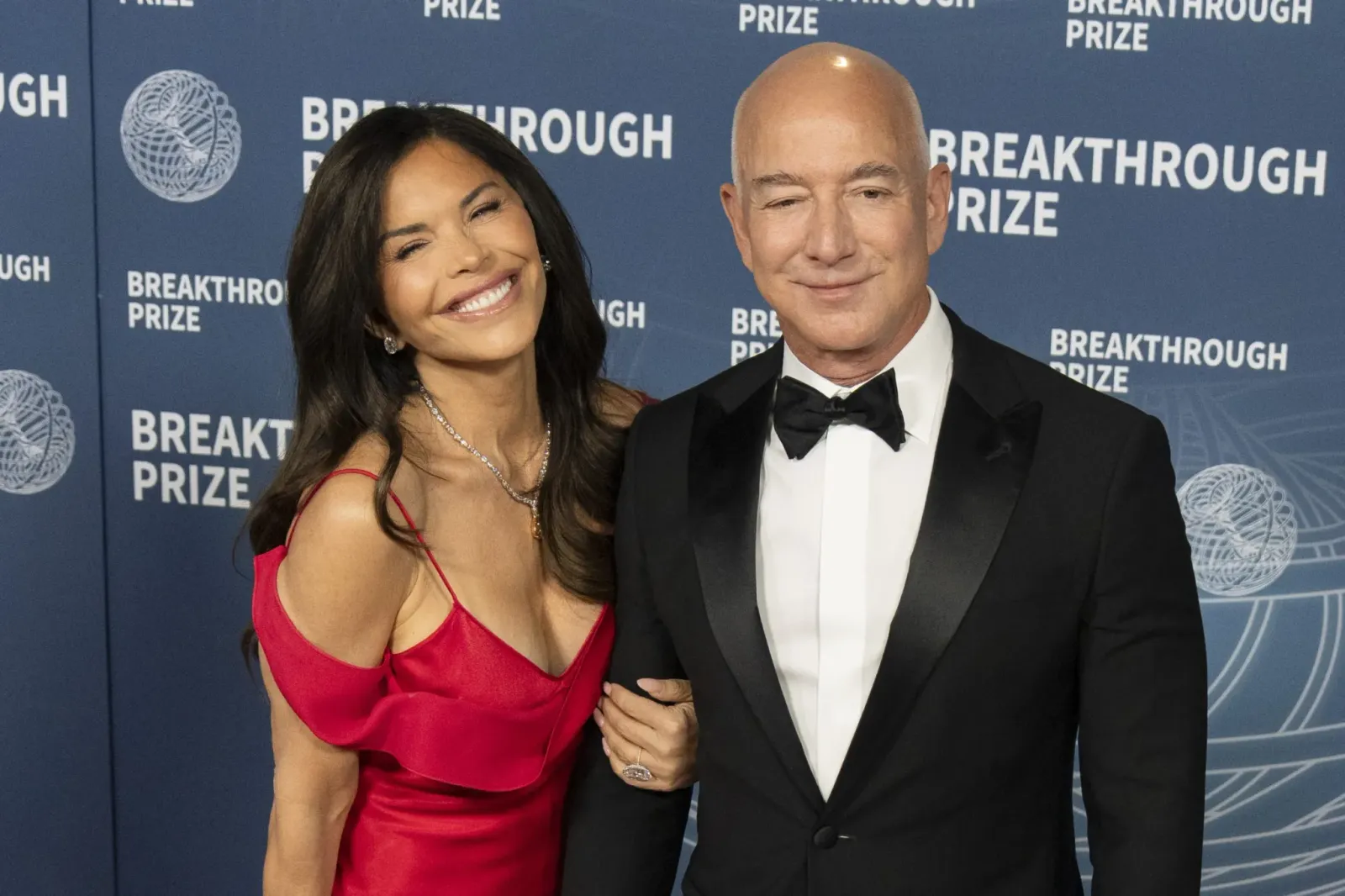
The Bezos Earth Fund, the philanthropy Jeff Bezos launched in 2020 with Lauren Sánchez Bezos as vice chair, is committing more than $100 million across 15 grants to protect the Amazon rainforest, the organization told Fortune exclusively. The check lands with roughly $7 billion of Bezos' $10 billion, 10-year climate pledge still unspent and about four years left, making spend velocity and measurable outcomes the real test for the fund and its peers.
The Bezos Earth Fund is putting more than $100 million into protecting the Amazon rainforest, the philanthropy told Fortune exclusively, one of the larger checks it has written as it races a deadline Jeff Bezos set for himself. The money moves through 15 new grants across South America for forest and Indigenous land protection, restoration, and real-time monitoring. "We were drawn to the region because the Amazon rainforest is one of the most important areas for biodiversity and crucial in the global fight against climate change," said Cristián Samper, managing director and leader for nature solutions at the Bezos Earth Fund. "It is also one of the most extraordinary ecosystems, home to millions of people and species that increasingly face threats from deforestation, fire and other pressures."
Here is the number that makes this check interesting. As of late September, the fund had granted about $2.4 billion against Bezos' $10 billion, 10-year pledge made when he launched it in 2020. That leaves roughly $7 billion to deploy in about four years. Run the arithmetic and the annual spend rate has to climb sharply from the pace of the first five years. The Amazon package is what that pressure looks like on the ground: a larger check, a wider grantee list, and a portfolio tilting toward work that can be measured from orbit.
The $100 million splits into distinct bets. The largest share, $46 million, goes toward protecting forests and Indigenous lands, with grantees including FUNBIO, the International Conservation Fund of Canada, the Kayapó Indigenous Alliance, and the Amazon Conservation Team. More than $15 million targets deforestation and fires, with Leonardo DiCaprio's Re:wild among the grantees. Another $19 million funds monitoring of the rainforest, through the Andes Amazon Fund and Spatial Informatics Group's Natural Assets Laboratory. And a $2 million grant to the International Institute for Sustainability will set up two test sites spanning 12,000 acres to trial restoration methods.
Samper is direct about why Indigenous-led conservation gets the biggest slice. "It's central to the commitment because it's central to success," he said. "Indigenous communities are the best positioned to protect the rainforest because it's their home - they are guardians, on the ground every day, monitoring their land, identifying and responding when problems arise." Roughly 400 Indigenous peoples, more than 2 million people in all, live across the Amazon Basin, according to the fund, and it argues some of the best-protected forests in the region are the ones those communities manage. The track record it cites: since 2021, about $150 million granted for Amazon conservation, working with more than 40 organizations in five South American countries, supporting 16 million acres of new conservation areas and securing 14 million acres of legally recognized Indigenous territories, plus improved management across 450 million acres of existing protected areas and Indigenous lands.
The monitoring money is where the fund's technology thesis lives. It backed this year's launch of FireSat, three satellites that monitor wildfires worldwide, including in the Amazon Basin. Three of the new grants will build tools to track species and ecological change far more cheaply than current methods. One is Amazon.ia, a network of observatories that combines DNA traces from water and soil with sound recorders, AI-powered cameras, and high-resolution satellite imagery. Samper said fires are one of the main drivers of deforestation and that "catching fires early makes a huge difference toward limiting the damage they cause, which is why we've awarded more funding to accelerate that work." The fund says it will track progress through grantee reports and independent satellite analysis, looking at whether forests stay standing, deforestation falls, degraded areas recover, and protected lands are well managed.
The science explains the urgency. About 17% of the Amazon's forests have been lost and roughly as much has been degraded, according to the World Wildlife Fund. The rainforest is the world's biggest tropical rainforest, spanning nine countries, per a 2025 report by Climate Focus and the WWF. A 2024 study in Nature estimated that by 2050, as much as 47% of the Amazon's forests could face stresses that risk pushing them past a tipping point. The fund's stated targets: protect 37 million more acres, build stronger systems to manage 285 million more acres, cut annual deforestation by about 220,000 acres by addressing fires and cattle land management, and use AI and satellites to see changes as they happen. It identifies cattle ranching and fire as the two leading causes of forest loss in the Amazon, often linked when land is cleared and burned for pasture.
The timing is notable. The commitment lands days after Bezos gave away 771,492 Amazon shares to nonprofits, worth roughly $200 million, SEC filings show. A separate filing showed the Bezos Earth Fund Foundation received 97,404 of those shares. That is the funding model in miniature: philanthropy capitalized by stock in the company he founded, with the giving clock running alongside it. The fund has been busy elsewhere too, with more than $25 million for ocean protection in the Pacific, $100 million as a founding member of the Species Recovery Alliance, and $34 million toward developing new clothing materials in an effort led by Lauren Sánchez Bezos, the fund's vice chair since its early days.
For executives watching, the Amazon package is a template for how large philanthropies are shifting from writing checks to building infrastructure: satellite fire detection, DNA-based biodiversity monitoring, and locally run patrols that produce auditable results. Samper frames it as one piece of a larger system. "Avoiding a tipping point will take sustained action from many different actors, so we don't view any one funding package as the solution on its own," he said. The harder question is the one the calendar asks. With roughly $7 billion left and about four years to move it, the Bezos Earth Fund's next few years will say as much about how modern mega-philanthropy operates as about the forest itself.
This story's Key Insights and Take-aways are locked.
Create a free account to unlock Executive Actions for one credit.
Register to UnlockAlways free for Executives Club members. Join the Club
More in Science

Anthropic's I.P.O. Made Rank-and-File Researchers Worth Tens of Millions
Researchers who joined just a few years ago are now worth tens of millions, and the windfall resets the pay benchmark for every private A.I. lab still paying in paper.

Sea Lion Culling Strategy Fails: New Model Says Killing Them Won't Save Salmon
The latest research from AAAS overturn a long-held conservation assumption, forcing policymakers to rethink critical resource allocation in marine ecosystems.

Microplastics do more than pile up: they react with water to damage cells
Scientists have found that plastic particles can generate highly reactive molecules in water, a mechanism that could explain links to heart attacks, strokes, and neurological disorders.