
Brad Pitt's Cliff Booth Returns, and the Sequel Plays Like Tarantino TV
Variety's review says Brad Pitt's Cliff Booth follow-up delivers a 'shaggy' star-vehicle high; the more telling detail is why it 'feels like QT TV.'
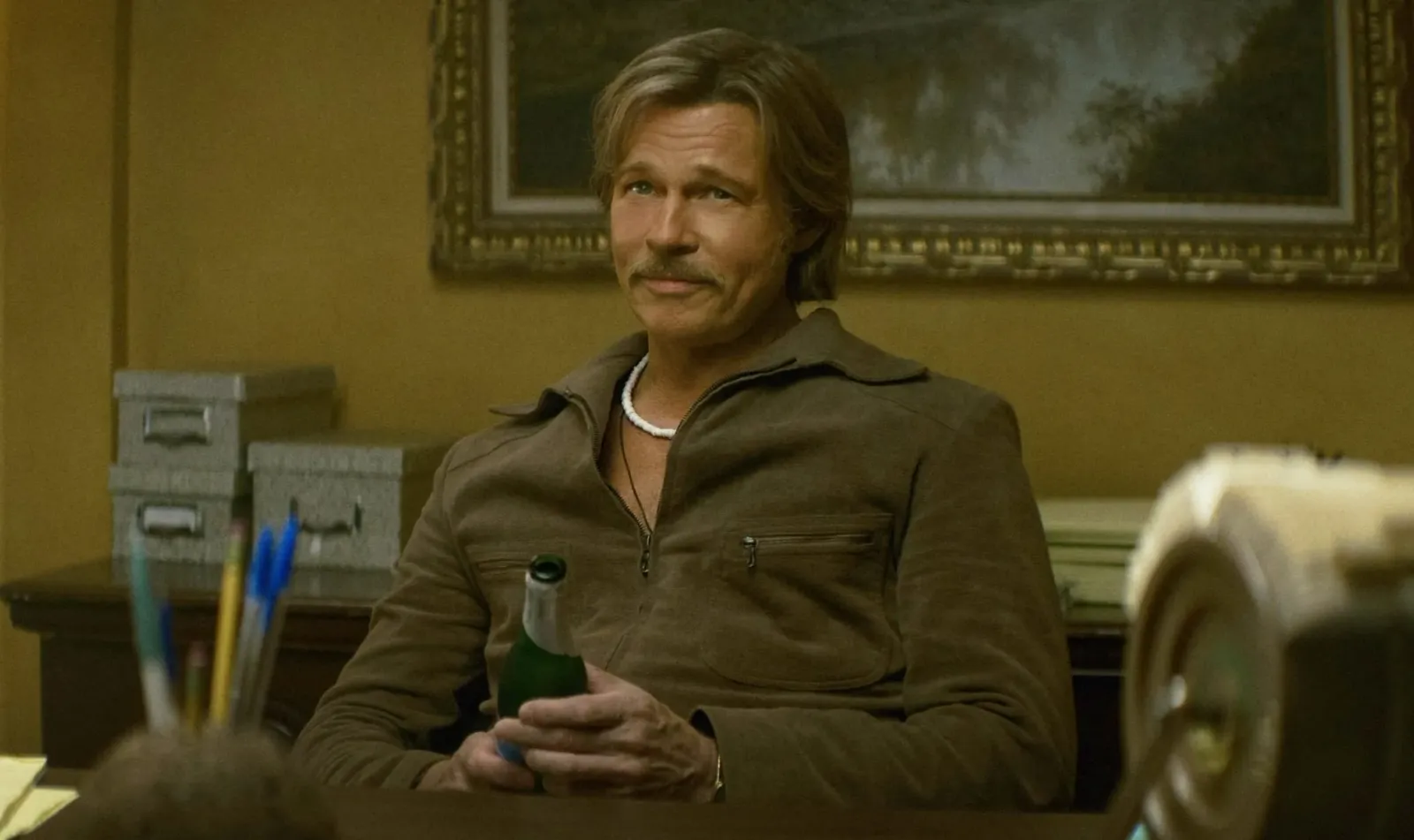
Brad Pitt returns as Cliff Booth in 'The Further Mis-Adventures of Cliff Booth,' the sequel to 'Once Upon a Time in Hollywood' that Variety's review praises as a 'very fun' Tarantino hangout movie in which Pitt hits the 'aura jackpot.' For decision-makers, the review's 'feels like QT TV' framing is the signal: star-led, texture-first IP is the asset that survives format shifts, but only for as long as the star's deal holds.
Brad Pitt's Cliff Booth is back, and Variety says the return lands. The trade's review calls "The Further Mis-Adventures of Cliff Booth" a sequel to "Once Upon a Time in Hollywood" and describes it as "a very fun Tarantino hangout movie that feels like QT TV," with Pitt hitting what the headline calls the "aura jackpot." The critic goes in skeptical and comes out sold: "I'm not sure what I was expecting from a sequel to 'Once Upon a Time in Hollywood,'" the review reads, "but I dug just about every ambling, low-down minute of this one." That single line is the whole business story in miniature. A legacy character, a movie star who is also the brand, and a reviewer who expected to shrug and instead got a "highly pleasurable, shaggy heat-of-the-moment buzz."
The most revealing phrase in the review is not "fun." It is "QT TV." That is a compliment, but it is also a diagnosis. The review's own vocabulary, "shaggy," "ambling," "low-down," "hangout," describes texture rather than plot. A hangout movie, in the industry's usage, is one that trades narrative machinery for the pleasure of a character's company. That is precisely the shape of prestige television, and precisely the habit streamers have spent a decade training audiences to binge. When a sequel to a major film gets described as feeling like television, the wall between the two formats has moved again. The review does not say how the film will be distributed. It does not have to. The language already tells you which direction the business is traveling.
For context on why this sequel exists at all: character-first IP is typically the most efficient asset a studio can hold. A title and a face carry marketing that no campaign can buy, and sequels to star-driven originals are historically the cheapest awareness in Hollywood, because the audience for the first film is already priced in before a single trailer drops. Cliff Booth is an unusually clean version of that asset. He is not a superhero and not a toy, so he arrives without the licensing overhead or the fan-service obligations that usually come bundled with franchise machinery. He is a performance, and the performance belongs to one actor.
Which is also the risk. IP anchored to a single performer is only as durable as that performer's availability, interest, and price. Character franchises that outlive their casts, from comic books to spy series to animated libraries, keep paying for decades because the asset is separable from any one deal. A star-led character is not. Every sequel renegotiates the value of the human being at the center, and that leverage compounds with each installment. Brad Pitt is the reason this movie exists and the reason its economics look like a negotiation rather than a spreadsheet. Boards that treat star-anchored IP as a permanent asset are usually wrong about the word "permanent."
The review also lands in a market where critical consensus matters less to star vehicles than it once did. Star-driven films are typically critic-resistant: audiences buy the face, not the score, so a warm notice is upside rather than oxygen. The more useful signal here is tonal. The critic's pleasure comes from looseness, from a movie that does not strain to justify itself. That appetite is real, and event-scale slates rarely feed it. For executives allocating development dollars, the lesson is not "make hangout movies." It is that the demand the review describes, for star-led, adult-skewing, texture-first film, is genuine and chronically under-supplied.
Second-order effects run straight through the talent business. If a character can travel, the value accrues to whoever controls the underlying rights, not only to the actor. That is why agencies push for franchise participation, why stars increasingly trade upfront fees for back-end, and why universe thinking spreads even to films that were never designed as franchises. It also explains why "feels like QT TV" is strategically interesting rather than merely cute. If a film's texture is already televisual, the same asset can extend into a series, a limited run, or a format that survives the star's schedule. The review is describing a movie. The industry will read it as an option.
The stakes for peers are straightforward. Studios and streamers are competing for a shrinking pool of performers who can open something on name alone, and the price of that scarcity rises with every favorable review. Each warm notice of a star-led sequel lifts the floor on the next negotiation, the next option, the next rights package. The counterweight is format flexibility: the more a story can live as a film or as a series, the less any single deal can hold it hostage. "The Further Mis-Adventures of Cliff Booth" is a fun review. It is also a data point about where leverage sits in the content economy, and who has to pay for it.
This story's Key Insights and Take-aways are locked.
Create a free account to unlock Executive Actions for one credit.
Register to UnlockAlways free for Executives Club members. Join the Club
More in Entertainment

GTA 6 banks $3.8bn in one day, torching every launch record
One game just out-earned every video game launch and every single-day film box office haul in history, and the fallout lands on every media CEO's forecast.

GTA VI Racked Up $3.79 Billion in a Single Day, Topping Every Film Ever
A 13-year wait produced a $3.79 billion day, more than any movie has made in its entire run, and it resets the launch math for every studio, streamer, and brand chasing the same attention.

GTA 6 sells 32.5M pre-sales and $3.79B day one, torches 13-year record
Rockstar's sequel didn't just beat Grand Theft Auto V's 13-year-old benchmark; it reset what a launch can be, with 32.5 million pre-sale copies and $3.79 billion in a single day.