

Burnham rejects Welsh devolution plea: 'not persuaded'
The PM's letter to the Welsh First Minister closes the door on further powers and leaves Cardiff Bay's fiscal ambitions without a Westminster sponsor.
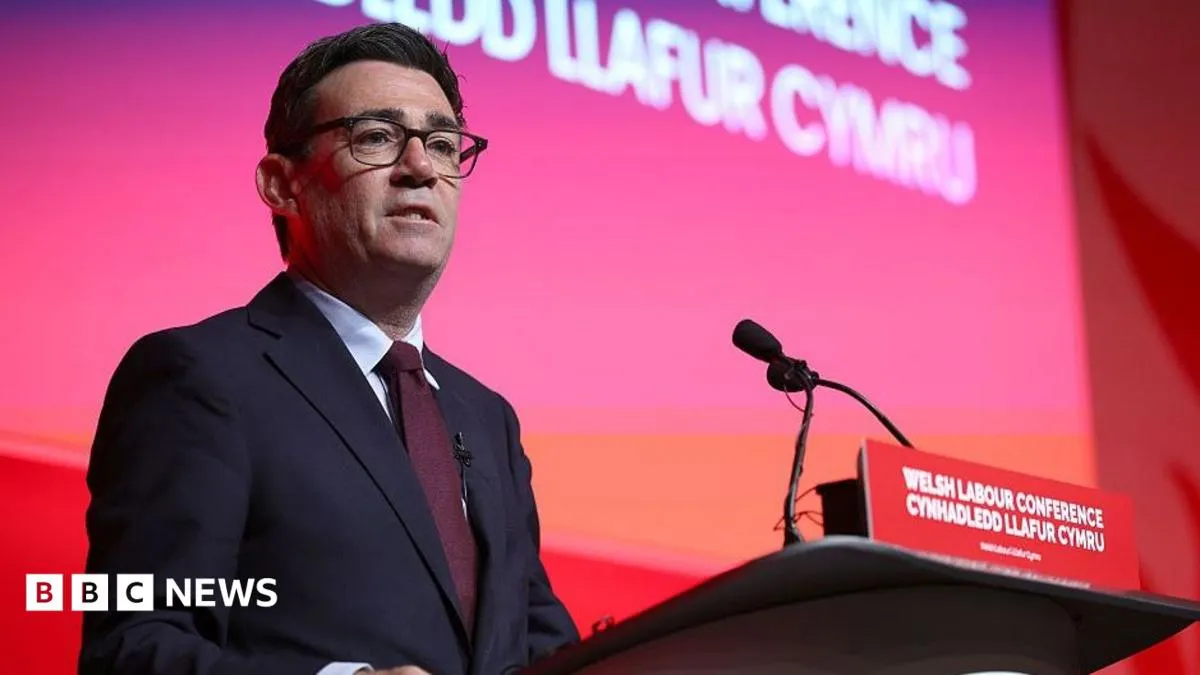
UK prime minister Burnham has written to the Welsh First Minister rejecting calls to devolve further powers, saying he is "not persuaded" by the argument that devolution would benefit Wales. The refusal hardens the boundary between Westminster and Cardiff Bay, locking in a two-government approval stack for anyone with capital in Welsh energy, rail, or infrastructure.
Burnham has said no. In a letter to the Welsh First Minister, the prime minister rejected calls to hand further powers to Wales, saying he is "not persuaded" by the argument that devolution would benefit the country. That single phrase does a lot of work. It is not a polite deferral, not a "we'll look at it", and not a promise to revisit the question after the next spending review. It is a written, on-the-record refusal from the head of the UK government to the head of Wales's devolved administration, and written refusals are far harder to walk back than a shrug in a corridor.
The mechanics matter as much as the message. A prime minister who wanted to keep the door open would have taken a phone call and left no paper. Sending a letter to the Welsh First Minister creates a document that civil servants will cite in briefings, that opposition parties will read out, and that sets the baseline for every future negotiation between London and Cardiff Bay. It also travels. Scotland and Northern Ireland both watch what Westminster concedes to Wales, because the devolution settlements have historically moved in loose parallel rather than in isolation.
For context, Welsh devolution has always advanced in slices rather than in one leap. Voters backed a Welsh assembly in 1997 by a razor-thin margin, and the institution that followed started with secondary powers before gaining primary lawmaking authority. The 2017 Wales Act moved the settlement to a reserved powers model, under which Cardiff Bay can legislate on anything not explicitly held back by Westminster. Tax powers arrived in stages: land transaction tax and landfill disposals tax replaced UK-wide equivalents, and Welsh rates of income tax were partially devolved, though the Welsh Government has so far chosen not to vary them. The pattern for three decades has been incremental, negotiated, and rarely generous.
That is why the current ask list matters. The powers Wales has typically sought next are the ones closest to domestic policy: policing and justice, the Crown Estate's Welsh assets, elements of rail infrastructure, and wider fiscal levers to match the responsibilities Cardiff Bay already carries. Each has a Westminster counter-argument. Justice is said to need UK-wide coherence. The Crown Estate is said to need a single balance sheet. Rail is said to be a network, not a region. None of those arguments is new, and none is unreasonable on its face. But stacked together they amount to a standing answer of no, which is precisely what the letter delivers.
There is a fiscal subtext that rarely makes headlines but shapes everything else. Wales's day-to-day funding flows largely through the Barnett formula, a population-based mechanism that adjusts the block grant rather than matching need. Devolution without money is an unfunded mandate, and successive Welsh governments have argued that the gap between what they are responsible for and what they can raise is the real constraint. Refusing further powers while leaving the funding formula untouched keeps that tension exactly where it is: Cardiff Bay owns delivery of services, Westminster owns the money. For any executive trying to read the political weather, that split is the thing to track, not the headline.
For business, the practical question is which layer of government owns the decision you need. Energy developers looking at Welsh waters care intensely whether the Crown Estate's Welsh assets are managed in London or Cardiff. Infrastructure investors care whether rail enhancement is specified by UK-wide rail bodies or by a devolved government with its own priorities. Companies weighing a Welsh base care about planning, skills, and business rates, all of which are already devolved. A hard stop on further devolution does not freeze the status quo; it locks in a two-government operating model that every regulated business in Wales already has to navigate.
The wider signal is about how this UK government intends to handle the union. Devolution is not a one-off constitutional event; it is an ongoing negotiation over where power sits, and every refusal becomes a data point for the next round. A prime minister who says he is not persuaded today is also telling Edinburgh and Belfast how he is likely to respond to their asks. That is the second-order consequence worth pricing in: the letter is addressed to one first minister and read by three.
For leaders with UK exposure, the takeaway is unglamorous but useful. Political and regulatory risk in the UK is increasingly vertical, meaning the same project can need sign-off from a devolved administration, a UK department, and a regulator that answer to different political masters. Mapping that stack, and knowing which minister actually holds the pen, is now part of doing business here. The letter to the Welsh First Minister did not change any law. It changed the odds on the next set of changes, and that is usually enough to move a decision.
This story's Key Insights and Take-aways are locked.
Create a free account to unlock Executive Actions for one credit.
Register to UnlockAlways free for Executives Club members. Join the Club
More in Politics

Egypt's foreign minister: Hamas must hand over weapons for Gaza phase two
Badr Abdelatty tells Asharq Al-Awsat that Cairo is pressing Palestinian factions to implement weapons understandings, and that phase two of Trump's Gaza plan hinges on every party, Israel included, meeting its commitments.

Emilija Morrison escaped Neet life. Her new job is just as precarious
A Glasgow graduate with an NCTJ diploma welcomes the government's youth jobs plans, but warns that a paycheque without security is not an exit from Neet life.
Ministers lift gagging clauses at UK data watchdog ahead of culture probe
Staff at the Information Commission can now describe their workplace without contractual silence, and ministers are due to publish the review's terms next week.