

Egypt's foreign minister: Hamas must hand over weapons for Gaza phase two
Badr Abdelatty tells Asharq Al-Awsat that Cairo is pressing Palestinian factions to implement weapons understandings, and that phase two of Trump's Gaza plan hinges on every party, Israel included, meeting its commitments.
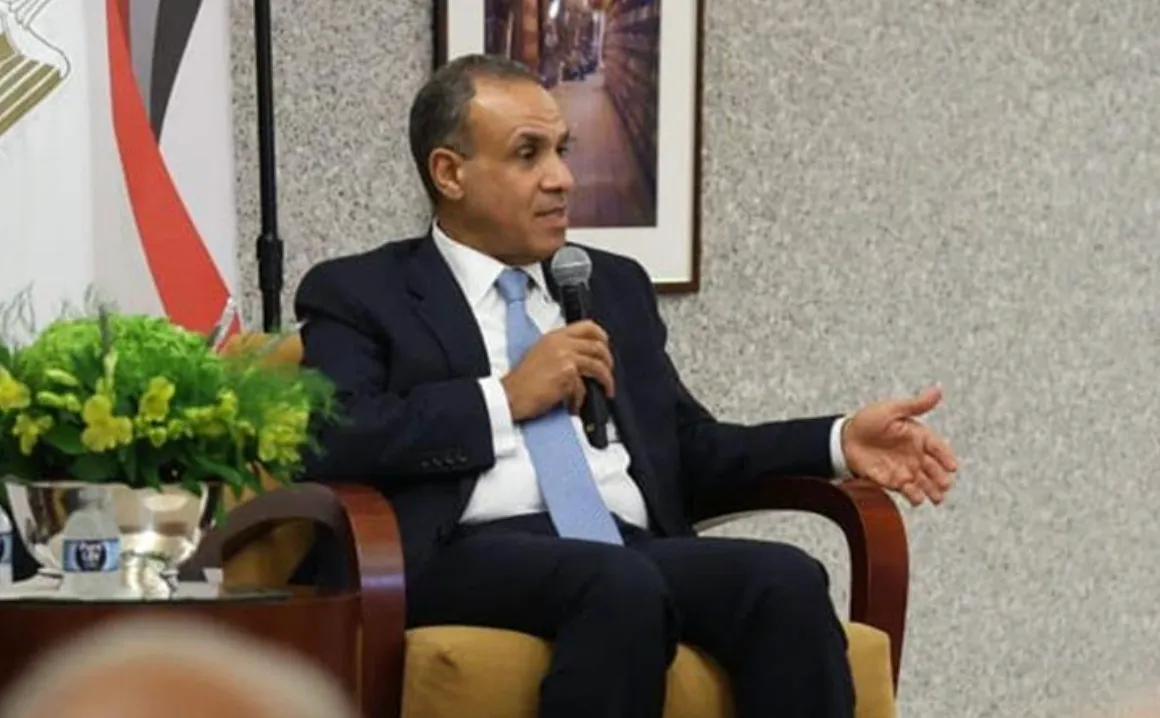
Egyptian Foreign Minister Dr. Badr Abdelatty said in exclusive remarks to Asharq Al-Awsat that Cairo is pushing Palestinian factions, foremost among them Hamas, to implement understandings on confining and handing over weapons. He tied the transition to the second phase of President Trump's plan to end the war in Gaza to all parties honoring their commitments, chiefly completing the Israeli withdrawal and ensuring the flow of supplies the plan requires.
Egypt's foreign minister, Dr. Badr Abdelatty, is not waiting for the next round of talks to set the terms. In exclusive statements to Asharq Al-Awsat, he said Cairo is pressing ahead with efforts to push Palestinian factions, foremost among them Hamas, toward implementing understandings on confining and handing over weapons. That is the hardest single item in any Gaza settlement, and Abdelatty has now put it on the record as the thing his government is actively working. He paired it with a blunt condition: transitioning to the second phase of US President Donald Trump's plan to end the war in Gaza requires all parties to honor their commitments.
The two commitments he singled out are the ones that decide whether phase two opens at all: completing the Israeli withdrawal and ensuring the flow of supplies the plan requires. Read that as a sequencing argument, not a status update. Egypt's position is that the transition is conditional on performance rather than a date on a calendar, and that the performance has to come from every party, not only from Hamas. That framing matters because it removes the option of a partial pass. If one side delivers and another does not, the phase does not open.
Why weapons are the hinge. Disarmament provisions are historically the last item implemented and the first item disputed in any ceasefire architecture. Confining weapons is a physical, verifiable act: stockpiles accounted for, storage secured, transfer routes closed. Handing them over is political, because it asks an armed faction to trade its leverage for a promise about what comes next. Egypt is one of the few actors with a working channel to both Hamas and the Israeli government, which is why Cairo typically ends up as the party that converts broad declarations into sequenced, checkable steps. Mediators trade in verification and guarantees. Abdelatty's statement is a signal that Cairo intends to be the broker of this transition, not a spectator to it.
Egypt's interest is not abstract. Gaza sits on Egypt's border, and instability there has historically spilled across it, from refugee pressure to weapons and militant activity in the Sinai Peninsula. Cairo has spent years fighting an insurgency in the north of that peninsula, and any arrangement that leaves loose weapons in Gaza is, from Egypt's vantage point, a domestic security problem with a foreign address. That is the unspoken logic behind the public demand: confining weapons is as much about Egypt's own border as it is about Israel's security.
Phase two is where the irreversible items live. Phased plans typically front-load steps that can be reversed if talks break, such as pauses in fighting, exchanges, and surges in relief. They back-load the steps that cannot be undone, including withdrawals, disarmament, and the question of who governs afterward. Abdelatty's framing is a warning that the reversible phase does not buy the irreversible one. Completing the Israeli withdrawal and keeping supplies flowing are the two conditions he named, and both are measurable. That is deliberate. Measurable conditions are harder to walk back than verbal commitments.
Follow the money, because it is parked. Reconstruction in Gaza would rank among the largest capital deployment exercises the region has seen in years, spanning construction, power, water, logistics, and finance. Gulf sovereign funds, regional contractors, and international lenders have the balance sheets for it. What they do not have is a way to underwrite a security vacuum. Lenders and investors typically require three things before capital moves into a post-conflict zone: a political umbrella that survives a change of government, a verified security arrangement, and a functioning authority able to sign contracts and enforce them. Phase two is the gate on all three. If it stalls, the money stays parked and timelines slip by quarters. If it opens, the first movers are the firms with government relationships and on-the-ground logistics, not the ones waiting for a press release.
What to watch. Three indicators will tell you whether Abdelatty's push is working. First, whether Hamas and the other factions actually implement the understandings on confining and handing over weapons, the item Cairo says it is pressing hardest. Second, whether the Israeli withdrawal is completed, since Abdelatty named it as a primary obligation. Third, whether the flow of supplies scales in a way that is visible and sustained rather than episodic. None of these resolve quickly. Compliance questions in this region are answered in months, not days, and every party has an incentive to claim the other side moved first. The practical read for anyone with exposure to the region is that Gaza's next phase is now a compliance story, and compliance stories reward patience and punish optimism.
This story's Key Insights and Take-aways are locked.
Create a free account to unlock Executive Actions for one credit.
Register to UnlockAlways free for Executives Club members. Join the Club
More in Politics

Emilija Morrison escaped Neet life. Her new job is just as precarious
A Glasgow graduate with an NCTJ diploma welcomes the government's youth jobs plans, but warns that a paycheque without security is not an exit from Neet life.
Ministers lift gagging clauses at UK data watchdog ahead of culture probe
Staff at the Information Commission can now describe their workplace without contractual silence, and ministers are due to publish the review's terms next week.

Mahmood Tackles a 'Two-Tier Policing' Myth She Doesn't Believe Exists
The home secretary chose the path of least resistance on a claim a Guardian columnist calls a rightwing myth, while the Met's own record on the Stephen Port murders asks the harder question.