

Mahmood Tackles a 'Two-Tier Policing' Myth She Doesn't Believe Exists
The home secretary chose the path of least resistance on a claim a Guardian columnist calls a rightwing myth, while the Met's own record on the Stephen Port murders asks the harder question.

Home secretary Shabana Mahmood is tackling 'two-tier policing,' a claim Guardian columnist Gaby Hinsliff frames as a rightwing myth that Mahmood does not believe exists, choosing what Hinsliff calls the path of least resistance. For leaders in any institution, the case is a live test of what happens when you engage a popular narrative you reject: you absorb the cost of validating it without capturing the benefit of correcting it.
Shabana Mahmood, the UK home secretary, is tackling 'two-tier policing.' Gaby Hinsliff's question in a Guardian column is the one that should follow her into every room: why is she tackling something she does not believe exists? Hinsliff's answer is unflattering. The home secretary, she writes, 'seems to have chosen the path of least resistance.' That is the whole story in one line. The claim that British policing runs a two-tier system is, in Hinsliff's framing, a rightwing myth. And yet the person with the most power to face it down has instead decided to act tough about it.
Strip the phrase back and 'two-tier policing' is an allegation that police apply different standards to different groups of people: that some complaints draw a fast, heavy response while others get shrugged off. It is a contested idea, and Hinsliff treats it as a myth rather than a diagnosis. But myths are not harmless. They set the terms of a debate, and they put a home secretary in a genuinely awkward spot. Act tough on the claim and you lend it credibility. Face it down and you risk looking like you are dismissing public concern. Hinsliff's charge is that Mahmood picked the easier of the two.
The reason that choice matters is the record Hinsliff sets beside it. Ten years ago this month, Stephen Port was convicted of the murders of four young gay men lured to their deaths via the dating app Grindr. It then took another five years for their families to learn through an inquest what some had long suspected: that the Metropolitan police's failure to link the murders quickly enough may have contributed to the later deaths. That finding raises a question the two-tier debate rarely asks out loud, Hinsliff notes: whether it would have happened if the victims were straight.
The year after that inquest, officers at Charing Cross station were caught WhatsApping each other rape jokes and insults like 'fuck you bender.' Not long afterwards, Louise Casey's review concluded that the force was both institutionally homophobic and misogynistic. Put those facts side by side and the politics of the phrase inverts. The loudest argument about two-tier policing is about whether the police are too soft on some groups. The documented failures in the Met's own recent history point in the opposite direction.
There is a structural reason home secretaries end up here. The job sits at the intersection of operational policing, which is formally independent, and political accountability, which is entirely theirs. When a narrative gains enough traction, the default institutional instinct is to be seen to respond. Historically, that has meant reviews, consultations, and language that acknowledges a concern without endorsing it. It is rarely a winning position. You absorb the cost of engagement without capturing the benefit of correction, and the framing stays with the people who built it.
The second-order costs land in places that never show up in a press release. For victims' families, a debate framed around whether police are too harsh on one group can crowd out the harder question of whether they were too slow for another. For forces, ambiguity from the top filters downward: officers get a signal about which complaints are politically live and which are not. And for the public, the asset at stake is legitimacy. Policing by consent depends on people believing the rules apply the same way to everyone, which is precisely the belief the two-tier claim attacks.
That is why Hinsliff's question is sharper than it looks. It is not really about whether Mahmood personally believes the claim. It is about what a leader does when a false narrative is popular. The path of least resistance is tempting because it defers the fight rather than losing it. But deferring a fight over the legitimacy of policing is not neutral. It hands the framing to the people who started it, and it makes the eventual correction harder and later. For any executive watching, the lesson generalises cleanly: when you engage with a claim you do not accept, you are not splitting the difference. You are choosing a side, and it is usually not yours.
This story's Key Insights and Take-aways are locked.
Create a free account to unlock Executive Actions for one credit.
Register to UnlockAlways free for Executives Club members. Join the Club
More in Politics
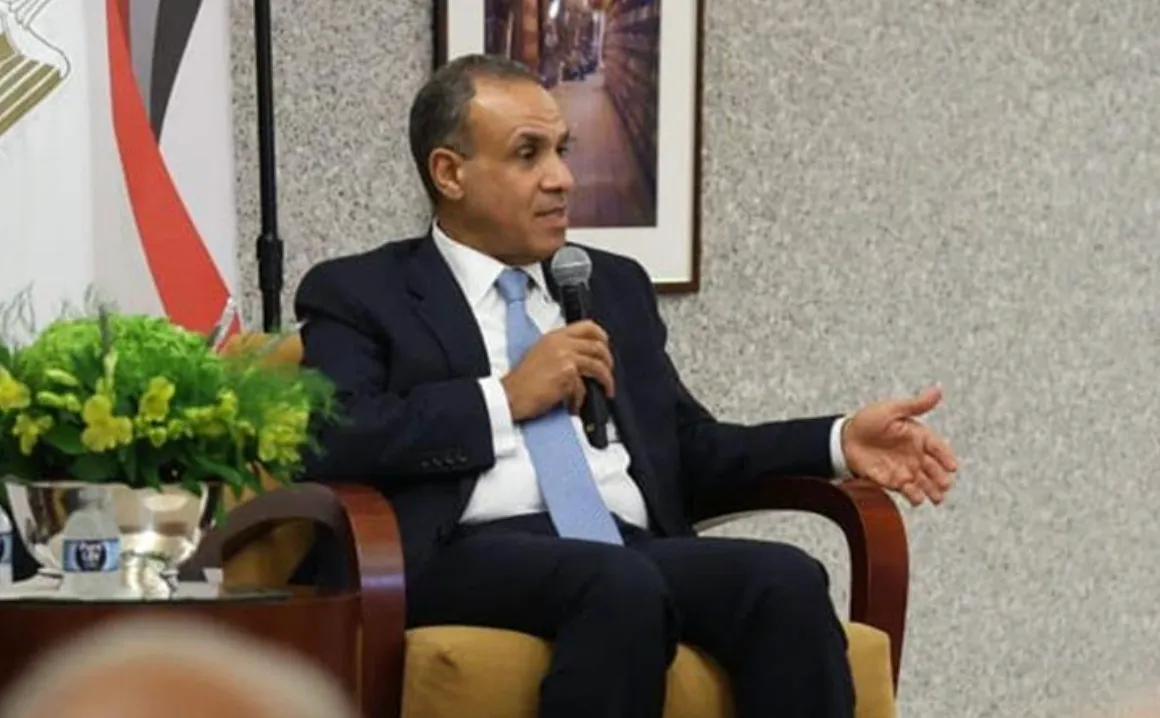
Egypt's foreign minister: Hamas must hand over weapons for Gaza phase two
Badr Abdelatty tells Asharq Al-Awsat that Cairo is pressing Palestinian factions to implement weapons understandings, and that phase two of Trump's Gaza plan hinges on every party, Israel included, meeting its commitments.

Emilija Morrison escaped Neet life. Her new job is just as precarious
A Glasgow graduate with an NCTJ diploma welcomes the government's youth jobs plans, but warns that a paycheque without security is not an exit from Neet life.
Ministers lift gagging clauses at UK data watchdog ahead of culture probe
Staff at the Information Commission can now describe their workplace without contractual silence, and ministers are due to publish the review's terms next week.