
C.T.E. Could Only Be Confirmed in Autopsies. A Protein May Change That
Two studies point to an unusual protein as the possible basis for a blood test that would diagnose the brain disease in living athletes, turning a posthumous verdict into a clinical one.
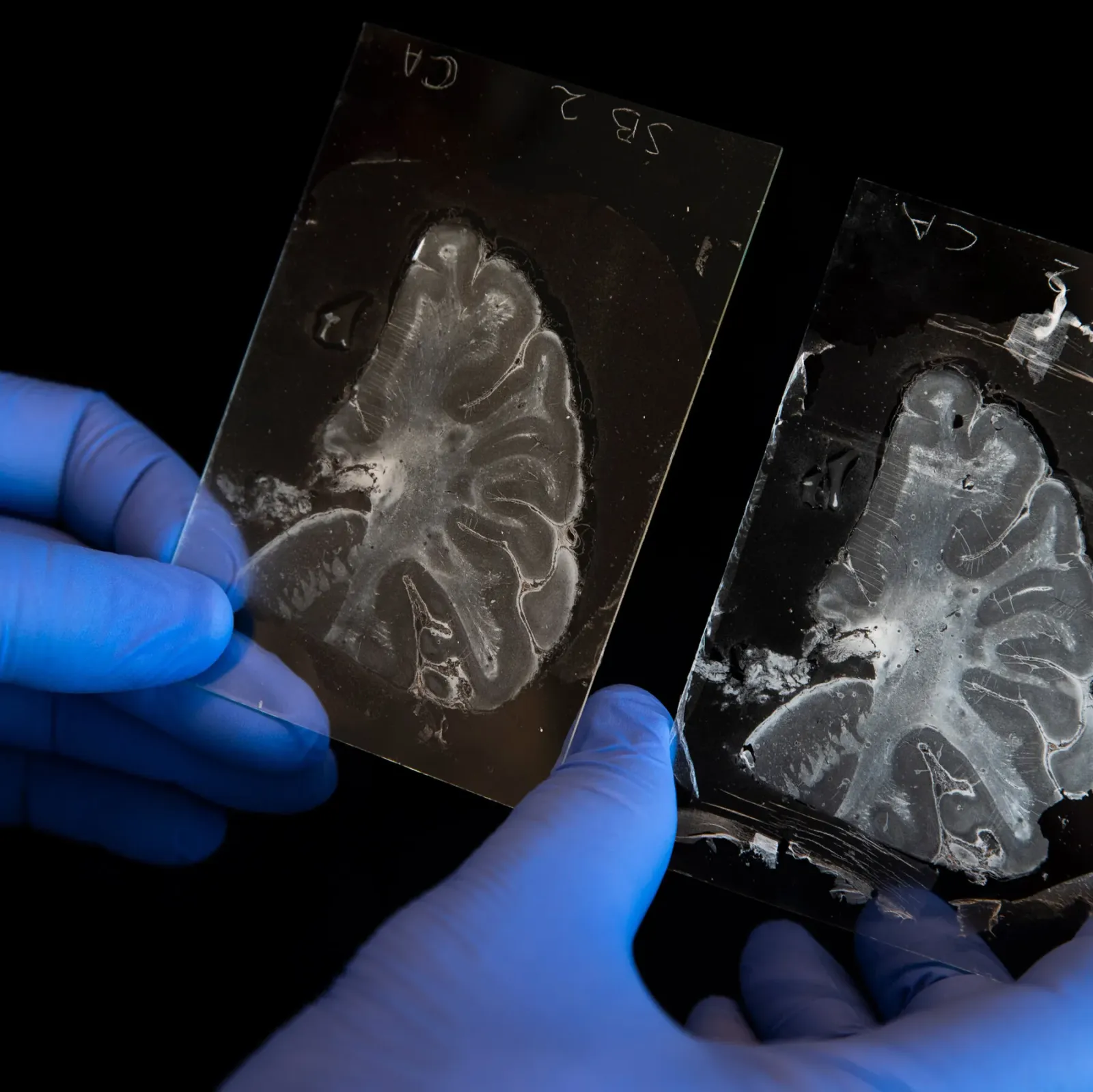
Two new studies, reported by The New York Times, suggest an unusual protein may open the door to a blood test that diagnoses C.T.E. in living patients rather than only in brain tissue after death. For leagues, teams, insurers, and the biotech companies chasing diagnostics, the shift would move a condition that has lived in litigation and donation registries into the clinic, where it becomes a test, a cost, and eventually a liability question.
C.T.E. has a diagnostic quirk that has shaped everything around it: you cannot confirm it in a living person. Chronic traumatic encephalopathy, the brain disease that disproportionately affects athletes in contact sports, is identified today by examining brain tissue, which means confirmation has historically arrived only after the patient has died. Two new studies, reported by The New York Times, suggest an unusual protein may change that, potentially paving the way for a blood test that detects the disease in living patients. The language matters: this is a path being paved, not a product being shipped. But the direction of travel is the story.
Start with why a blood test would be such a large unlock. Right now the question "does this person have C.T.E.?" is answered by a pathologist, not a physician. Families and researchers often learn the answer from a brain donation program months after a funeral. That gap has done two things. It has made the disease nearly impossible to study in real time, since researchers cannot watch it progress in a patient sitting in front of them. And it has pushed the entire conversation about repetitive head trauma into arenas where the evidence arrives late and the arguments get settled by lawyers rather than clinicians. A validated blood test would move the question from the morgue to the exam room, which is a fundamentally different institutional setting with a fundamentally different set of rules.
The mechanism under investigation is a protein, described in the reporting as unusual, that appears to be a usable signal of the disease. For context, C.T.E. is characterized by tangled deposits of a protein called tau in the brain, and the field has spent years chasing ways to detect that signature without cutting into tissue. What makes these studies notable is the specific target: a marker that could plausibly be read from something as routine as a blood draw. Researchers have long noted that the science of C.T.E. has been constrained by selection bias, because the brains that get studied come from people whose families chose to donate, often after symptoms were already severe. A living test would not just be more convenient. It would let researchers study people before symptoms, which is where every other degenerative brain disease got serious.
Sports is where the implications land first, and hardest. Contact sports are the reason C.T.E. is a public issue rather than a niche neuropathology curiosity, and a living diagnostic would change the bargaining position of everyone in that ecosystem. Athletes who currently have no way to know would have a test to request. Teams and leagues that currently argue about risk in the abstract would face a measurable, individual result. Insurers and underwriters, who price uncertainty, would suddenly have a variable to price. None of that happens on announcement of two studies, and the reporting is appropriately conditional, but the structural question is now visible: who gets tested, who pays for it, and who has to see the answer.
There is a genuine regulatory and commercial runway between a promising protein and a test a doctor can order. Diagnostics generally need analytical validation, then clinical validation in large and diverse cohorts, then whatever clearance the relevant regulator requires before marketing. That is years of work and real capital, typically funded by specialty diagnostics companies or larger lab operators rather than by the research groups that publish the first signal. The companies that move early on a C.T.E. marker would be buying optionality on a market with an unusually motivated customer base, and an unusually complicated one, since the buyers of a test for a disease with no cure are not obviously the patients themselves.
Which raises the second-order problem nobody has solved: what do you do with an answer? A disease-modifying treatment for C.T.E. does not exist, which means a positive result currently buys information and little else. That is the same dilemma that reshaped the conversation around Alzheimer's biomarkers, and it looms larger here because the population being tested skews young and the result could follow someone through a career, a contract, and an insurance application. Expect the ethics, the privacy questions, and the eligibility decisions to become the fight long before a test reaches a clinic. The science opens the door; policy decides who walks through.
For executives in sports, insurance, and life sciences, the practical read is to treat this as a leading indicator rather than a finished product. Watch for replication, cohort size, and whether the marker holds up in people who are asymptomatic, because that is the difference between a research tool and a screening test. The industry has been managing C.T.E. as a retrospective problem for two decades. The moment it becomes a prospective one, every contract, policy, and roster decision that touches head trauma gets a new input.
This story's Key Insights and Take-aways are locked.
Create a free account to unlock Executive Actions for one credit.
Register to UnlockAlways free for Executives Club members. Join the Club
More in Science

Anthropic's I.P.O. Made Rank-and-File Researchers Worth Tens of Millions
Researchers who joined just a few years ago are now worth tens of millions, and the windfall resets the pay benchmark for every private A.I. lab still paying in paper.

Sea Lion Culling Strategy Fails: New Model Says Killing Them Won't Save Salmon
The latest research from AAAS overturn a long-held conservation assumption, forcing policymakers to rethink critical resource allocation in marine ecosystems.

Microplastics do more than pile up: they react with water to damage cells
Scientists have found that plastic particles can generate highly reactive molecules in water, a mechanism that could explain links to heart attacks, strokes, and neurological disorders.