
California's ocean is already at record highs. El Niño is next.
Record-high water off California, El Niño, and king tides are stacking into a winter of severe coastal flooding, and the losses land on uninsured owners, local budgets, and coastal operators first.
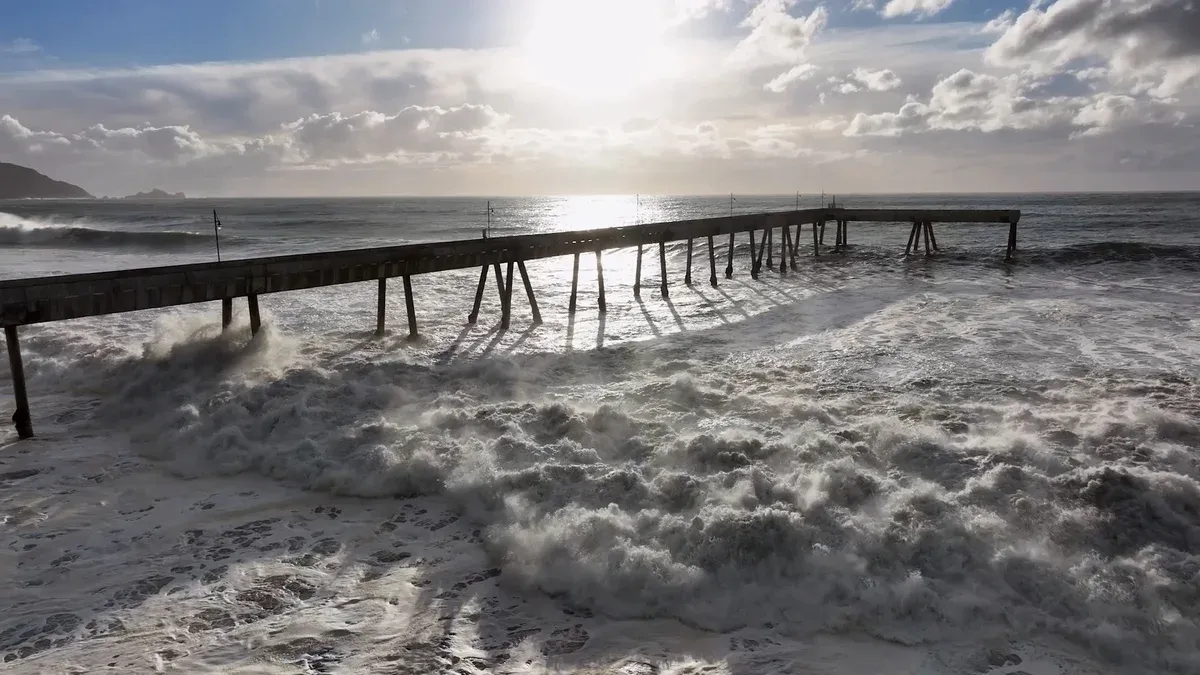
Ocean waters off California are already at record heights, and El Niño stacked on top of king tides is set to deliver a winter of severe coastal flooding, according to Scientific American. For decision-makers, the near-term exposure sits in uninsured coastal property, shoreline infrastructure, and the local budgets that absorb the first losses.
The setup is not subtle. Ocean waters off California are already at record heights, and the same forces driving that record are the ones set to drive this winter's damage: El Niño stacked on top of king tides, the highest astronomical tides of the year. The result, per Scientific American, is a winter of severe flooding along the California coast. A normal winter high tide is an inconvenience. This one arrives on a coastline that has already lost its margin for error.
Start with what each term actually means, because the combination is the story. King tides are not storms; they are the highest tides the calendar produces, when the gravitational pull of the sun and moon line up with the Earth's closest approach. They are predictable to the hour, and they typically cluster in the winter months. El Niño is the wildcard layered on top. During an El Niño, the Pacific typically shifts warm water eastward toward the Americas and suppresses the upwelling that normally keeps California's coastal water cold. The practical effect is a higher-than-normal sea surface sitting right off the coast, plus a storm track that historically delivers bigger swell and heavier rain to the state. So California is entering winter with the ocean already parked higher than it has ever been measured.
Flooding is a sum, not a single event. Take the baseline sea level, add the tide, add storm surge, add wave run-up, then add rainfall that cannot drain because the ocean is already sitting on top of the outfall. Every term in that equation needs less of itself to cause damage when the baseline is a record. That is why the first damage in a winter like this is often the least dramatic: seawater pushing up through storm drains and over low-lying roads on a sunny, windless day. By the time a real storm arrives, the coast is already losing.
The category of assets historically in the blast radius is well known to anyone who has run operations on the West Coast: the coastal highway network, the rail corridor that hugs the shoreline, low-lying airports, wastewater and water treatment plants sited near the water, and the ports with the freight and warehousing economy built behind them. Add beaches themselves, which are the coast's first line of defense and its first casualty. The specific damage this winter will do is unknowable in advance. The exposure, however, is not. It is a map that already exists.
Then there is the money, and this is where the reader's world gets personal. Standard commercial and homeowners property policies typically exclude flood. Flood coverage is usually bought separately, either through the federal program or the private flood market, and take-up has historically been low relative to the exposure. California also runs a FAIR Plan as the insurer of last resort for properties the admitted market will not write. When a winter like this lands, the losses hit in sequence: first the uninsured owner, then the local government budget, then everyone else through rates, taxes, and reconstruction costs. Property values adjust more slowly, but they do adjust. Coastal flood exposure gets priced in over years, and a run of bad winters is exactly how that repricing begins.
For anyone with coastal operations, this is a scheduling problem with a deadline. King tides can be forecast to the hour, which means the surge windows are known well in advance. The decisions that matter are made before the water shows up: where inventory and equipment sit, whether drainage and backup power have actually been tested, whether leases and contracts put flood risk on the tenant or the landlord, and whether the insurance schedule matches the real exposure rather than the assumed one.
The strategic point is bigger than one winter. Record-high ocean water is not a one-off; it is a floor that keeps rising. Each season starts slightly higher than the last, which means the same storm that made headlines a decade ago becomes routine, and the routine eventually becomes a line item. For operators, that shifts coastal exposure out of the weather category and into capital planning: site selection, lease structure, insurance strategy, and supply-chain redundancy all get repriced against water that no longer behaves the way the models assumed.
The winter ahead is the near-term test. The record water is already in place off California, El Niño is already in the mix, and the king tides are already on the calendar. What is not yet settled is who prepared for them and who will spend the spring explaining why they did not.
This story's Key Insights and Take-aways are locked.
Create a free account to unlock Executive Actions for one credit.
Register to UnlockAlways free for Executives Club members. Join the Club
More in Science

Anthropic's I.P.O. Made Rank-and-File Researchers Worth Tens of Millions
Researchers who joined just a few years ago are now worth tens of millions, and the windfall resets the pay benchmark for every private A.I. lab still paying in paper.

Sea Lion Culling Strategy Fails: New Model Says Killing Them Won't Save Salmon
The latest research from AAAS overturn a long-held conservation assumption, forcing policymakers to rethink critical resource allocation in marine ecosystems.

Microplastics do more than pile up: they react with water to damage cells
Scientists have found that plastic particles can generate highly reactive molecules in water, a mechanism that could explain links to heart attacks, strokes, and neurological disorders.