
Caroline Ellison served 14 months, then landed a job helping direct charity money
The FTX star witness who put Sam Bankman-Fried away now works at Manifund, a nonprofit once backed by FTX's own philanthropic arm, and her new boss is betting the world believes in redemption.
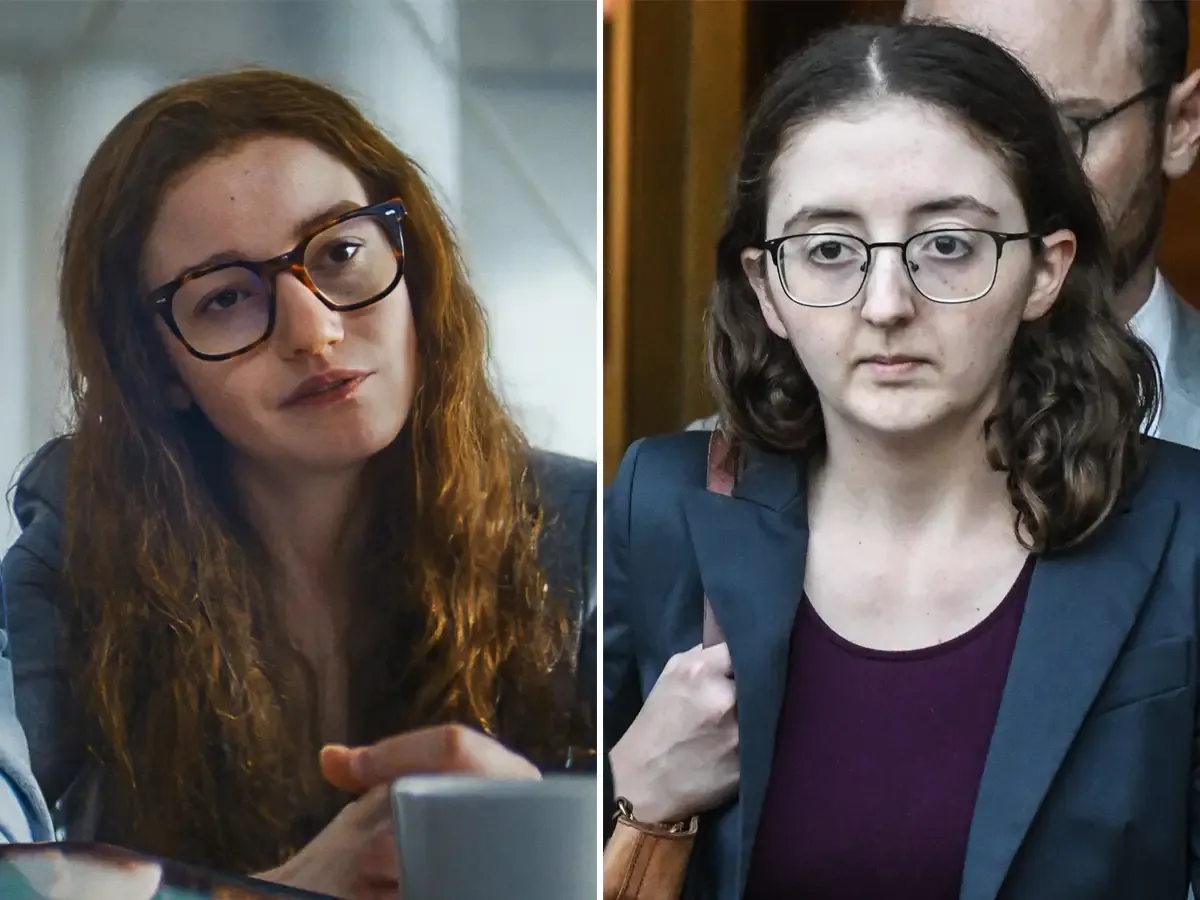
Caroline Ellison, the former Alameda Research CEO who testified against Sam Bankman-Fried, was released from federal custody on January 21, 2026, and has since been hired full time at Manifund, a nonprofit previously backed by the FTX Future Fund. The hire tests whether a high-profile cooperating witness can be reintegrated into the philanthropic sector, and it hands every board a live precedent for weighing redemption against reputational risk.
Caroline Ellison is free, employed, and back in the money business, just not the kind she used to run. The former Alameda Research CEO and star witness against Sam Bankman-Fried was released from the custody of the Federal Bureau of Prisons on January 21, 2026, at age 32, after about 14 months behind bars. By July she had quietly started a work trial at Manifund, a nonprofit, and roughly a month later she converted to full time. Manifund founder and CEO Austin Chen announced the hire on Substack in September, confirming it to Business Insider without providing documentation of her employment.
The detail that makes the hire land: Manifund was previously backed by the FTX Future Fund, the philanthropic initiative tied to the exchange whose collapse vaporized customer money. So the woman who told a Manhattan jury how Bankman-Fried directed her to deceive Alameda's lenders is now helping decide how charitable dollars get directed. "I believe in redemption," Chen wrote. "Caroline has admitted her faults, worked to make creditors whole, and served her time in prison. I'd like to give her the opportunity to contribute back to the world; I hope that the world will concur."
Ellison was never the face of FTX. She ran Alameda Research, the trading firm that served as FTX's sister company, and she was Bankman-Fried's on-again, off-again girlfriend. When the exchange publicly collapsed, she became a main character anyway, largely because she took the stand. Over three days of testimony in Bankman-Fried's 2023 criminal trial in Manhattan federal court, Ellison told the jury he directed her to deceive Alameda lenders into believing both companies had more money than they really did. She also described his "risk-neutral" approach to business, his multi-million-dollar political donations, and his "distant" behavior as a boyfriend. "There was a feeling that I wanted more in our relationship," she testified. "The whole time we were dating, he was also my boss, so that created some awkward situations." Bankman-Fried, for his part, testified that he was "historically bad" at long-term commitments. "I didn't have the time or energy to put into what she wanted in the relationship," he said.
Bankman-Fried was convicted on seven counts of fraud and conspiracy and sentenced to 25 years in prison. Ellison struck a plea deal with the Justice Department, as did FTX executives Gary Wang and Nishad Singh. At her 2024 sentencing, US District Judge Lewis Kaplan cited her "very, very substantial cooperation" with prosecutors and "genuine remorse" in handing down a two-year sentence. "You're a very strong person in some ways. But you're not inviolable," Kaplan told her. "Somehow, for some reason, it's hard for me to understand, Mr. Bankman-Fried had your kryptonite. You were vulnerable and you were exploited."
Then the sentence kept shrinking. Ellison reported to the low-security Danbury Federal Correctional Institution in Connecticut on November 7, 2024. Weeks later, nearly four months were shaved off, moving her scheduled release to July 20, 2026. On October 16, 2025, she was transferred into community confinement, which typically means home confinement or a halfway house. On January 21, 2026, she was out. That arc is not unusual in federal white-collar cases: cooperation credit, good-time allowances, and community confinement routinely compress sentences for defendants who help prosecutors build cases against bigger targets. What is unusual is how fast the next chapter arrived.
Ellison kept a low profile for her first few months of freedom, then landed the Manifund role in July. Her own description of the job is refreshingly unglamorous: "improving our technical infrastructure, working on operations and customer support, and posting updates on our newsletter." She also sent a message through Chen's post. "I'm deeply sorry for what I did, and I completely understand why people may not want to work with me," it said. "But I'm very grateful to Austin for giving me a second chance, and judging me on my current work performance rather than my past. I feel very lucky not only to have a job, but to be working somewhere that I think is doing great work and has a mission I believe in." She added that she probably would not reply to comments on the post.
The timing keeps the story warm. Netflix's limited series "The Altruists" dramatizes Ellison's relationship with Bankman-Fried, with Emmy winner Julia Garner playing Ellison and Anthony Boyle playing the FTX founder. Ellison's diary entries and blog posts, public before and during the trial, remain central to how the public understands his fall from grace. For a nonprofit, that is a double-edged inheritance: attention, scrutiny, and a donor base that will ask hard questions about who is handling the money.
For executives and boards, the Ellison hire is a live case study in second-chance employment at a moment when reputational risk travels faster than any background check. Chen made a bet that performance and contrition outweigh the search results. The counterargument writes itself: donors, partners, and grantees may not separate the person from the wreckage. Either way, the precedent is set. The most famous cooperating witness of the crypto era served about 14 months, and she is now employed, on the record, and asking to be judged on the work.
This story's Key Insights and Take-aways are locked.
Create a free account to unlock Executive Actions for one credit.
Register to UnlockAlways free for Executives Club members. Join the Club
More in Business

S&P 500 Enters Correction, Down 10% From Its High on AI Worries
The index's slide past the 10 percent line is a symbolic verdict on investor mood, and the AI trade that powered the rally is now the thing testing it.

Dow and S&P 500 enter correction as Nasdaq logs worst week since 2020
All 11 S&P 500 sectors fell more than 1% in the same week for the first time since April 2025, a breadth signal that matters more than any single index level.

Chip stocks lose $2.3 trillion in a week, worst run in 25 years
A $2.3 trillion weekly wipeout in semiconductors is forcing every board with an AI story to ask whether it owns a thesis or just a crowded trade.