

Chet Faliszek says TF2 could never be made by AI, and the reasons hit hard
Polygon highlights Chet Faliszek's argument that AI cannot replicate the craft behind Team Fortress 2, and why that matters now.
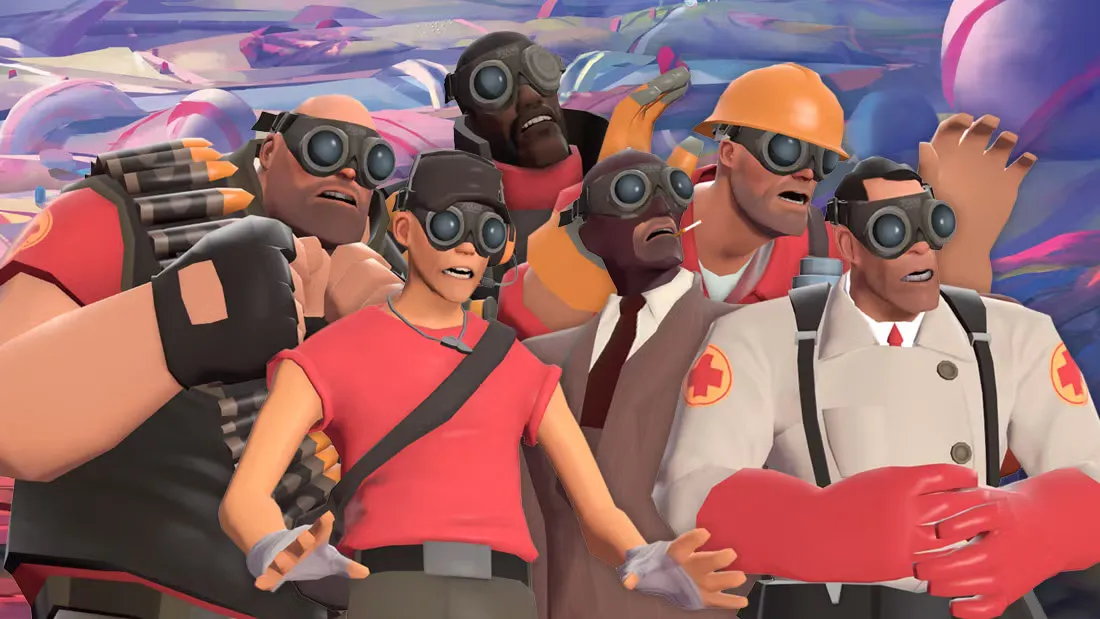
Chet Faliszek, a key writer behind Left 4 Dead, Half-Life, and Team Fortress 2, argues that TF2 could never be made by AI. For decision-makers, it is a reminder that shipping games is not just content generation, it is design, iteration, and lived-in systems.
It sounds almost provocative in a way that makes you stop scrolling: Chet Faliszek, one of the key writers behind franchises like Left 4 Dead, Half-Life, and Team Fortress 2, has strong opinions about what artificial intelligence can and cannot do in game development. In Polygon’s piece, the headline claim is blunt, and the premise is simple: TF2 could never be made by AI.
That claim is not presented as a deep technical critique of AI tooling. It is closer to a craft argument. Polygon frames the core problem as this: systems built to regurgitate what already exists may struggle to produce something truly original. In other words, even if AI can remix patterns, the heart of what makes a genre-defining game land with players is not just having lots of recognizable stuff. It is having the right stuff, in the right way, with the right iteration loops, and with design instincts that come from experience and taste.
For executives, this matters because the last 18 to 36 months have trained many organizations to treat “AI capability” as a proxy for “AI product readiness.” That shortcut shows up in boardrooms and product reviews: if a model can draft copy, generate concept art, or output code snippets, the expectation becomes that it can also reproduce the creative and systems thinking behind successful products. Faliszek’s position pushes back on that assumption. The Polygon piece is essentially a warning that outputs are not the same thing as authorship, and that “similarity” is not the same thing as “the real thing.”
There is also a second-order implication that hits harder than the rant itself. Multiplayer games like Team Fortress 2 are not static assets you can generate once and ship forever. They are living products. They rely on design clarity, feedback from real communities, balance adjustments over time, and emergent play that players co-create through thousands of sessions. A system that primarily regurgitates what exists can generate ideas, sure. But the ongoing work of refining a rule set, understanding what makes the meta fun instead of frustrating, and ensuring updates actually improve player experience is a different type of labor. It is closer to continuous stewardship than one-time production.
Now, zoom out. Across software, media, and entertainment, regulators and policymakers have been paying increasing attention to AI systems for a reason: when automated tools generate content at scale, they raise thorny questions about authorship, ownership, and accountability. Even if Polygon’s article does not dive into specific regulatory filings or new laws, the backdrop is real. In many jurisdictions, the “who is responsible” question becomes unavoidable once AI systems are used in production workflows that create public-facing products. If a company leans on AI as a shortcut, it also increases the risk that when something goes wrong, no one can clearly point to what decisions were human versus machine, and why.
Faliszek’s argument, as presented by Polygon, also lands in the context of incentives. Large studios and publishers operate under pressure to reduce costs and accelerate timelines. AI is attractive because it promises speed and scale. But TF2 is a reference point for how legacy titles often succeed for reasons that are hard to measure in minutes saved. The “feel” of a game, its balance philosophy, and the way a player learns the system are usually built through repeated playtesting and expert judgment. If AI is treated like a substitute for that judgment, companies can end up with a product that looks plausible but misses the intangible interactions that create long-term engagement.
So what should executives take from this, beyond the headline? It is a sanity check for strategy. If you are evaluating AI adoption in a creative or product-heavy domain, you need to ask what you are actually trying to replicate. The Polygon framing suggests that TF2 could never be made by AI because the process is not just generation. It is design taste plus iterative feedback plus community behavior, all wrapped in human authorship. That does not mean AI is useless. It means you should be careful about overselling what “AI-made” really signals.
And for anyone building games, investing in studios, or running product teams in adjacent categories, this becomes a competitive question. If AI-generated content is abundant, differentiation shifts toward the human layer: the taste that selects, the instincts that shape, and the teams that can steer a complex system over years. The strategic stake is straightforward: the companies that win will not simply be the ones that generate the most. They will be the ones that understand what generation cannot replace, even when the tools get better.
This story's Key Insights and Take-aways are locked.
Create a free account to unlock Executive Actions for one credit.
Register to UnlockAlways free for Executives Club members. Join the Club
More in Technology

Nvidia's $89B data center quarter: the 9 companies cashing in
The AI buildout is minting fortunes beyond GPUs, and memory, cloud, and cooling suppliers are riding the same wave.

A YouTuber dissected the iPhone Duo and thinks he found crackgate's cause
CuriousHagi's teardown of Apple's foldable reveals a gear-like hinge that may explain why screens crack in the same spot within hours.

Google quietly links your phone number to every Android account on your SIM
Adding a SIM now ties your phone number to all Google accounts - and future accounts inherit it. Here's the security and privacy stakes.