
China Fossils Prove Homo Erectus Survived 200,000 Years Longer Than Expected
This massive revision to the human evolutionary timeline suggests incredible adaptive capacity and completely reshapes our understanding of ancient migratory patterns.
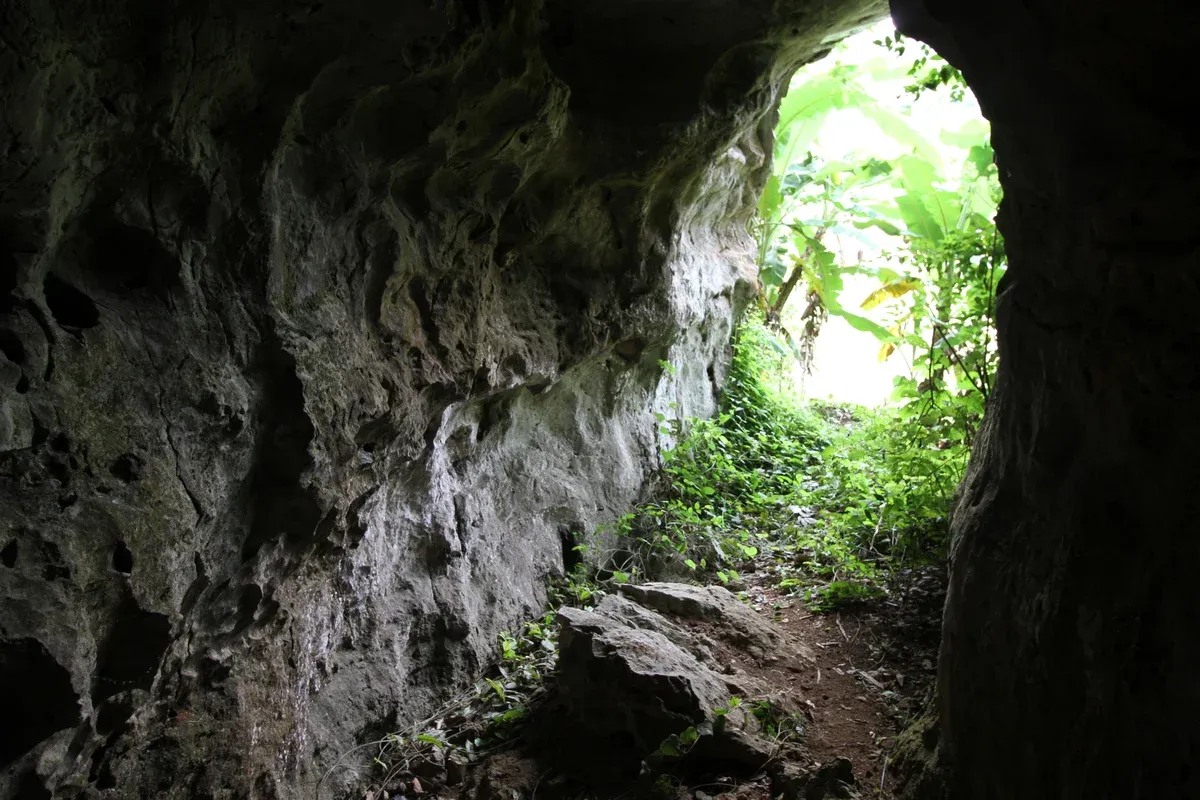
New fossil evidence from China has dramatically extended the known survival window of Homo erectus, pushing its presence back by an estimated 200,000 years. This forces a complete reassessment of human migratory routes, technological adoption, and the sheer resilience of early hominids.
The narrative we held about the timeline of human evolution just got a massive, unexpected rewrite. New fossil discoveries in China have fundamentally challenged the established understanding of Homo erectus, suggesting this ancient species persisted in the region for an additional 200,000 years beyond previous scientific estimates. This isn't just a minor adjustment to a chart; it's a seismic shift in how we view the adaptive capacity and migratory reach of our earliest ancestors. The implication is clear: the ancient human species was not just a keen traveler, but a profoundly resilient, long-term operator who managed to sustain a complex presence in China for a far longer period than the scientific community had budgeted for.
For decades, paleoanthropology operated under a specific set of assumptions regarding the pace of evolutionary change and the constraints of environmental adaptation. We mapped out the known trajectory of Homo erectus, charting its movements across continents based on the fossil record. The prevailing model suggested a certain window of existence and a specific rate of decline or transition into later hominid forms. The new data, however, acts like a massive, unforeseen market expansion. It tells us that the operational lifespan of this species in the Chinese ecosystem was significantly longer, forcing researchers to re-evaluate everything from resource availability to cultural persistence over deep time.
What does a 200,000-year extension actually mean in practical terms? It speaks to an incredible, sustained level of environmental mastery. To survive in a specific geographic region for such an extended period requires more than just basic survival; it demands sophisticated resource management, the ability to navigate complex ecological shifts, and a stable, if slow, cultural evolution. This isn't a species that faded quickly; it's a species that demonstrated profound, long-term operational endurance. Think of it as a company that maintained market relevance and operational viability across multiple, unpredictable economic cycles over two centuries, even if those cycles spanned millennia.
This discovery forces us to look at the mechanisms of persistence. How did Homo erectus manage to maintain its presence in China for this extended duration? The answer likely lies in a combination of highly localized adaptive strategies and a deep understanding of regional resource availability. The environment, which might have presented challenges, simultaneously offered niches that allowed for sustained population viability. This challenges the notion of a single, linear path of human development. Instead, it suggests a mosaic of successful, localized strategies that allowed certain populations to thrive and endure far longer than their peers.
From an executive perspective, this is a powerful metaphor for organizational resilience. When we look at the long-term survival of Homo erectus, we are looking at a masterclass in strategic patience and adaptability. In a modern business context, this discovery suggests that the most successful entities are not necessarily those that achieve the fastest growth, but those that possess the deepest roots and the most robust capacity to absorb shocks and maintain function over vast, unpredictable timescales. The lesson is that longevity is often a function of deep, localized adaptation rather than rapid, sweeping innovation.
Furthermore, this revision impacts our understanding of human migration itself. If Homo erectus was operating in China for this extended period, it suggests that the pathways and timing of their dispersal across Asia were far more complex and protracted than previously modeled. It implies that the 'Great Migration' wasn't a single, rapid event, but a series of sustained, highly adaptive movements that allowed the species to occupy and persist in diverse environments for epochs. This complexity demands that future research moves away from simple linear models and toward highly nuanced, multi-variable simulations of ancient human movement and survival.
This story's Key Insights and Take-aways are locked.
Create a free account to unlock Executive Actions for one credit.
Register to UnlockAlways free for Executives Club members. Join the Club
More in Science

Anthropic's I.P.O. Made Rank-and-File Researchers Worth Tens of Millions
Researchers who joined just a few years ago are now worth tens of millions, and the windfall resets the pay benchmark for every private A.I. lab still paying in paper.

Sea Lion Culling Strategy Fails: New Model Says Killing Them Won't Save Salmon
The latest research from AAAS overturn a long-held conservation assumption, forcing policymakers to rethink critical resource allocation in marine ecosystems.

Microplastics do more than pile up: they react with water to damage cells
Scientists have found that plastic particles can generate highly reactive molecules in water, a mechanism that could explain links to heart attacks, strokes, and neurological disorders.