
CONMEBOL Locks 10 Votes Behind Infantino Before FIFA's Election
South America's unanimous council vote in Barranquilla hands Gianni Infantino a bloc of ten votes a year early, raising the price of any challenge to his FIFA presidency.
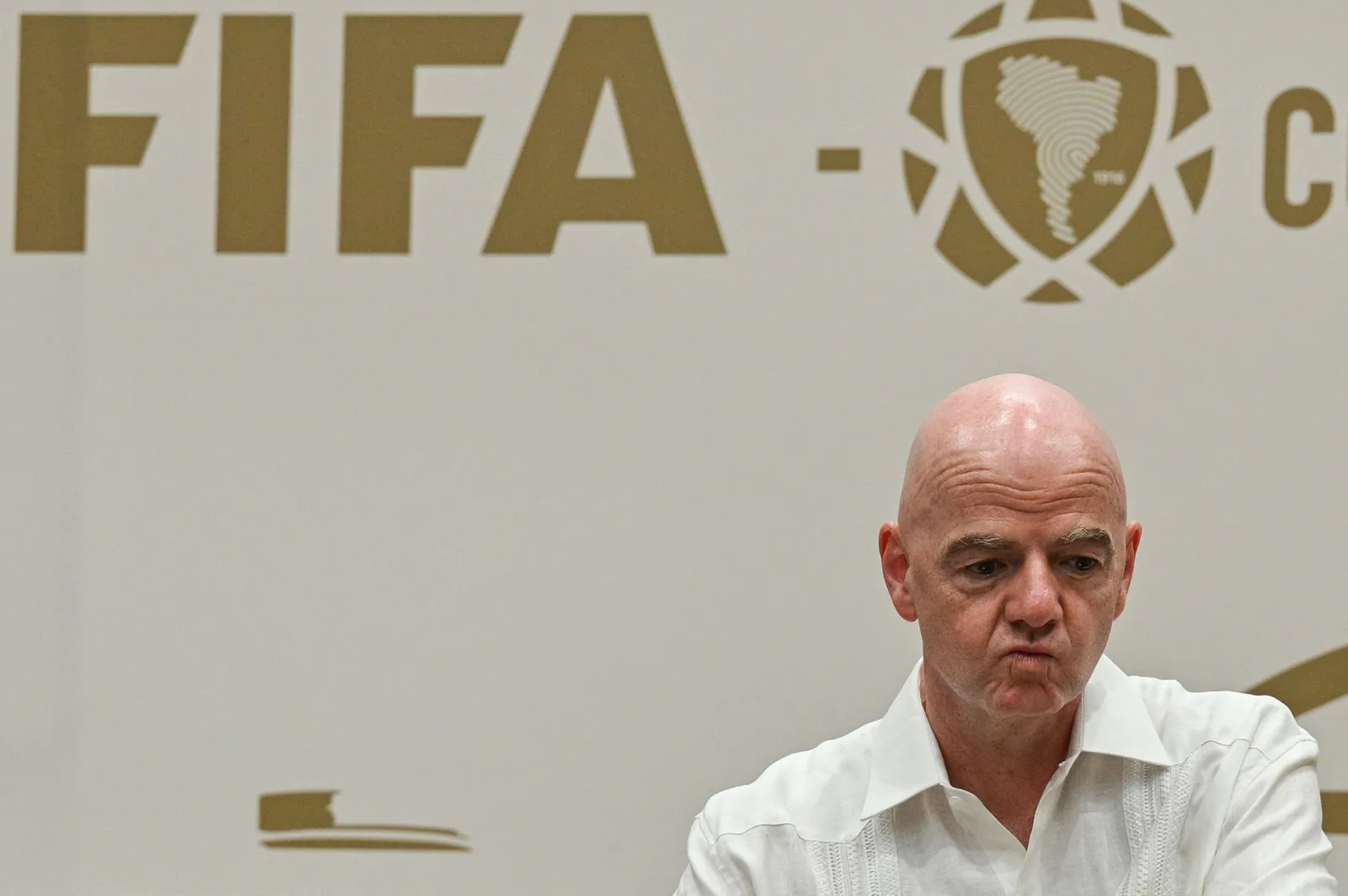
CONMEBOL, South American football's governing confederation, has affirmed unanimous support for Gianni Infantino's re-election as FIFA president, with backing from all member associations after a council meeting in Barranquilla, Colombia. The early, bloc-wide endorsement gives the incumbent a locked voting foundation ahead of next year's election and sets a higher bar for any rival, while signaling what the region expects from FIFA in return.
Gianni Infantino just banked ten votes, and he banked them early. CONMEBOL, South American football's governing confederation, has affirmed unanimous support for Infantino's re-election as FIFA president, with backing from all of its member associations ahead of next year's election. The decision came out of a council meeting in Barranquilla, Colombia, putting the region's entire voting bloc behind the incumbent before a single ballot has been cast.
That last detail is the story. FIFA's president is chosen by the federation's member associations, and confederations historically vote as blocs rather than as collections of independents. CONMEBOL's ten associations, with Argentina, Brazil and Uruguay among them, are now publicly and unanimously committed. For an incumbent, that is not a mood swing; it is campaign infrastructure laid a year ahead of schedule, and it makes the climb for any potential challenger meaningfully steeper.
For context, Infantino has run FIFA since 2016, when he was elected after Sepp Blatter's resignation amid a sprawling corruption investigation that had pushed the federation to the brink. He was returned to office in 2023 without a rival on the ballot. His tenure has been defined by expansion: the men's World Cup grows to 48 teams for 2026, co-hosted by the United States, Canada and Mexico; the Club World Cup has been relaunched as a 32-team competition; and FIFA Forward has directed development money toward member associations around the world. Every one of those decisions touches the confederations that vote, which is why endorsements like this one are never purely ceremonial.
Confederation backing is rarely sentiment. It is the visible half of a transaction in which the currency is World Cup places, development funding, competition hosting and influence over an increasingly crowded match calendar. South America has already collected a marquee prize on Infantino's watch: FIFA awarded the opening matches of the 2030 centenary World Cup to Uruguay, Argentina and Paraguay, with the bulk of that tournament staged in Spain, Portugal and Morocco. An expanded 48-team field also means more places at the table for the region. Read the Barranquilla declaration as a receipt as much as a promise.
The wording matters too. CONMEBOL is reiterating support, not discovering it. The confederation had already signaled its backing, and this council meeting converted that position into a formal, unanimous, all-members-on-record statement. That is a deliberate choice of continuity over deliberation. Incumbents want endorsements to look inevitable, because inevitability is the cheapest way to keep challengers from raising money, assembling slates and burning a year of their careers on a race that looks already decided.
There is a governance backdrop worth keeping in view. FIFA spent the years after 2015 rebuilding its institutional credibility, with reforms that included term limits, a revamped congress structure and independent oversight bodies. The federation's 211 member associations remain the ultimate electorate, and confederation-level endorsements have long been the leading indicator of how those votes will fall. A unanimous bloc announcement a year out is about as strong a signal as this system produces short of an actual ballot.
The timing also lands inside a commercially enormous cycle. The 2026 World Cup in North America is expected to be one of the largest sporting events ever staged, with sponsors, broadcasters, host cities and national federations all building plans around it. For those counterparties, a presidency that looks settled is a presidency that reduces governance risk. A contested FIFA election would inject uncertainty into rights negotiations, sponsorship activations and tournament logistics at precisely the moment the commercial machine is supposed to be running at full speed. That is the quiet argument for the Barranquilla announcement: stability is a product.
What to watch from here is whether other confederations follow in sequence or hold back. Bloc endorsements tend to cascade, and each one that lands makes the next one easier, because nobody wants to be the last federation backing a winner. The open question is whether anyone credible steps forward to test the field at all, and whether an early, unanimous commitment would survive a genuine contest. For now, the arithmetic is on the incumbent's side.
The strategic lesson for executives outside football is familiar. Coalitions get built before they are needed, not during the vote. CONMEBOL's ten associations just proved they can move as one, publicly, on a fixed date, with a clear beneficiary. That is what disciplined stakeholder management looks like at scale, and it is why the announcement matters far beyond South America: it sets the price of opposition, and it tells every sponsor, broadcaster and host city which way the wind is already blowing.
This story's Key Insights and Take-aways are locked.
Create a free account to unlock Executive Actions for one credit.
Register to UnlockAlways free for Executives Club members. Join the Club
More in Politics
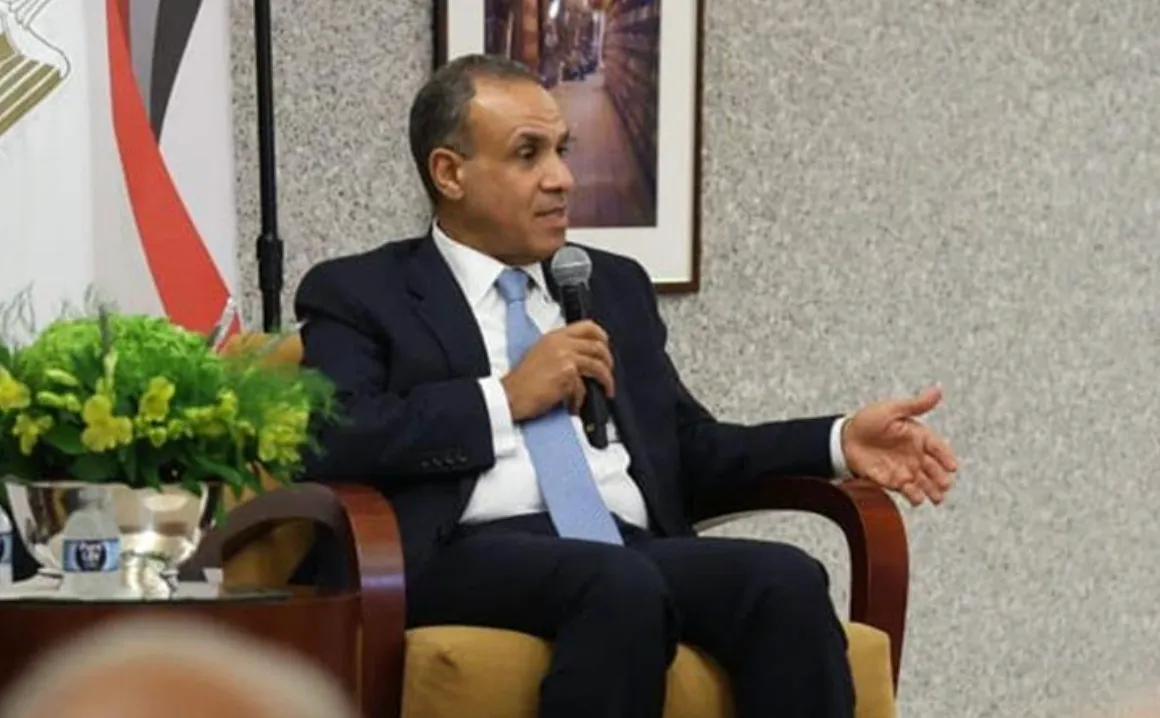
Egypt's foreign minister: Hamas must hand over weapons for Gaza phase two
Badr Abdelatty tells Asharq Al-Awsat that Cairo is pressing Palestinian factions to implement weapons understandings, and that phase two of Trump's Gaza plan hinges on every party, Israel included, meeting its commitments.

Emilija Morrison escaped Neet life. Her new job is just as precarious
A Glasgow graduate with an NCTJ diploma welcomes the government's youth jobs plans, but warns that a paycheque without security is not an exit from Neet life.
Ministers lift gagging clauses at UK data watchdog ahead of culture probe
Staff at the Information Commission can now describe their workplace without contractual silence, and ministers are due to publish the review's terms next week.