
CyberLeek is back, claiming a full playable GTA 6 build is now online
A hacker group says it has released a development build of the final GTA 6, making good on an October threat and putting every pre-release pipeline in the industry on notice.
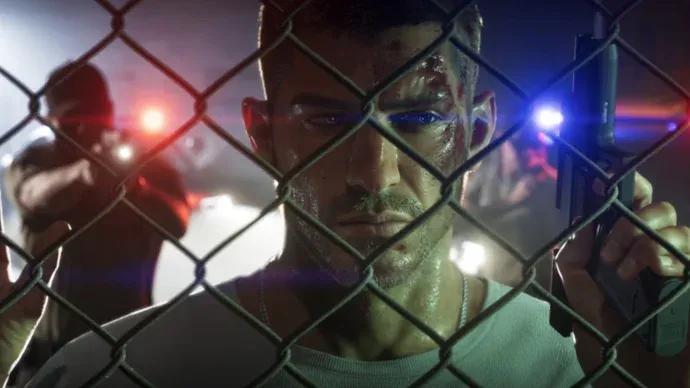
CyberLeek, the hacker persona behind the pre-launch GTA 6 gameplay leak, has reappeared claiming it released a development build of the final version of the game, apparently fulfilling an October threat to publish a full, playable build. For Rockstar's parent company and every publisher guarding pre-release code, the claim pushes build security, vendor access, and leak-response planning back to the top of the risk register.
CyberLeek is back, and the claim is bigger than last time. The hacker persona behind the pre-launch leak of GTA 6 gameplay reappeared today, saying it has released a development build of the final version of the game on its site. Per the report, the move appears to make good on a threat the group posted back in October, when it stated its intent to release a full, playable build of the game. That is the claim in full. Everything that follows, for Rockstar, for its parent company, and for every studio that ships a game on a fixed date, hangs on whether it is true.
A development build is not a trailer, a screenshot, or a stray line of code. In the ordinary course of game production, it is a working version of the software: the thing testers play, engineers patch, and studios guard roughly as tightly as they guard unreleased financials. If a build of the final version is genuinely out there, the damage is not one bad news cycle. It is spoilers that no embargo can contain, datamined content that surfaces months before a planned reveal, a marketing calendar the publisher no longer controls, and an uncomfortable internal question about how the files left the building in the first place.
This is not the group's first appearance. CyberLeek was responsible for leaking GTA 6 gameplay before the game launched, an event that tends to reset how a publisher thinks about secrecy for years afterward. For context, GTA is developed by Rockstar Games and published by Take-Two Interactive, and it is one of the most commercially significant franchises in entertainment, with a release cycle measured in years and a fanbase that treats every scrap of footage as news. Historically, leaks of this magnitude have drawn criminal investigations, and UK prosecutors have previously secured convictions against hackers who targeted major game studios.
The October threat is the detail that makes this more than noise. A group that announces an intention and then, months later, claims to have executed it is signaling something specific: persistence, access, and a willingness to burn the asset rather than sell it quietly. Leaks in this world typically serve one of a few purposes. Sometimes it is clout. Sometimes it is leverage in an extortion attempt. Sometimes it is a straight data dump after a ransom goes unpaid. The public claim does not tell us which, and the report does not say.
For a publicly traded publisher, the exposure runs on two tracks at once. The first is creative and commercial: a playable build can spoil story beats, map layouts, mechanics, and the reveal cadence that a company spends years and a large marketing budget constructing. The second is operational and legal. Build servers, third-party vendors, contractors, and remote work all widen the surface area, and a confirmed intrusion typically triggers forensic review, notification obligations, and conversations with regulators and law enforcement. None of that is cheap, and none of it is fast.
There is also a quieter cost that boards tend to underweight: the trust tax inside the studio. When unfinished work escapes, teams that have spent years on a project watch strangers pick it apart frame by frame. Studios typically respond by tightening access, which slows production, and by shifting announcement plans, which can ripple into earnings guidance if a reveal was meant to anchor a quarter. For peers at other publishers, the lesson is not that Rockstar was unlucky. It is that the most valuable asset in the building is often the one sitting on an internal server.
What to watch now is verification. A claim is not a build, and the gap between the two is where most of these stories die. Watch for takedown notices, for whether footage that looks like final-version content actually surfaces, and for any statement from the publisher or the platforms hosting the files. Watch, too, for whether the October threat was the opening move in a campaign rather than a one-off. If it was, the target list rarely stops at one company.
The strategic takeaway for anyone running a company with a crown-jewel product: assume the perimeter has already been tested, and plan for the day something gets out. The publishers that handle these moments well are the ones with a rehearsed response, a legal team on standby, and a communications plan that does not depend on the leak turning out to be fake.
This story's Key Insights and Take-aways are locked.
Create a free account to unlock Executive Actions for one credit.
Register to UnlockAlways free for Executives Club members. Join the Club
More in Entertainment

GTA 6 banks $3.8bn in one day, torching every launch record
One game just out-earned every video game launch and every single-day film box office haul in history, and the fallout lands on every media CEO's forecast.

GTA VI Racked Up $3.79 Billion in a Single Day, Topping Every Film Ever
A 13-year wait produced a $3.79 billion day, more than any movie has made in its entire run, and it resets the launch math for every studio, streamer, and brand chasing the same attention.

GTA 6 sells 32.5M pre-sales and $3.79B day one, torches 13-year record
Rockstar's sequel didn't just beat Grand Theft Auto V's 13-year-old benchmark; it reset what a launch can be, with 32.5 million pre-sale copies and $3.79 billion in a single day.