
Cyclones Now Hit Peak Fury at Landfall, and Coasts Pay the Bill
Climate change is timing hurricanes and typhoons to peak at the coastline, compressing warning windows for insurers, ports, and the cities that depend on them.
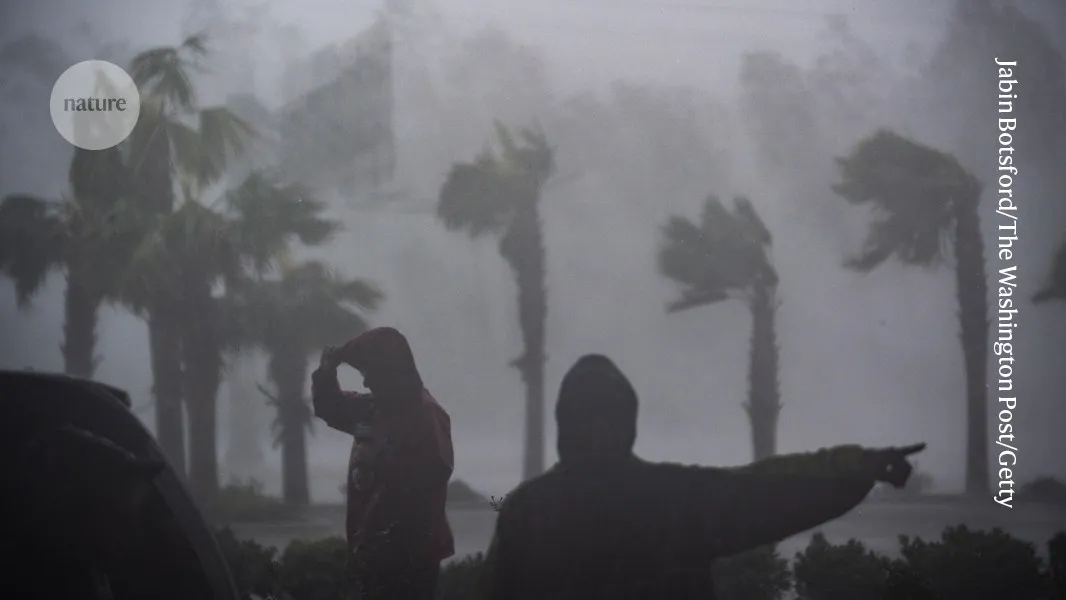
A Nature news report published 19 November 2026 finds that climate change is creating conditions that pump up the intensity of hurricanes and typhoons just as the storms reach the coast. For insurers, lenders, port operators, and coastal asset owners, that timing shift shortens warning windows and quietly undermines risk models built on storms that weakened offshore.
The most violent hours of a tropical cyclone are increasingly arriving at the coastline instead of spending themselves over open water. That is the finding of a Nature news report published on 19 November 2026, which concludes that climate change is creating conditions that pump up the intensity of hurricanes and typhoons just as the storms reach the coast. The distinction sounds academic. It is not. A storm that peaks far out at sea and then weakens on approach gives a coastline time to evacuate, a port time to batten down, and an insurer a loss estimate that behaves the way the actuarial tables expect. A storm that peaks at the shoreline delivers its maximum wind, surge and rain to precisely the places where people, property and capital are most concentrated. The peak is migrating to the worst possible moment.
Start with the mechanics, because they explain why the timing is the story. Hurricanes and typhoons are the same phenomenon wearing different regional names: hurricanes in the North Atlantic and the eastern Pacific, typhoons in the western Pacific. Either way, the engine is warm ocean water. A tropical cyclone pulls heat and moisture off the sea surface and converts it into wind, which is why forecasters watch sea-surface temperatures the way equity analysts watch guidance. For context, the warmer the water and the moister the air above it, the more energy the system has to work with and the faster it can organize itself. The Nature report's central point is not that storms are getting stronger in some abstract, mid-ocean sense. It is that the conditions that intensify them are more likely to be in place at the moment of landfall rather than days before it.
The operational consequence is a shorter fuse. Emergency management works backwards from landfall, and every stage of that timeline, evacuation orders, shelter capacity, grid pre-positioning, port and refinery shutdowns, airline ground stops and hospital surge staffing, assumes a certain amount of notice. Rapid intensification, in which a storm gains strength much faster than a standard forecast cycle anticipates, is the scenario planners dread most because it invalidates decisions made hours earlier. For context, track forecasts have improved substantially over the past several decades while intensity forecasts have improved more slowly, which means the hardest thing to predict is exactly the variable the Nature report says is shifting. A storm that reaches peak fury at the coast does not just hit harder. It hits sooner than the playbook assumed.
Then there is the capital. Catastrophe models are backward-looking instruments by design, calibrated on historical landfall records, sea-surface conditions and observed damage. If the distribution of peak intensity is sliding toward the coastline, a model trained on the old pattern systematically understates the tail. That matters well beyond the modeling team. Reinsurers set treaty pricing off those curves, catastrophe bond investors price off them, and the broader insurance-linked securities market takes its cue from them. Parametric covers, which pay out when wind speed crosses a specified threshold at a specified location, are especially exposed: a storm that intensifies in the final hours before landfall can jump a trigger that a slower-building system would never have reached. Municipal bondholders, coastal mortgage books and credit rating agencies carry much of the same physical exposure, typically without anything close to the same analytical firepower.
The asset side is just as exposed. Ports, LNG terminals, refineries, water treatment plants, substations, transmission corridors, airports, data centers and offshore wind installations are all sited, for obvious reasons, near water. The Nature report's timing shift compresses the window in which any of them can be secured, and a single port closure can idle plants and distribution networks far inland, which is the part that shows up in earnings calls nowhere near the coast. Historically, water rather than wind does the heaviest damage in these events, through storm surge and rainfall, and a storm arriving at full strength rather than in decline puts more of both onshore.
Governance is catching up to the physics. Climate disclosure regimes, including the ISSB standards and the earlier TCFD framework they build on, push companies toward scenario analysis of physical risk, and insurers' own regulators have grown more attentive to how carriers translate climate science into underwriting and reserving. Rating agencies increasingly ask coastal issuers and operators to demonstrate that their assumptions are current. The awkward question raised by this report is whether the assumptions are current at all. Many risk registers were built when the working assumption was that a storm peaks offshore and decays before it lands.
For executives and boards, the practical asks are narrow and uncomfortable. Does the catastrophe model, or the business interruption model, or the internal capital model still embed the old decay-before-landfall assumption? Does the operational playbook still assume a notice period the atmosphere may no longer grant? Were insurance limits and deductibles set on curves that predate the shift? And do the coastal assets on the balance sheet carry a valuation that reflects a shorter fuse? None of these questions requires a new forecast. They require an honest look at the assumptions already in the file. The storms are arriving at their strongest at the worst possible moment. The models should at least know that.
This story's Key Insights and Take-aways are locked.
Create a free account to unlock Executive Actions for one credit.
Register to UnlockAlways free for Executives Club members. Join the Club
More in Science

Anthropic's I.P.O. Made Rank-and-File Researchers Worth Tens of Millions
Researchers who joined just a few years ago are now worth tens of millions, and the windfall resets the pay benchmark for every private A.I. lab still paying in paper.

Sea Lion Culling Strategy Fails: New Model Says Killing Them Won't Save Salmon
The latest research from AAAS overturn a long-held conservation assumption, forcing policymakers to rethink critical resource allocation in marine ecosystems.

Microplastics do more than pile up: they react with water to damage cells
Scientists have found that plastic particles can generate highly reactive molecules in water, a mechanism that could explain links to heart attacks, strokes, and neurological disorders.