
D'Angelo's Unreleased 'Kamikazi' Is Already Playing Inside GTA 6
Rockstar's in-game radio just became a stealth release channel, and a lost D'Angelo track shows why game worlds now rival labels for a premiere.
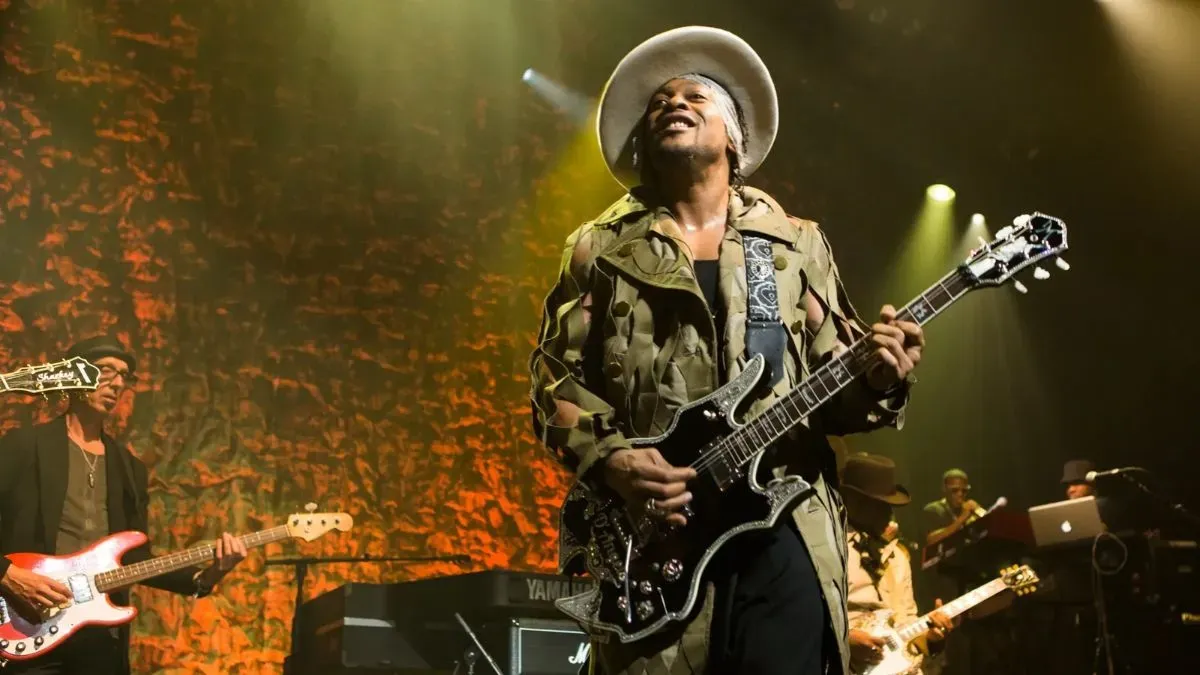
An unreleased D'Angelo track titled 'Kamikazi' has surfaced on the Worldwide FM station inside Grand Theft Auto VI, appearing on none of his three studio albums with no standalone release announced. For executives in music, media, and games, it is a live case study in how a game world can premiere an asset before any label does.
An unreleased D'Angelo song is already out in the world, and it did not arrive through a label, a streaming service, or a midnight drop. Players of Grand Theft Auto VI have reported hearing a track titled 'Kamikazi' while tuned to the game's in-game radio station Worldwide FM. The song appears on none of D'Angelo's three studio albums, and no standalone release has been announced. Per Consequence's report, 'Kamikazi' plays alongside D'Angelo's 'Lady' elsewhere on the dial, meaning the same virtual broadcast is carrying both a catalog staple and a recording the public has never been able to buy.
That is the story in a single line: a finished, unreleased recording by one of the most revered and least prolific artists in modern soul is now circulating inside a video game, found by players rather than announced by anyone. There is no press release to point to, no pre-save link, no confirmation of a wider release. The premiere happened on a fictional radio dial, in front of players who may not even know what they are hearing.
Start with the artist. D'Angelo has released three studio albums across a career spanning decades, a ratio of output to influence that is close to unmatched in R&B. That scarcity is why an unreleased track is news at all. For his fans, the vault is not a marketing asset; it is a rumor. It also explains why the discovery landed like a scavenger hunt. When an artist releases this rarely, an unheard song does not need promotion. It needs only to exist somewhere a listener can stumble onto it.
The Rockstar connection is not new. The source notes this continues D'Angelo's unusual history with the studio after Red Dead Redemption 2, where his music was folded into the game's world rather than bolted on as a licensed needle drop. That is a deliberate way to use an artist: not as a soundtrack credit but as atmosphere. Rockstar's radio stations have historically worked as curated cultural artifacts, with in-game DJs, deep cuts, and genre programming that players remember years later. Worldwide FM, the station carrying 'Kamikazi,' sits in that tradition, a dial position historically associated with soul, jazz, and global sounds rather than the top of the charts.
For the music business, the mechanics matter more than the mystery. Games have quietly become one of the most valuable places a song can live. A placement in a major title reaches an audience that is enormous, global, and unusually attentive, because players sit through the music as part of the world they are driving through. Historically that has meant licensing fees and, increasingly, a measurable lift in streams once players go searching for a song they heard. What is different here is sequencing. Normally a game licenses something that already exists. Here, the game appears to be the first place the song exists at all.
That flips the usual launch math. An unreleased track inside a game manufactures scarcity, and scarcity creates demand no marketing budget can buy. It also creates ambiguity. If 'Kamikazi' has no announced release, the only way to hear it is to play, which turns the game into a de facto exclusive and every player into a distributor of clips, screen recordings, and forum threads. For an artist with a famously small catalog, that is a strange kind of leverage: the asset appreciates the longer it stays unavailable, at least until the audience's patience curdles into frustration.
Watch three things from here. First, whether 'Kamikazi' gets a standalone release or a soundtrack credit, which would reveal whether this was a soft launch or a permanent exclusive. Second, whether other unreleased material follows, because a pattern would suggest a deliberate vault strategy rather than a one-off favor. Third, how labels and publishers respond, since a premiere inside a game raises real questions about who controls the first listen and who gets paid for it.
The broader lesson for anyone running a creative business is that the release calendar is no longer the only calendar. Audiences find culture where they already spend time, and the platforms hosting those places now hold leverage that once belonged to radio and retail. A game world can premiere a song, a film can break a single, and a livestream can do both in an afternoon. The executives who win the next decade will treat those environments as distribution, not decoration. The song is out there. The announcement, so far, is not.
This story's Key Insights and Take-aways are locked.
Create a free account to unlock Executive Actions for one credit.
Register to UnlockAlways free for Executives Club members. Join the Club
More in Entertainment

GTA 6 banks $3.8bn in one day, torching every launch record
One game just out-earned every video game launch and every single-day film box office haul in history, and the fallout lands on every media CEO's forecast.

GTA VI Racked Up $3.79 Billion in a Single Day, Topping Every Film Ever
A 13-year wait produced a $3.79 billion day, more than any movie has made in its entire run, and it resets the launch math for every studio, streamer, and brand chasing the same attention.

GTA 6 sells 32.5M pre-sales and $3.79B day one, torches 13-year record
Rockstar's sequel didn't just beat Grand Theft Auto V's 13-year-old benchmark; it reset what a launch can be, with 32.5 million pre-sale copies and $3.79 billion in a single day.