
Dead by Daylight Teases Godzilla, Its Wildest Crossover Swing Yet
Behaviour Interactive has already rented Tokyo Ghoul, Tomb Raider and Nicolas Cage; a kaiju tease plus a new mall map shows how far the crossover economy now stretches.
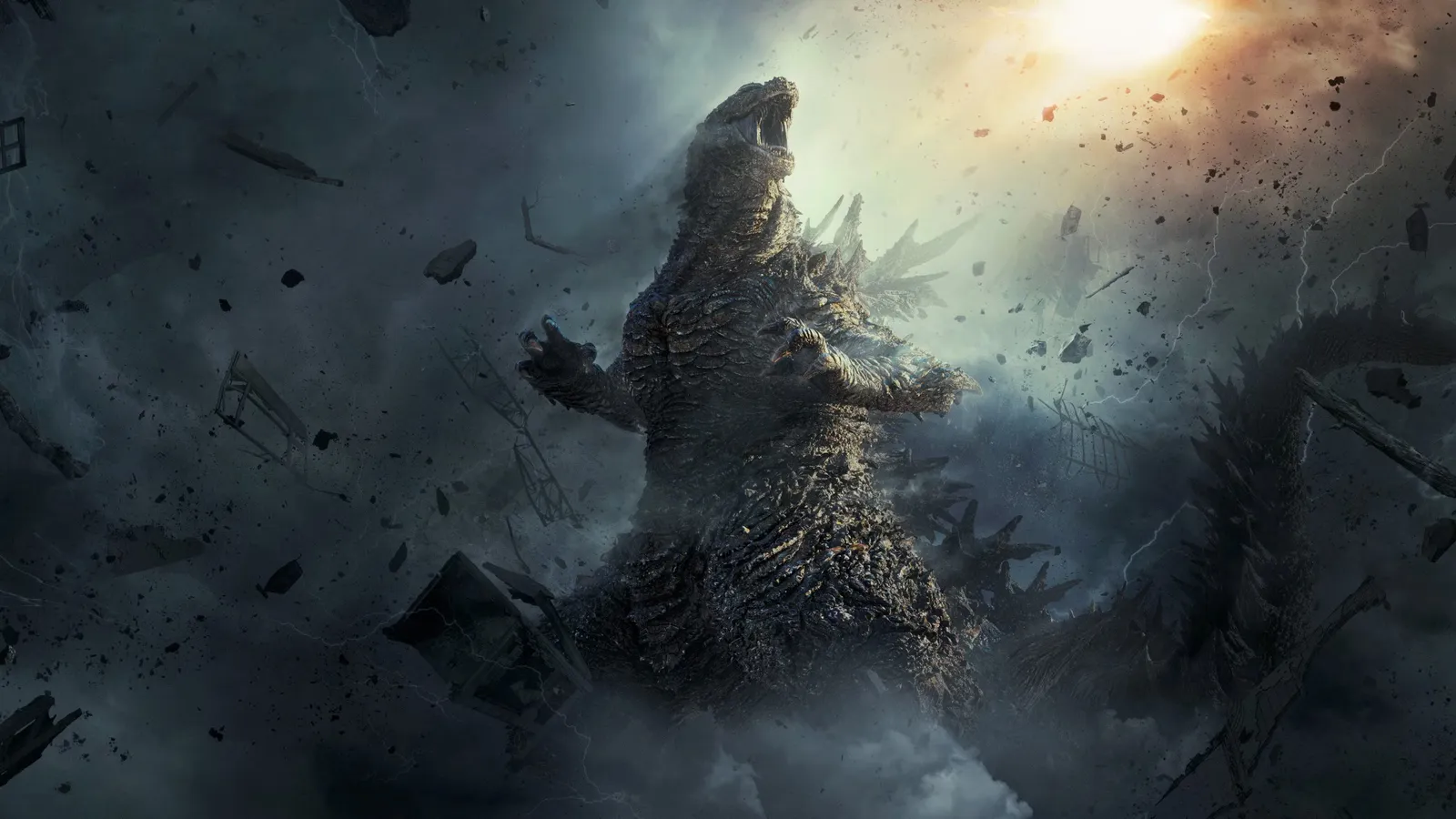
Behaviour Interactive has teased Godzilla as the next crossover for its asymmetrical horror game Dead by Daylight, alongside a new map called Hartshorne Mall. For operators in live-service gaming, the tease is a case study in using licensed IP as a retention and marketing engine, and in the design and rebalancing risk that comes attached to it.
Behaviour Interactive did not announce a release date. It did not show gameplay. It did not name a price. It dropped a teaser, and the teaser says Godzilla. The King of Monsters appears to be heading to Dead by Daylight, the asymmetrical multiplayer horror game where survivors try to outlast a killer, and the same tease also revealed a new map called Hartshorne Mall. That is the entire payload, and it was enough to set the game's community alight, because nothing about a city-flattening kaiju fits the template the game has spent years refining.
The shock is the point. Dead by Daylight has built a reputation on crossovers that should not work. The roster already includes Tokyo Ghoul, Tomb Raider, and Nicolas Cage, the actor, not a character he played. Each addition stretched the definition of horror a little further. Godzilla stretches it past the point where the word still means anything. A masked stalker hunting teenagers through a cornfield is one design problem. A radioactive monster the size of a skyline is a completely different one, and Behaviour has never shied away from exactly that kind of problem.
Why does a studio keep renting other people's characters? Because in live-service games, crossovers typically do double duty. They pull lapsed players back for a limited-time event, and they pull new players in through the borrowed brand's own audience. Building an original character costs design time and carries no built-in marketing. Licensing a known name costs money up front but arrives with a fanbase attached. For a game that has been running for the better part of a decade, that trade is usually the cheaper way to buy attention.
The other side of the deal matters just as much. Toho, the Japanese company that controls Godzilla, has historically been selective about where the character shows up, and for good reason: a monster that has anchored films for seven decades is a brand, not a prop. Licensing it into a horror game is a bet that the audience overlap is real and that the tone will not undercut the character. For Toho, a live-service game is also a standing advertisement, one that keeps Godzilla in front of players between film releases without paying for distribution.
The Hartshorne Mall reveal is the quieter half of the announcement, and arguably the more consequential one for players. Maps are the unglamorous engine of a game like this. A new environment resets routing, changes which perks and killers are strong, and gives streamers something new to learn. It is also typically cheaper to produce than a licensed character, and it refreshes the queue for everyone, not just the people who buy the crossover. Studios that ship headline characters and never ship maps tend to watch their meta go stale.
Zoom out and this is one front in a broader arms race. Live-service games across the industry have spent years turning themselves into storefronts for other people's intellectual property, because the economics reward it. IP holders, meanwhile, have started treating games as a marketing channel rather than a licensing afterthought. The result is a market where the value of a crossover is set less by the fame of the character and more by how well the game's core loop can absorb it.
What the teaser does not say is what Godzilla actually is. There is no date, no confirmation of whether the character arrives as a playable killer, a survivor, a cosmetic, or a limited-time event, and no indication of how a kaiju gets balanced against four people hiding behind pallets. That ambiguity is deliberate. Teasers are built to generate speculation, and speculation is free marketing. It is also a liability. If the eventual payoff is a skin rather than a playable monster, the same community that is currently thrilled will feel shortchanged, and the goodwill burns faster than it was earned.
For operators and boards watching the live-service sector, the lesson is structural. Crossover licensing is a retention strategy dressed as a marketing strategy, and it only works when the design team can deliver something the core audience actually wants to play. The questions to ask before signing the next deal are unglamorous: does the IP fit the loop, does the pipeline have room for the rebalancing work, and is there a second content beat ready if the reveal lands flat. Behaviour has earned the benefit of the doubt on the first question. The next two are where the money is made or lost.
This story's Key Insights and Take-aways are locked.
Create a free account to unlock Executive Actions for one credit.
Register to UnlockAlways free for Executives Club members. Join the Club
More in Entertainment

GTA 6 banks $3.8bn in one day, torching every launch record
One game just out-earned every video game launch and every single-day film box office haul in history, and the fallout lands on every media CEO's forecast.

GTA VI Racked Up $3.79 Billion in a Single Day, Topping Every Film Ever
A 13-year wait produced a $3.79 billion day, more than any movie has made in its entire run, and it resets the launch math for every studio, streamer, and brand chasing the same attention.

GTA 6 sells 32.5M pre-sales and $3.79B day one, torches 13-year record
Rockstar's sequel didn't just beat Grand Theft Auto V's 13-year-old benchmark; it reset what a launch can be, with 32.5 million pre-sale copies and $3.79 billion in a single day.