
Deezer’s AI music detector scans rival playlists, then flags synthetic tracks to delete yourself
A free Deezer tool imports playlists from Spotify and Apple Music, highlights AI-sounding tracks, and requires manual deletion.
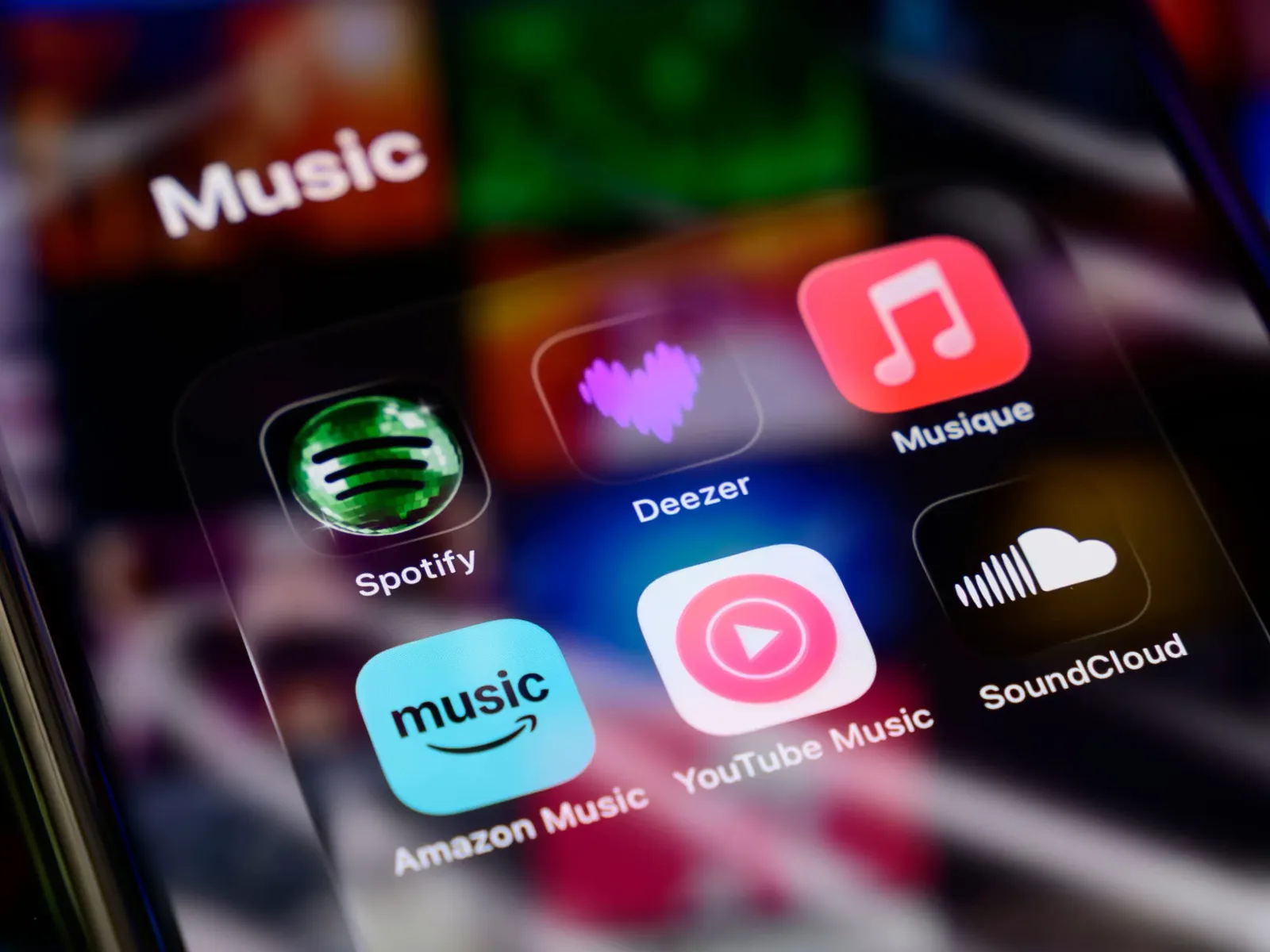
Deezer launched a free AI music detection tool that scans playlists on Deezer and competing services like Spotify, Apple Music, YouTube Music, and SoundCloud. It flags tracks likely generated by AI using frequency artifacts, as Deezer said 44% of new tracks on its platform are AI-generated.
Deezer just rolled out a free AI music detector that can scan playlists not only on its own platform, but also on rivals like Spotify, Apple Music, YouTube Music, and SoundCloud. The tool imports a user’s playlist, highlights tracks it flags as synthetic, and gives users an option to share the findings. There is one practical catch: Deezer does not auto-remove anything for you. After it identifies suspect content, you have to manually delete it yourself.
The stakes here are bigger than a neat feature. Deezer says it already sees massive volume of AI music: 44% of all new tracks uploaded to its platform are AI-generated, roughly 75,000 songs per day. Deezer also argues that listeners are not matching that creation pace with equal adoption, with AI-generated music accounting for 1% to 3% of streams on its platform.
So what does the detector actually do? According to Deezer’s spokesperson speaking to Business Insider, the system identifies “frequency artifacts,” described as small yet distinctive spectral peaks in the audio signal that are exclusive to generative models used to create AI music. In plain English: it is looking for audio fingerprints that show up in tracks created by common AI music generators, not just “does this sound weird.” The company says it built the tool by studying songs created with popular AI music generators including Suno and Udio.
That matters for decision-makers because it positions Deezer as moving from reactive labeling to proactive detection, at least at the playlist level. Instead of waiting for voluntary disclosure from creators or depending on users to notice oddities, Deezer is trying to spot patterns embedded in how AI models synthesize sound. The product flow is also telling: the tool scans after a playlist is imported, highlights the tracks it flags, and then gives users a way to share the results. That sharing option could accelerate social proof and skepticism, especially if users start posting screenshots of what the detector finds across different platforms.
Deezer CEO Alexis Lanternier framed the launch as a transparency and rights issue. In a statement, he said he hopes the AI music detector becomes an “eye-opening experience” for listeners. He added that AI-generated music is “far from a marginal phenomenon,” and with daily deliveries increasing, he wants the whole music ecosystem to “join us in taking action to help safeguard artist's rights and promote transparency for fans.” The subtext is clear: platforms are not just hosts anymore. They are increasingly expected to police provenance, even when the content is produced without clear labels.
The launch also arrives amid concerns about AI music flooding streaming services. Deezer says 44% of new tracks uploaded to its platform are AI-generated, but it reports that AI-generated music only represents 1% to 3% of streams. Even more pointed, Deezer says about 85% of those listens are tied to suspected fraudulent activity such as bot-driven streaming. That is a double bind for operators. On one hand, detection can help reduce the distribution of low-quality or inauthentic tracks. On the other hand, if high fractions of AI music activity are driven by bots, then enforcement and trust become critical, not optional.
There is another pressure point, too: consumer skepticism appears to be growing. Business Insider cites an early 2026 report from music analytics firm Luminate stating that between May and November of 2025, interest in AI-generated music declined from -13% to -20%. It adds that Gen Z and Gen Alpha listeners showed some of the strongest signs of skepticism. Deezer is launching in a climate where audiences might want more than novelty. They want to know what they are listening to, and they might be less willing to reward AI output at the same rate it is being produced.
For context, the piece notes that most other streaming platforms either lack AI labeling or have largely relied on voluntary disclosure for AI labels. That makes Deezer’s approach stand out. Even if labeling is imperfect, automated detection changes the cost structure. It can reduce dependence on creator attestations, but it also raises operational questions that boards will care about: accuracy, false positives, appeals, and what happens when detection and user deletion are out of sync. The current tool gives users the power to delete what it flags, which is a relatively lightweight enforcement model. But the moment platforms can reliably detect AI content at scale, the industry will have to decide what “responsibility” looks like.
The strategic implication for executives in music platforms is that provenance tooling is turning into a competitive feature, not a niche experiment. Deezer is basically offering listeners a detective for the entire ecosystem of major streaming services, not just its own catalog. If Deezer’s detector becomes a de facto benchmark for “this track is likely synthetic,” it could shape expectations for transparency, change how playlists are moderated, and influence how rights holders push platforms. In an environment where Deezer is already seeing 75,000 AI-generated tracks per day and where AI-related listens may cluster around suspected bots, the competitive question is not whether AI music will exist. It is whether platforms can keep user trust, protect artists, and prevent the stream from turning into a numbers game that bots win.
This story's Key Insights and Take-aways are locked.
Create a free account to unlock Executive Actions for one credit.
Register to UnlockAlways free for Executives Club members. Join the Club
More in Business

SpaceX raises $75bn in public sale, setting up Elon Musk’s record stock-market debut
A $75 billion public raise before a record listing turns SpaceX’s next chapter into a trillionaire test for markets.

SpaceX sets IPO at $135, selling 555M+ shares and launching trading Friday
Elon Musk's rocket company prices its world-scale IPO at $135 per share, moving into public markets immediately.

SpaceX prices IPO at $135 per share, starting the biggest listing ever
SpaceX moves from rumor to price point: $135 per share signals a new bar for private-market exits and public-market gravity.