
Democrats Agree on 'Medicare for More.' The Hard Part Starts in January.
A rare liberal-moderate truce has produced a consensus health plan, but the mechanism Democrats choose will decide who gets covered, how fast, and who pays for it.
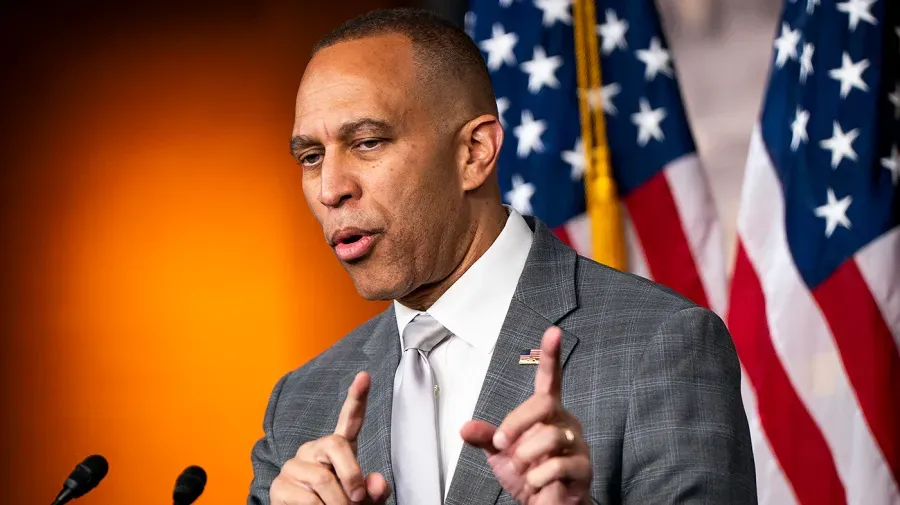
Democrats are coalescing around 'Medicare for More,' a plan to expand Medicare coverage to more Americans when they take control of Congress in January, with both the party's liberal and moderate wings agreeing to pursue it quickly next year. The consequence for decision-makers is that the design fight that follows will determine how fast coverage expands and which parts of the health care industry absorb the change.
Democrats have found something rare in Washington: agreement. When they take control of Congress in January, both the party's liberal and moderate wings say they want to move fast on 'Medicare for More,' a plan to expand Medicare coverage to more Americans. That is a genuine consensus, the kind that usually takes a party years to build. It is also, by the source's own framing, the easy part. As Democrats eye ways to actually deliver on it, the hard part begins.
Start with what 'Medicare for More' is not. It is not 'Medicare for All,' the single-payer vision that dominated Democratic health care debates in recent election cycles. Historically, the 'More' framing has described incremental expansion of the existing program rather than a wholesale replacement of private insurance. That distinction is the entire reason the truce holds. It lets liberals claim real momentum toward universal coverage while letting moderates tell constituents back home that they are not torching the employer-based system that covers most working Americans. The source does not specify which expansion mechanism Democrats have settled on, and that is precisely the open question.
Why the truce matters so much. For years, the party's health care argument has been a proxy war between its wings, with one side pushing for a sweeping public program and the other warning about cost, disruption and swing-district backlash. A consensus policy that bridges that divide is politically valuable in a way that a slogan is not: it is something leadership can actually schedule, whip and pass. Both sides agreeing to pursue 'Medicare for More' quickly next year removes the first and usually fatal obstacle, which is the fight over whether to try at all.
The mechanics are where this gets real. Congress is not a single lever. In the Senate, most legislation needs 60 votes to overcome a filibuster, a threshold that has historically pushed major health care expansions into budget reconciliation, the procedural track that requires only a simple majority but comes with strict rules about what can be included. The Affordable Care Act's coverage expansion famously moved through that track in 2010. Those rules typically favor spending and tax provisions over structural rewrites of how insurance markets operate. So the 'how' is not a technicality. In health care, the mechanism is the policy.
Then there is the money. Medicare does not pay providers what commercial insurers pay. Historically, Medicare reimbursement rates run below private rates for the same services, which is why hospitals, physician groups and drugmakers watch any expansion of the program with a mix of volume optimism and margin anxiety. More covered people means more paying patients. It also means a larger share of revenue set by government rates rather than negotiated contracts. For a hospital system CFO, that trade-off is the entire ballgame, and it gets decided in the design phase, not the rollout.
Employers should be watching too. If 'More' means letting older workers or near-retirees buy into Medicare, the second-order effect lands directly on corporate benefit costs. Historically, shifting older and more expensive employees off employer plans and onto a public program has been framed as relief for balance sheets. It also shrinks the commercial risk pool, which can push premiums higher for the workers who remain. That is the kind of quiet actuarial consequence that never makes a rally sign but always shows up at renewal.
What to watch from here. Three things: the mechanism, the timeline behind 'quickly,' and the pay-for. The source says both wings want to pursue the plan next year, but 'next year' is an intention, not a schedule. Watch whether the consensus survives contact with an official cost estimate, and whether moderates stay on board once the offsets are named out loud. Watch, too, whether the word 'More' quietly expands in scope as the drafting proceeds, because that is how incremental programs have historically become something larger.
The strategic stakes. For anyone running a company with a large hourly workforce, a hospital system, a health plan or a drug pipeline, the next few months are a positioning exercise, not a spectator sport. The party has agreed on the destination. It has not agreed on the route, and the route is where the money, the margins and the coverage decisions actually live. That is the hard part Democrats have been promising to get to. In January, they arrive.
This story's Key Insights and Take-aways are locked.
Create a free account to unlock Executive Actions for one credit.
Register to UnlockAlways free for Executives Club members. Join the Club
More in Politics
'Mentor grandfather, not the godfather': GOP chairs brace for Trump's 2028 grip
Two dozen-plus Republican state and county leaders tell Politico they are stuck with Trump in 2028, and the polling shows why they cannot say so out loud.
Hakeem Jeffries' Three Tests: Trump, Schumer's Job and Stephen Miller
The Democratic nominee for House speaker is now on the record about investigating Trump, whether Chuck Schumer should be majority leader, and whether he would ever sit down with Stephen Miller.
Republicans Barred Her From Capitol Bathrooms. Her Party Just Promoted Her.
Democrats elevated Sarah McBride, the first openly transgender member of Congress, to a top post, a direct answer to the GOP targeting that has shadowed her since she reached Washington.