

Hakeem Jeffries' Three Tests: Trump, Schumer's Job and Stephen Miller
The Democratic nominee for House speaker is now on the record about investigating Trump, whether Chuck Schumer should be majority leader, and whether he would ever sit down with Stephen Miller.
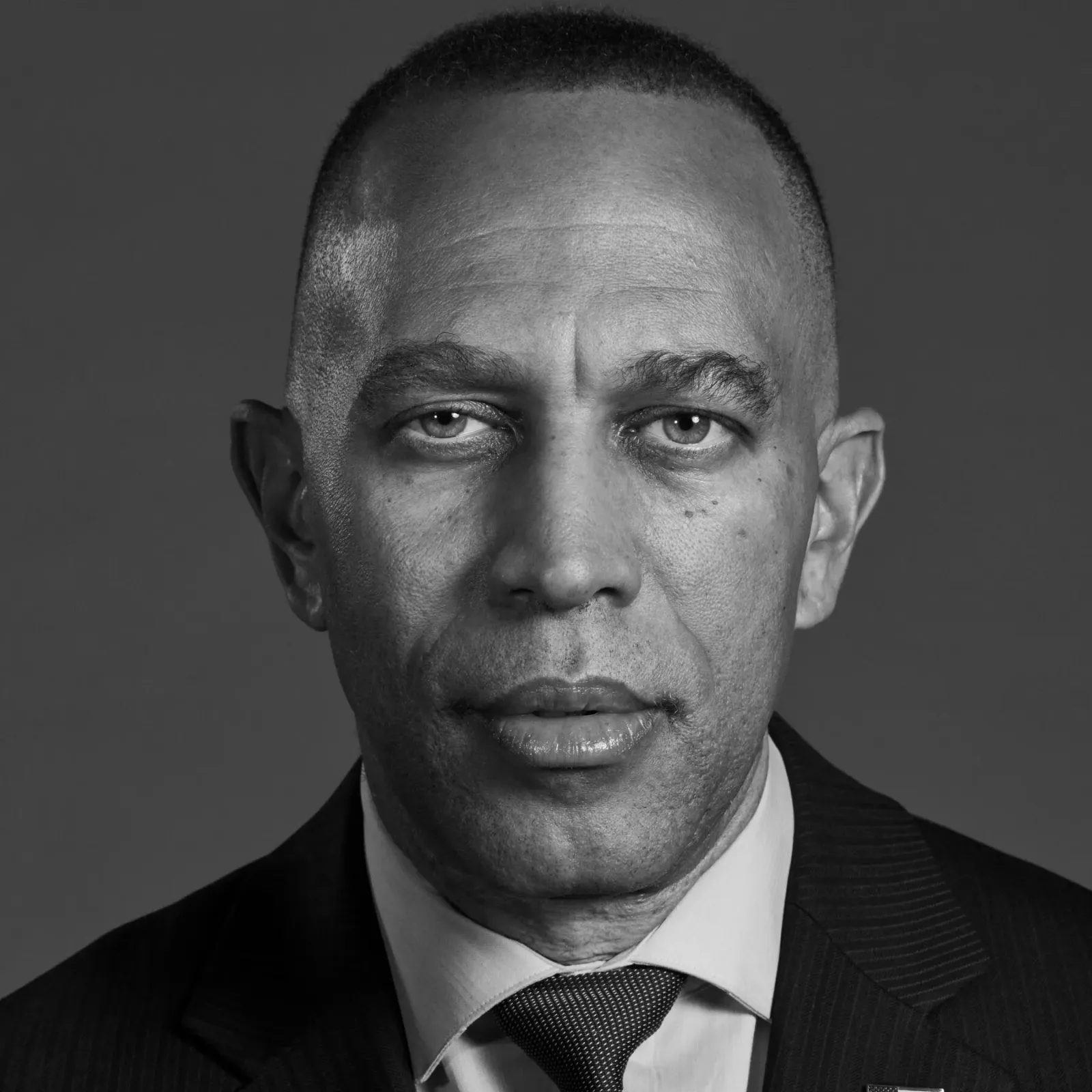
Hakeem Jeffries, the Democratic nominee for House speaker, has put three questions at the center of his rise: investigating Trump, whether Chuck Schumer should be majority leader, and whether he would ever meet with Stephen Miller. For executives and boards, how he sequences oversight against legislation will determine which Washington risks, from funding fights to subpoena-driven hearings, go live over the next two years.
Hakeem Jeffries, the Democratic nominee for House speaker, has put three questions on the record, and each one maps the terrain of the next Congress: investigating Trump, whether Chuck Schumer should be majority leader, and whether Jeffries would ever sit down with Stephen Miller. That is the substance of a New York Times interview that reads less like a profile than a preview of how the speaker's gavel would actually get used. Jeffries is not a backbencher auditioning for attention. He is the Democrat his caucus has nominated for the top job in the House, a post that sits second in the line of presidential succession and decides what does and does not reach the floor.
Start with the investigations, because that is where the loudest expectations sit. A speaker does not personally subpoena anyone. The speaker sets the machinery: which committees get gavels, which chairmen get resources, which document requests become formal demands, and how long a probe runs before it slams into an election calendar. So the question of investigating Trump is not really a yes-or-no about one man. It is a question about whether the House's oversight apparatus gets pointed at the executive branch at all, and how hard it is allowed to push. Oversight is also the cheapest thing a new majority can produce. It requires no sixty votes, no Senate deal, no White House signature. It requires a chairman, a staff, and a camera.
The second question is the delicate one, because it points inward. Whether Chuck Schumer should be majority leader is not a debate about Senate procedure. It is a debate about the Democratic Party's center of gravity, and about who gets to speak for it. Both men are New York Democrats who have spent years holding together a coalition that runs from deep-blue urban districts to the swing seats that decide majorities. Asking that question out loud, even carefully, is a statement about generational turnover and about how much patience the party's base still has. It is also the kind of answer that cannot be unsaid once it is given.
Then there is Stephen Miller, a figure long associated with hardline immigration policy inside Trump's orbit. Sitting down with him is a categorically different act from investigating him. A subpoena is a demand. A meeting is a signal. If a Democratic speaker takes a meeting with an architect of the policies his party has spent years attacking, the base will read it one way and the business community another. If he refuses, he keeps the moral clarity and loses the channel. The question is really about whether this speaker intends to negotiate with the administration or litigate against it in public.
Here is why all three questions land on the same desk. The speaker controls the floor, and almost everything that matters in Washington needs floor time. Appropriations, the debt limit, tax legislation, trade votes: none of it moves without the speaker's calendar. In practice, that makes the speaker the single most important negotiator in any divided government, whether or not he wants the job. Historically, the tension is brutal, because oversight and legislation compete for the same hours, the same staff, and the same political capital. Every subpoena is a day not spent on a bill. Every hearing is a headline that swing-district members have to answer for back home.
That tension is the real test of the Jeffries moment. A speaker who leads with investigations satisfies the activist base and generates a constant stream of coverage, but risks defining his majority by what it opposes rather than what it passes. A speaker who leads with legislation gets the deals and frustrates the people who knocked doors. The sequencing, not the rhetoric, is the tell. Watch which committee chairmen get named first, whether the first floor votes are messaging bills or must-pass funding, and how quickly a government funding deadline becomes a negotiating table. Those choices get made in the first hundred days, and they set the tone for two years.
For executives, boards, and anyone with capital exposed to Washington, the practical read is straightforward. The speaker's early choices tell you which risks are live: a funding fight that runs to the edge, a debt limit standoff that rattles credit markets, oversight hearings that turn into subpoena fights and drag regulated industries into the middle of them. The reverse is also true. A speaker who keeps a channel open to the White House can move tax and permitting packages that a purely oppositional House never could. Both paths are available. The interview is the first signal of which one Jeffries intends to walk.
What to watch next is not the rhetoric but the roster and the calendar. Committee gavels, the first oversight letters, the first scheduled votes, and any sign that a meeting with the administration is actually on the table. Those are the four tells. Jeffries has now named the three questions. The answers will be written in scheduling decisions, and they will land faster than most people expect.
This story's Key Insights and Take-aways are locked.
Create a free account to unlock Executive Actions for one credit.
Register to UnlockAlways free for Executives Club members. Join the Club
More in Politics
'Mentor grandfather, not the godfather': GOP chairs brace for Trump's 2028 grip
Two dozen-plus Republican state and county leaders tell Politico they are stuck with Trump in 2028, and the polling shows why they cannot say so out loud.
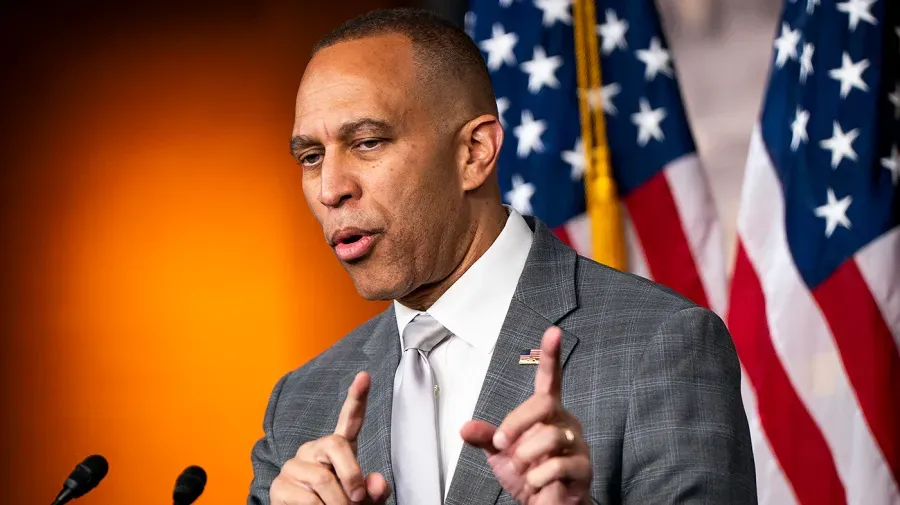
Democrats Agree on 'Medicare for More.' The Hard Part Starts in January.
A rare liberal-moderate truce has produced a consensus health plan, but the mechanism Democrats choose will decide who gets covered, how fast, and who pays for it.

Republicans Barred Her From Capitol Bathrooms. Her Party Just Promoted Her.
Democrats elevated Sarah McBride, the first openly transgender member of Congress, to a top post, a direct answer to the GOP targeting that has shadowed her since she reached Washington.