

'Mentor grandfather, not the godfather': GOP chairs brace for Trump's 2028 grip
Two dozen-plus Republican state and county leaders tell Politico they are stuck with Trump in 2028, and the polling shows why they cannot say so out loud.
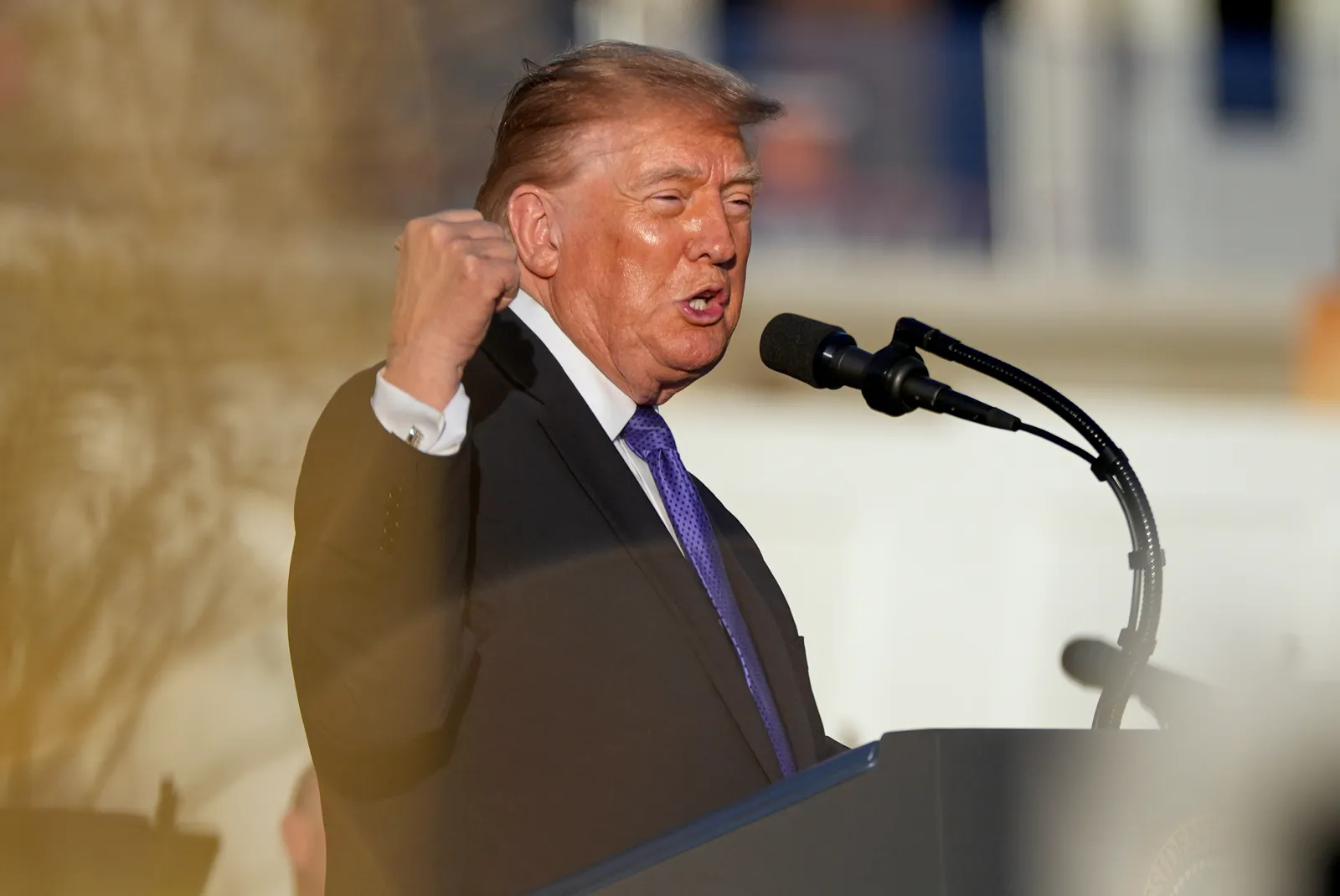
Republican state and county party chairs across red, blue and purple states tell Politico they expect President Donald Trump to dominate the 2028 nominating fight, even as a Reuters/Ipsos poll puts his approval at 32% overall and a Politico poll finds 56% of his 2024 voters want the party to distance itself from him. For donors, candidates and operatives, the 2028 primary is already being shaped by Trump's endorsement of RNC Chair Joe Gruters and his super PAC's fundraising, not by a debate the party is willing to have publicly.
Kansas GOP chair Danedri Herbert has a wish for President Donald Trump, and she is happy to say it out loud: "I hope he becomes kind of the mentor grandfather, and not the godfather." That single line is the entire 2028 Republican primary in miniature. Herbert, who chairs the Kansas Republican Party, added the part that makes it sting: "In America, we hope and expect our presidents to not keep a tight grip on the party, to recognize that now it's time for me to mentor the next generation." She is not expecting that to happen. Neither is anyone else.
Politico interviewed more than two dozen GOP state and county officials from red, blue and purple states since Election Day, and the picture is a party still processing a devastating midterm drubbing with no agreed plan for what comes next. The polling explains the anxiety. A Reuters/Ipsos survey put Trump's approval at 32% overall and 70% among Republicans, down from 91% on Inauguration Day last year. A Politico poll taken after the midterms found 56% of Trump's own 2024 voters believe the Republican Party needs to distance itself from him and his agenda. And yet nobody in the party expects that to happen.
Trump is already moving to make sure it does not. He endorsed Republican National Committee Chair Joe Gruters for another term and ordered his powerful super PAC to continue fundraising ahead of 2028. Arkansas GOP chair Joseph Wood put the arithmetic bluntly: "President Trump is going to be part of it, whether we want that or not. His voters are still going to be Republicans that we need to have come out in this election in two years."
That resignation runs through the interviews. Nebraska Republican Party chair Mary Jane Truemper: "Donald Trump's going to play whatever role he wants to play." Then the follow-up: "He's the president. I look at things as they are and not as I want them to be." Outgoing Minnesota Republican Party chair Alex Plechash framed it as a salvage operation: "We need to capitalize on what he brought to the party and do what we can to retain that. But there has been a definite turn in the political landscape."
A handful went further. Vermont GOP chair Paul Dame: "I don't know how much he really has to offer. I think most people are ready to move on in a new direction." Michael Bub, who chairs the Republican Party in ruby-red Taylor County, Wisconsin, was blunter still: "He should stay out of it. Look at the people he endorsed: They lost."
On the cause of those losses, virtually every official cited a poor political environment driven in part by the president's handling of the economy and the war in Iran. Almost none would say it directly. West Virginia GOP chair Josh Holstein: "I don't want to play the blame game, because I just don't think it's productive. But I do think that it was more economics than it was anything." That gap between private diagnosis and public attribution is its own data point about how criticism of Trump still operates inside the party.
The RNC's official answer is full loyalty. Spokesperson Natalie Baldassare said "President Trump remains the unequivocal leader of our party" and that Republicans "will continue to harness his ability to energize our voters and expose the Democrats' disastrous record to win in 2028." The White House declined to add anything, pointing to the RNC's response. Not everyone is on board with the machinery either. Kentucky chair Robert Benvenuti is backing RNC co-chair KC Crosbie's challenge to Gruters, and still wants Trump front and center. "He won't take a back seat and should not take a back seat," Benvenuti said. "I think he's been a tremendous leader for our country. I think his message will still ring true and will be very helpful as we go into 2028."
Others want the institution to stay out of the way. Connecticut GOP chair Ben Proto: "We shouldn't put our hand on the scale. I think Republican primary voters are pretty savvy and pretty smart and can figure out who our best candidate is going into the '28 election." Oklahoma chair Charity Linch went further: "Republicans should embrace whoever we decide we're going to get behind as a new president, and let the Trump era be gone by the time we're in 2028."
The strategic read for anyone watching: the party's base voters and its institutional leadership are pulling in different directions, and the leadership has decided not to fight it. Many chairs still praise Trump's ability to bring new voters into the party and credit him for turning them out for other candidates, which is precisely why the criticism stays soft. For donors, candidates and operatives planning 2028, the primary calendar is being shaped right now, by an endorsement and a super PAC, not by a debate the party is willing to have out loud. The grandfather may not be available. The godfather is already fundraising.
This story's Key Insights and Take-aways are locked.
Create a free account to unlock Executive Actions for one credit.
Register to UnlockAlways free for Executives Club members. Join the Club
More in Politics
Democrats Agree on 'Medicare for More.' The Hard Part Starts in January.
A rare liberal-moderate truce has produced a consensus health plan, but the mechanism Democrats choose will decide who gets covered, how fast, and who pays for it.
Hakeem Jeffries' Three Tests: Trump, Schumer's Job and Stephen Miller
The Democratic nominee for House speaker is now on the record about investigating Trump, whether Chuck Schumer should be majority leader, and whether he would ever sit down with Stephen Miller.
Republicans Barred Her From Capitol Bathrooms. Her Party Just Promoted Her.
Democrats elevated Sarah McBride, the first openly transgender member of Congress, to a top post, a direct answer to the GOP targeting that has shadowed her since she reached Washington.