
Deus Ex creator blasts GTA 6's billion-dollar model: 'last of its kind'
Warren Spector praised the game and torched the economics behind it, arguing the industry's most expensive production model should end with the title that perfected it.
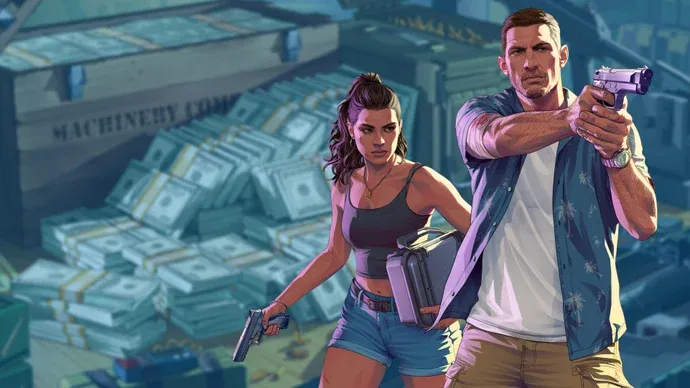
Warren Spector, the designer behind Deus Ex, has praised GTA 6's achievements while lambasting its billion dollar development model, writing that he hopes the game is "the last of its kind even if it's the best we have to offer." For decision-makers in any capital-intensive content business, the critique reframes a prestige hit as a concentration risk that peers may be tempted to copy rather than retire.
Warren Spector, the game designer behind Deus Ex and one of the architects of the immersive sim, has taken a swing at GTA 6 that lands harder than a review score. As the game finally arrives, Spector paired praise for what it achieves with a flat rejection of how it was built, writing: "I just hope GTA 6 is the last of its kind even if it's the best we have to offer." Eurogamer reported the comments. Read that sentence twice, because the two halves pull in opposite directions. The first half concedes the game may be the finest thing the medium can produce. The second half says he hopes the industry never does it again.
The phrase doing the work is "last of its kind." Spector is not arguing that GTA 6 is a bad game, and nothing in his comment suggests he wants it to fail. He is arguing that the production model behind it, which he characterizes as a billion dollar development, is a destination the industry should reach once and then abandon. That is a subtler and more uncomfortable critique than a bad review. A bad game can be dismissed. A great game built on a model you consider ruinous forces everyone in the room to admit the model works, at least for the one company that can afford it. Spector's stated hope is that the success does not become the template.
Spector's authority on this comes from a career spent at the opposite end of the budget spectrum. Deus Ex, his best known work, is remembered for density rather than scale: systems layered on systems, player choice over spectacle, a game that trusted players to find their own way through. Immersive sims, the genre he helped define, are typically made by teams a fraction of the size of the studios that produce open-world blockbusters. The source describes him as increasingly outspoken, and this comment fits that pattern: a designer with nothing left to prove, saying out loud what plenty of people inside large studios are likely thinking. He is not a competitor sniping at a rival's launch. He is a genre elder using a moment of maximum attention to make a structural point.
Strip away the personalities and the argument is about capital. Blockbuster development costs scale with headcount and calendar time, and both have grown for years: hundreds of people, five to seven years, multiple studios, marketing on top. For context, the studio behind the Grand Theft Auto series, Rockstar Games, sits inside publisher Take-Two Interactive, which means a single title of this size is not just a creative bet but a balance-sheet event. A budget in the billions turns one product into a bet-the-company proposition. When a title that size slips, the whole fiscal year slips with it; when it lands, it can carry a publisher's entire slate. That concentration is exactly what makes the model both irresistible and fragile. Historically, the games business has absorbed these escalations by finding new revenue: online stores, downloadable content, subscriptions, in-game purchases. Each one widened the audience, and each one also raised the cost of competing at the top.
The second-order effects are where this gets interesting for anyone outside games. If the ceiling keeps rising, the middle of the market thins out. Mid-size studios, the ones that historically trained talent and took creative risks, cannot match the spend and cannot survive on the margins a smaller hit provides. Talent concentrates into a handful of mega-projects, which means fewer people learn to ship, and fewer experiments happen at all. Meanwhile, the same logic has spread well beyond gaming. Streaming services, film franchises, and platform content arms have all been pushed toward nine-figure and ten-figure bets on the theory that only scale can win attention. Spector's complaint, read broadly, is a warning about what happens when the only viable strategy is the most expensive one.
There is a genuine paradox in his framing, and he names it himself. "Even if it's the best we have to offer" is not a throwaway clause. It concedes that the billion dollar model currently produces the industry's high-water mark, which is precisely why it is so hard to argue against. If cheaper games were visibly better, the case would make itself. They are not always, and that is what keeps the money flowing to the top of the market. The honest version of the debate is not art versus commerce. It is whether a medium can keep its best work while changing who gets to pay for it, and how many times.
For executives, the transferable lesson is about concentration risk dressed up as ambition. Any content business that funnels its best people and its balance sheet into one enormous bet is making the same trade: maximum upside, minimum resilience, and a shrinking bench behind the flagship. Spector's hope that GTA 6 is the last of its kind may or may not come true. What is already true is that the question has moved from the margins of the industry to its center, asked by the people who built it. When the architects start hoping their own masterpiece is a one-off, boards in every capital-intensive creative business should be listening.
This story's Key Insights and Take-aways are locked.
Create a free account to unlock Executive Actions for one credit.
Register to UnlockAlways free for Executives Club members. Join the Club
More in Entertainment

GTA 6 banks $3.8bn in one day, torching every launch record
One game just out-earned every video game launch and every single-day film box office haul in history, and the fallout lands on every media CEO's forecast.

GTA VI Racked Up $3.79 Billion in a Single Day, Topping Every Film Ever
A 13-year wait produced a $3.79 billion day, more than any movie has made in its entire run, and it resets the launch math for every studio, streamer, and brand chasing the same attention.

GTA 6 sells 32.5M pre-sales and $3.79B day one, torches 13-year record
Rockstar's sequel didn't just beat Grand Theft Auto V's 13-year-old benchmark; it reset what a launch can be, with 32.5 million pre-sale copies and $3.79 billion in a single day.