
DIA: Russia's Nuclear-Armed Satellite Could Threaten Thousands at Once
The Pentagon's intelligence arm says a single detonation could degrade satellites in low, medium and geosynchronous orbit, and it names China, Russia, Iran and North Korea as the drivers.
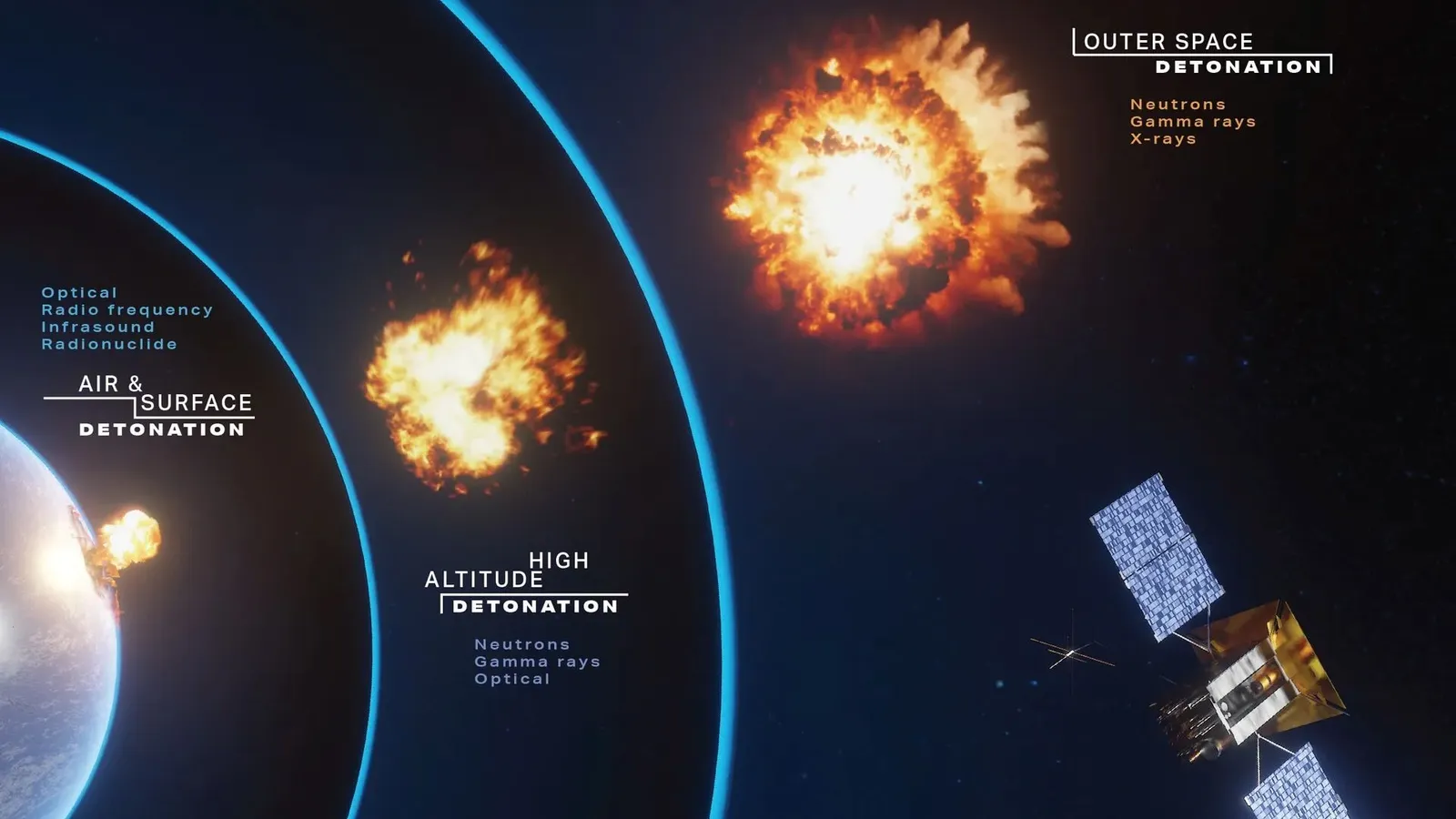
The U.S. Defense Intelligence Agency's 2026 "Challenges to Security in Space" report states that Russia is developing a satellite designed to carry a nuclear weapon, and that China, Russia, Iran and North Korea are fielding counterspace capabilities that threaten all space systems. For executives whose operations, navigation, timing or communications depend on orbit, the report formalizes a threat model that now includes irreversible loss, not just temporary disruption.
Russia is developing a satellite designed to carry a nuclear weapon, and the U.S. Defense Intelligence Agency has now put that assessment in writing. The finding sits inside the 2026 edition of "Challenges to Security in Space," the DIA's third unclassified pass at the threats facing U.S. national security in orbit. The consequence, in the agency's own words: "A space-based capability such as this could cause rapid and sudden loss or degradation of thousands of satellites operated by countries and companies around the world," along with the "vital communications, navigation, scientific, meteorological, commercial and national security services they provide." Russia is pursuing the capability despite its obligation to comply with the 1967 Outer Space Treaty, the U.N. agreement that prohibits placing objects carrying nuclear weapons, or any other weapons of mass destruction, into orbit around Earth.
The report's up-front finding is blunt: China, Russia, Iran and North Korea are developing, testing, deploying and using space capabilities "in a way that threatens the security of all space systems and their associated space benefits." Information in the report is current as of July 2026. DIA's mission is to provide intelligence on foreign militaries to help prevent wars and win the ones that are fought, and this edition reads like a map of how fast the domain has militarized. China and Russia, the agency says, are developing "a formidable spectrum" of offensive capabilities to degrade or destroy other countries' space services, spanning kinetic destruction, sophisticated jamming and cyber operations.
The mechanics matter because they determine what is recoverable. Counterspace operations, the DIA notes, can be offensive or defensive, and can reversibly or irreversibly deny, disrupt, degrade, damage or destroy a space object or a component of a space system. Antisatellite missiles strike kinetically and can produce debris that stays in orbit for decades or even centuries. Cyber counterspace attacks target the satellite data inside the transmission signal and the systems that use, transmit and control the flow of that data. Electronic attacks, including jamming and spoofing, go after a nation's use of the electromagnetic spectrum and can interfere with communications and command and control of military forces, including piloted and unpiloted vehicles. Directed-energy weapons can temporarily or permanently blind image-collecting satellites and affect overhead persistent infrared and weather sensors, denying the ability to monitor, track and target forces.
A nuclear detonation in space, the DIA warns, could be tailored to impact satellites in most orbits: low Earth orbit, where commercial and reconnaissance satellites sit; geosynchronous orbit, home to critical communications; and medium Earth orbit, which carries navigation and timing satellites. That is the whole stack, not a slice of it.
The commercial layer is what turns this into a boardroom problem rather than a purely military one. The DIA notes that "the production of cheaper, smaller, and simpler satellites, which are faster to develop and deploy, along with the expansion of commercially available launch services, are driving the rapid integration of commercial space alternatives to support national security." The same availability that lets startups and allied governments buy capacity also extends to state and non-state actors with malign interests. Cheaper satellites mean more of them, and more of them means more targets in a domain where debris does not check ownership.
Beyond Earth orbit, the report flags cislunar space, the region between our planet and the moon, as a growing arena of scientific and economic interest. China "may be exploring military applications from cislunar space," the report says. Beijing has stated a goal of developing a cislunar space economy by 2045 and is the first country to attempt sustained operations on the far side of the moon, with numerous projects slated to support that effort through the next decade. China portrays its interest in cislunar space as peaceful, but PRC officials have also discussed pursuing military capabilities there.
Peter Garretson, a senior fellow in defense studies at the American Foreign Policy Council and a strategy consultant focused on space and defense, told Space.com that the most significant positive change from earlier DIA appraisals is the explicit assessment that Russia is developing a satellite designed to carry a nuclear weapon. He said the expanded treatment reflects concerns in Congress and the Trump White House. He also flagged a consequential omission: the 2022 edition's treatment of research competition, surveillance beyond geosynchronous Earth orbit, and the potential military use of deep space for staging reserve forces has disappeared. In Garretson's view, the DIA needs to help Congress and the attentive public fit the puzzle pieces together on what China is doing and how it ladders into a strategy of comprehensive space dominance. "Everything they are doing, from launch cadence, reusable launch, commercial space investment, investments in power, propulsion, repair, manufacturing, to commercial assets working together," he said, supports both economic expansion toward new resources and what China hopes will be overwhelming military power and strategic depth.
Garretson called China's push into extractive and in-space industries "truly the strategic threat that could crush American space power," adding: "Now is the time to be making the investments to ensure we have a 'freedom's forge' and 'arsenal of democracy' in space that can protect the open space commerce that is the nation's strategy." The DIA's own outlook is that space will remain increasingly competitive and crowded. "The increase of Chinese, Russian, Iranian and North Korean counterspace capabilities, rapid growth in the number of space objects, and the proliferation of requirements for space-enabled services," the report states, "will all complicate operations in space in the coming decade." For operators, insurers, launch providers and any company whose business runs on orbit, the threat model just got a formal, public upgrade.
This story's Key Insights and Take-aways are locked.
Create a free account to unlock Executive Actions for one credit.
Register to UnlockAlways free for Executives Club members. Join the Club
More in Science

Anthropic's I.P.O. Made Rank-and-File Researchers Worth Tens of Millions
Researchers who joined just a few years ago are now worth tens of millions, and the windfall resets the pay benchmark for every private A.I. lab still paying in paper.

Sea Lion Culling Strategy Fails: New Model Says Killing Them Won't Save Salmon
The latest research from AAAS overturn a long-held conservation assumption, forcing policymakers to rethink critical resource allocation in marine ecosystems.

Microplastics do more than pile up: they react with water to damage cells
Scientists have found that plastic particles can generate highly reactive molecules in water, a mechanism that could explain links to heart attacks, strokes, and neurological disorders.