

DR Congo's 17th Ebola outbreak is already its worst: 5,000 dead, no proven vaccine
A rare strain with a near-50% death rate is outrunning the response, and the survivor of west Africa's 2013-2016 outbreak says faith leaders and funding, not medicine alone, will decide how this ends.
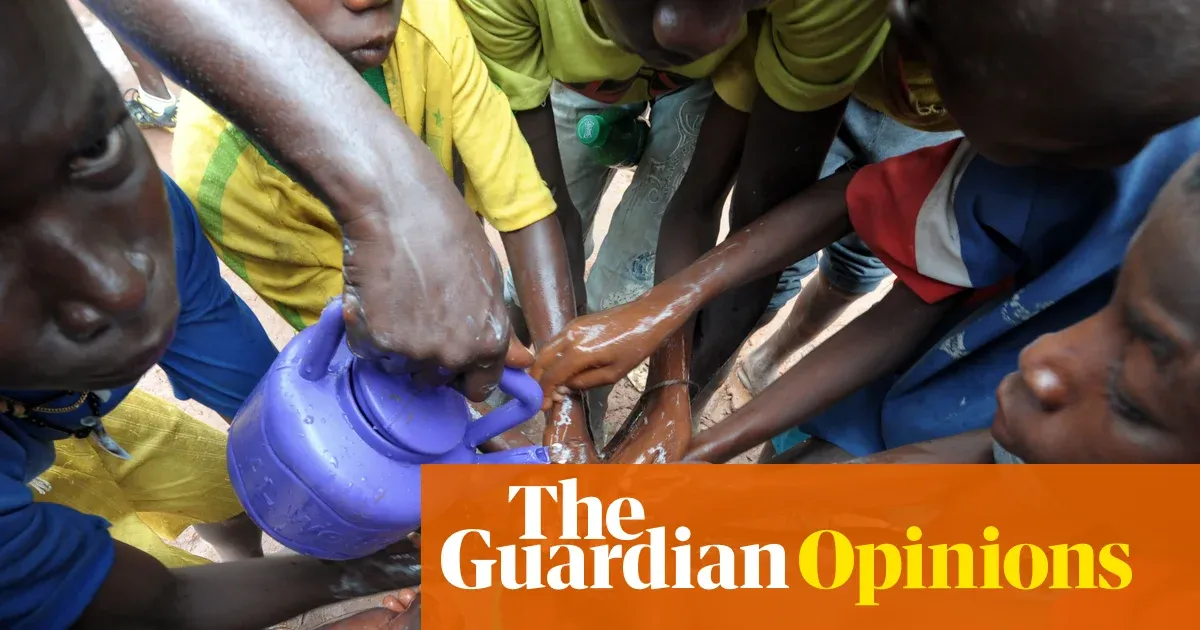
Kayode Akintola, who lived through the 2013-2016 west Africa Ebola outbreak that produced 28,600 cases and 11,300 deaths, argues in the Guardian that the far deadlier Bundibugyo outbreak now spreading in eastern DR Congo cannot be contained by medicine alone. For funders, health ministries and NGOs, his case is that local faith leaders and adequate, timely funding are the operational levers that decide whether the response catches the virus or loses the race.
More than 5,000 people have died in the eastern Democratic Republic of the Congo, and this is already the worst Ebola outbreak the country has ever recorded. It is the 17th time the virus has surfaced there. The strain doing the killing is Bundibugyo, a rare variant with no proven vaccine and no proven treatment, and almost 50% of those infected have died. The UN is warning that the spread of the disease is outstripping the response, and it is widely expected to become the worst Ebola outbreak in history.
The person who explains why that number is not just a medical failure is Kayode Akintola, who lived through the world's worst outbreak of the disease, in west Africa between 2013 and 2016. Back then, anyone infected had a nearly 40% chance of dying. The toll was 28,600 cases and 11,300 deaths. Writing in the Guardian, Akintola makes an argument that should be read by every funder, health ministry and NGO with a budget line for outbreak response: beating Ebola takes more than medicine. It takes the support of local faith leaders, and it takes adequate funding.
Start with speed, because that is what has changed. The rare strain now circulating in eastern DR Congo is spreading much more quickly than the virus did a decade ago in Sierra Leone, Liberia and neighbouring countries. In an outbreak, speed is not a detail; it is the whole game. Every day the response lags, the number of people each infected person can reach grows, and the cost of catching up grows with it. The fatality gap tells the same story. West Africa's outbreak killed nearly 40% of those infected. This one has killed almost 50%. A virus that kills half the people it reaches, in a region where the response is already behind, is a different order of problem.
Which is why the faith leaders matter more than they sound like they should. Ebola does not spread in a laboratory. It spreads in homes, at bedsides and at funerals, through direct contact with the bodily fluids of someone who is sick or has died. Historically, burial rituals and caregiving have been among the most efficient transmission routes for the virus, which is exactly why outbreak responders have learned that the people who can slow it down are often not clinicians. They are imams, pastors and community elders who can persuade families to change how they bury their dead, and to bring the sick in for treatment rather than hide them. Akintola's point is that this kind of trust cannot be airlifted in during a crisis. It has to be built with the people who already hold it.
The second half of his argument is money, and it is the half that gets decided in rooms far from the outbreak. The UN's warning that the spread is outstripping the response is, in practice, a statement about capacity: contact tracers, treatment beds, safe burial teams, protective equipment and the salaries that keep them staffed. Historically, outbreak funding arrives late and in bursts, after the case curve has already bent upward, and it tapers before the last case is contained. That pattern is expensive. A response that is underfunded in month one becomes a far larger bill in month six, and the difference is paid in deaths rather than dollars.
There is also a scientific gap that no amount of coordination closes on its own. There is no proven vaccine or treatment yet for the Bundibugyo variant. That single fact separates this outbreak from the playbook health workers have spent the past decade refining, and it means the classic tools, isolation, contact tracing, safe burials and community consent, carry more of the weight here than they would in an outbreak where a licensed countermeasure exists. It also means the timeline is not something anyone can promise. Vaccine and treatment development runs on its own clock, and outbreaks do not wait for it.
Seventeen outbreaks in one country is not bad luck. It is a pattern, and patterns have causes: a virus that persists in animal reservoirs, health systems that are stretched thin, and communities that have learned, sometimes for good reason, to be wary of outsiders in protective suits. Each outbreak that is not fully contained leaves behind the conditions for the next one. That is the part of Akintola's argument that should travel furthest beyond public health. The response to an outbreak is a trust problem and a logistics problem before it is ever a laboratory problem.
For decision-makers, the stakes are concrete. Funders who treat outbreak response as emergency charity rather than standing infrastructure will keep paying for the same crisis twice. Governments and NGOs that build relationships with local religious and community leaders before the next outbreak will move faster when it arrives. And anyone who assumed Ebola was a solved problem from a decade ago should note what the numbers say now: a rare variant, no proven vaccine, almost half of those infected dying, and a UN warning that the response is losing the race. The medicine matters. It is not, on its own, the answer.
This story's Key Insights and Take-aways are locked.
Create a free account to unlock Executive Actions for one credit.
Register to UnlockAlways free for Executives Club members. Join the Club
More in Science

Anthropic's I.P.O. Made Rank-and-File Researchers Worth Tens of Millions
Researchers who joined just a few years ago are now worth tens of millions, and the windfall resets the pay benchmark for every private A.I. lab still paying in paper.

A Puppeteer Is Now Oscar-Eligible for Playing Rocky Opposite Ryan Gosling
James Ortiz's Best Supporting Actor eligibility at the 99th Academy Awards turns puppetry into an awards-season argument about credit, contracts, and who counts as talent.

BepiColombo parks at Mercury after 8 years, 6 flybys and a solar panel scare
Europe and Japan just pulled off the hardest orbital insertion in the inner solar system, but the mission's real payoff, and its science, doesn't start until April 2027.