
Egypt unearths a 2,350-year-old necropolis rich in gold and falcon mummies
The northern Egypt burial ground spans the Late, Macedonian and Ptolemaic periods, and its tongue-shaped gold and ushabti figurines sharpen the picture of how Egyptians engineered the afterlife.
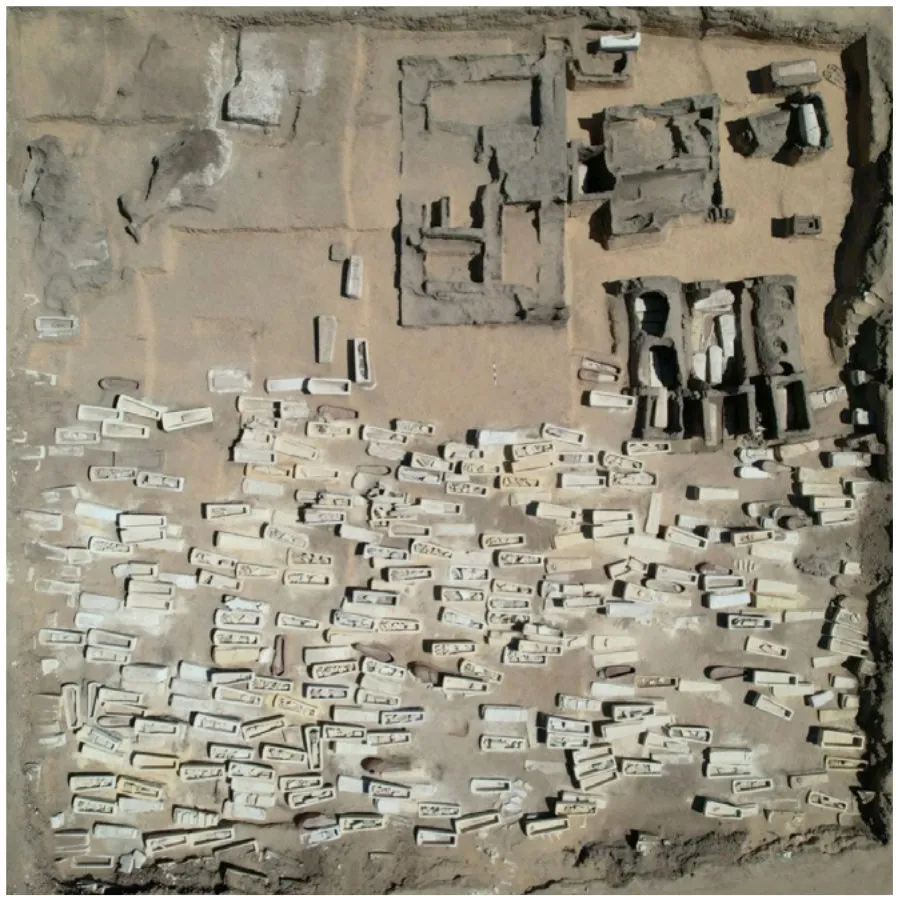
Archaeologists working in northern Egypt have uncovered a necropolis dating back around 2,350 years, packed with gold artifacts, jewelry, faience ushabti figurines, tongue-shaped gold pieces and mummified falcons, spanning the Late, Macedonian and Ptolemaic periods. For leaders in culture, tourism, museums and heritage finance, the find is fresh evidence that excavated antiquities remain one of the most reliable engines of attention, footfall and national soft power.
Archaeologists in northern Egypt have opened a necropolis that sat undisturbed for roughly 2,350 years, and it did not give up its secrets quietly. The burial ground has yielded a wealth of gold artifacts, jewelry and figurines, including tongue-shaped pieces of gold, faience ushabti figurines and mummified falcons. The material spans three distinct chapters of Egyptian history: the Late Period, the Macedonian period and the Ptolemaic period. That is a rare run of continuity, and it is the detail that makes this more than a pretty haul of shiny objects.
Start with the gold tongues. In Egyptian funerary practice, a tongue-shaped gold amulet was historically placed with the deceased so they could speak, and speak persuasively, before the gods of the underworld. The logic was bureaucratic as much as spiritual: death was a tribunal, and you wanted your case heard. The ushabti figurines, typically made of faience, a glazed ceramic that was one of Egypt's signature craft products, were the workforce of the afterlife, small stand-ins meant to answer the call when the deceased was summoned to labor. The mummified falcons point somewhere else entirely. The falcon was historically tied to Horus, and animal mummies in Egypt were frequently votive offerings, left by pilgrims paying for divine favor. Read together, the finds describe a culture that treated the afterlife as an operation to be staffed, supplied and argued.
Dating back around 2,350 years places the necropolis at roughly 325 BC, which is to say, right on one of the great seams of ancient history. Alexander the Great took Egypt in 332 BC. After his death, his general Ptolemy founded the dynasty that ruled until Cleopatra VII and the Roman annexation in 30 BC. The artifacts span the Late, Macedonian and Ptolemaic periods, which suggests the burial ground stayed in use across the handover rather than being abandoned. That matters, because it lets archaeologists watch how funerary practice shifted while the people in charge changed language, dress and gods. Historically, conquerors rarely erased Egyptian religion; they folded themselves into it, and the Ptolemies presented themselves as pharaohs. A cemetery that keeps working through a regime change is ground-level evidence of how that merger actually functioned.
Necropolises are the closest thing Egyptology has to a balance sheet. Temples and palaces advertise power; graves record what people believed enough to pay for. Funerary goods were an industry in the ancient world, with workshops, standardized molds and supply chains reaching for gold, quartz and imported materials. When a site yields jewelry and figurines in quantity, it speaks to demand: who could afford the full package, who settled for faience, and how religious obligation shaped household spending. That is the kind of second-order detail that turns a discovery from a headline into a research program, and it is why archaeologists get more excited about a workshop's worth of ordinary objects than about a single showpiece.
For the wider economy of culture, finds like this are fuel. Egypt's antiquities have historically underpinned a tourism sector that has long been one of the country's largest sources of foreign currency, and major discoveries reliably generate a wave of bookings, exhibition interest and academic funding. Museums, meanwhile, are in a permanent arms race for objects and stories that fill galleries and justify membership prices. A necropolis with gold, jewelry and mummified falcons is precisely the material that travels well: visually striking, easy to explain, and tied to the one ancient civilization most audiences can name without help.
That attention arrives with a legal frame. Egypt has long enforced strict protections on its antiquities, and the international trade in newly surfaced Egyptian objects is constrained by national law and by the 1970 UNESCO convention on cultural property. For institutions, the practical rule is that provenance matters more than beauty: a piece without a clean ownership history is a liability, not an asset. Discoveries made in-country, documented and published, strengthen the case for keeping collections at home and for loan-based exhibitions rather than outright acquisitions.
The immediate next steps are unglamorous and decisive. Conservation comes first, since gold survives well but faience and organic remains do not. Then documentation, imaging and analysis, typically including CT scanning of mummified remains and residue work on vessels, followed by peer-reviewed publication. Until that work is done, the honest reading of a site like this is: significant, promising and not yet fully interpreted. The timeline from excavation to scholarly consensus is measured in years, and the early press cycle always outruns the science.
Which is the real lesson for anyone watching from the outside. Heritage is one of the few assets that appreciates with every new discovery and cannot be manufactured. Egypt has a pipeline no competitor can replicate, and each excavation adds to a stock of cultural capital that converts into tourism, soft power and academic gravity. The necropolis in the north is 2,350 years old, but its value to the present is being minted right now.
This story's Key Insights and Take-aways are locked.
Create a free account to unlock Executive Actions for one credit.
Register to UnlockAlways free for Executives Club members. Join the Club
More in Science

Anthropic's I.P.O. Made Rank-and-File Researchers Worth Tens of Millions
Researchers who joined just a few years ago are now worth tens of millions, and the windfall resets the pay benchmark for every private A.I. lab still paying in paper.

Sea Lion Culling Strategy Fails: New Model Says Killing Them Won't Save Salmon
The latest research from AAAS overturn a long-held conservation assumption, forcing policymakers to rethink critical resource allocation in marine ecosystems.

Microplastics do more than pile up: they react with water to damage cells
Scientists have found that plastic particles can generate highly reactive molecules in water, a mechanism that could explain links to heart attacks, strokes, and neurological disorders.