

Eight years, 6bn miles: BepiColombo becomes second craft ever to orbit Mercury
Europe and Japan's double probe fires its thrusters on Saturday to become only the second spacecraft in history to orbit the smallest planet, and to explain a core that is unusually large for its size.
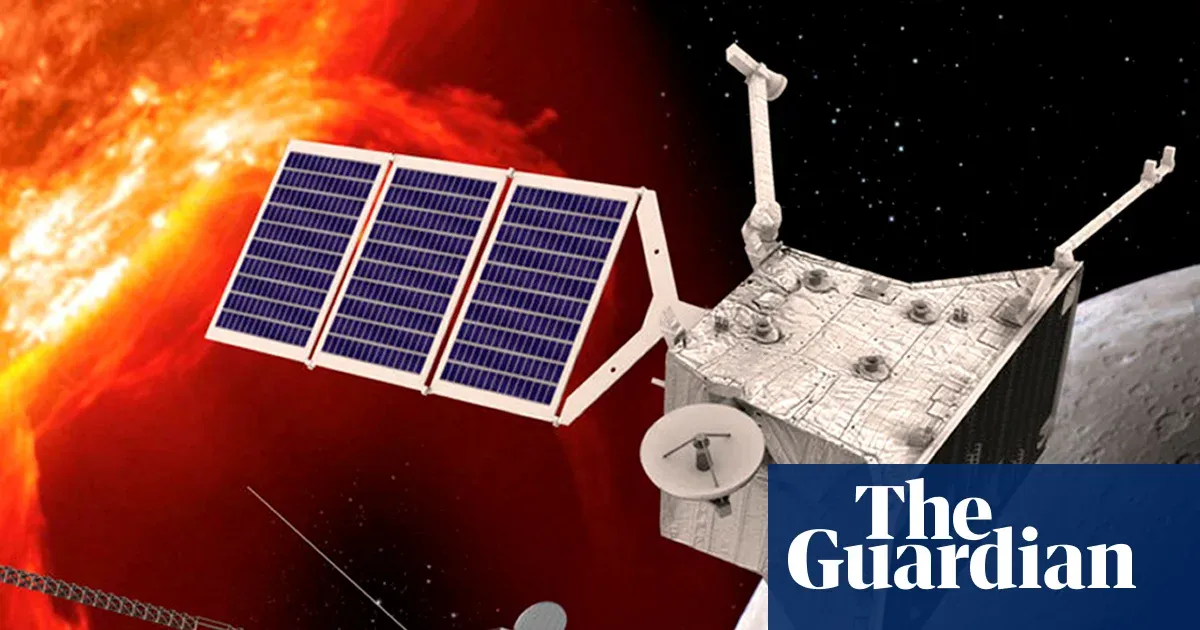
A joint European-Japanese mission, BepiColombo, has arrived at Mercury after a voyage of more than eight years and 6bn miles and will fire its thrusters on Saturday to become only the second spacecraft in history to circle the planet. For decision-makers it is a live case study in long-horizon capital: an eight-year, two-government commitment whose only return is public data, and whose payoff outlives the officials who funded it.
BepiColombo has arrived. After a voyage of more than eight years and 6bn miles, the joint European-Japanese mission is at Mercury and preparing to swing into orbit around the smallest planet in the solar system and the closest one to the Sun. Flight controllers will fire the spacecraft's thrusters on Saturday, a burn that, if it goes as planned, makes BepiColombo only the second mission in history to circle the first rock from the Sun. The first was NASA's MESSENGER, which orbited Mercury from 2011 until 2015. Everything the new mission sends home will therefore be second-generation data about a world that has had exactly one long-term visitor.
The double probe has two jobs, and they are the two hardest ones in planetary science: map the planet's surface, and study its interior. The payoff is the mystery that has hung over Mercury since the first crude flybys: its unusually large core. Mercury is the smallest planet in the solar system, yet its core is outsized relative to the planet that contains it. That mismatch is the kind of detail that forces scientists to rethink how rocky worlds form and evolve. BepiColombo was built to go and get the answer.
Getting to Mercury is one of the least forgiving problems in spaceflight, and that is the main reason the planet is so poorly explored. A spacecraft cannot simply aim at the innermost planet and accelerate; it has to shed the speed it inherits from Earth's orbit while falling deeper into the Sun's gravity well, and it has to survive the heat and radiation that come with being that close to the star. Historically, missions have solved this with a long sequence of planetary flybys, using each pass to bend the trajectory a little closer to the target. That is why the trip is measured in years and billions of miles rather than months.
The core is the scientific prize. A planet's interior is normally inferred rather than seen, and Mercury's is unusual enough that a single mission's measurements were never going to settle it. A core that large relative to the planet's overall size is rare in the solar system, and it raises a straightforward question with a complicated answer: did Mercury form that way, or did something later strip away the outer layers that should be there? Surface mapping and interior measurements are two halves of the same investigation, which is why the mission carries a double probe rather than one instrument package.
Being second matters more than it sounds. MESSENGER rewrote the book on Mercury: it confirmed the planet's magnetic field, mapped its surface in detail, and revealed a history more complex than its cratered, Moon-like look suggests. But one mission, with one set of instruments and one set of measurements, can only see so much. A second mission with a different instrument suite and a fresh observing window turns a set of snapshots into a time series. In planetary science, that is the difference between a discovery and an explanation.
For the two space agencies behind it, the mission is also a case study in a kind of project that is increasingly rare outside space: an eight-year, 6bn-mile commitment between two countries that produces no revenue and no product, and no headline until the day the thrusters fire. The return is data, and the data is public. That model, patient government capital funding open science, is what built much of the modern space industry's talent pool and supply chain. It is also the model most exposed to political cycles, because the payoff arrives long after the officials who funded it have left office.
The immediate milestone is Saturday's thruster burn. If it lands, BepiColombo joins a very short list of spacecraft that have ever orbited another planet, and the unusually large core finally gets a second, better set of eyes on it. The strategic read for anyone watching the space economy is simpler than the orbital mechanics: the missions that generate the most durable value are the ones nobody can shortcut. Eight years of travel cannot be compressed. Six billion miles cannot be optimized away. The only way to get the data is to build the thing, launch it, and wait.
After Saturday, the work starts. The probe's instruments will map the surface and study the interior, and the questions that have followed Mercury since the first flybys will get their best shot at an answer. For a planet that has had exactly one long-term visitor in the history of spaceflight, that is a genuinely new chapter. And for the people who spent more than eight years waiting for a thruster burn, it is the moment the waiting stops being the story.
This story's Key Insights and Take-aways are locked.
Create a free account to unlock Executive Actions for one credit.
Register to UnlockAlways free for Executives Club members. Join the Club
More in Science

Anthropic's I.P.O. Made Rank-and-File Researchers Worth Tens of Millions
Researchers who joined just a few years ago are now worth tens of millions, and the windfall resets the pay benchmark for every private A.I. lab still paying in paper.

Sea Lion Culling Strategy Fails: New Model Says Killing Them Won't Save Salmon
The latest research from AAAS overturn a long-held conservation assumption, forcing policymakers to rethink critical resource allocation in marine ecosystems.

Microplastics do more than pile up: they react with water to damage cells
Scientists have found that plastic particles can generate highly reactive molecules in water, a mechanism that could explain links to heart attacks, strokes, and neurological disorders.