
Ella Langley's Six CMA Wins Break a Record Johnny Cash Held Since 1969
The 60th CMA Awards handed one artist a record six trophies and turned Nashville's biggest night into a memorial for Dolly Parton and John Anderson.
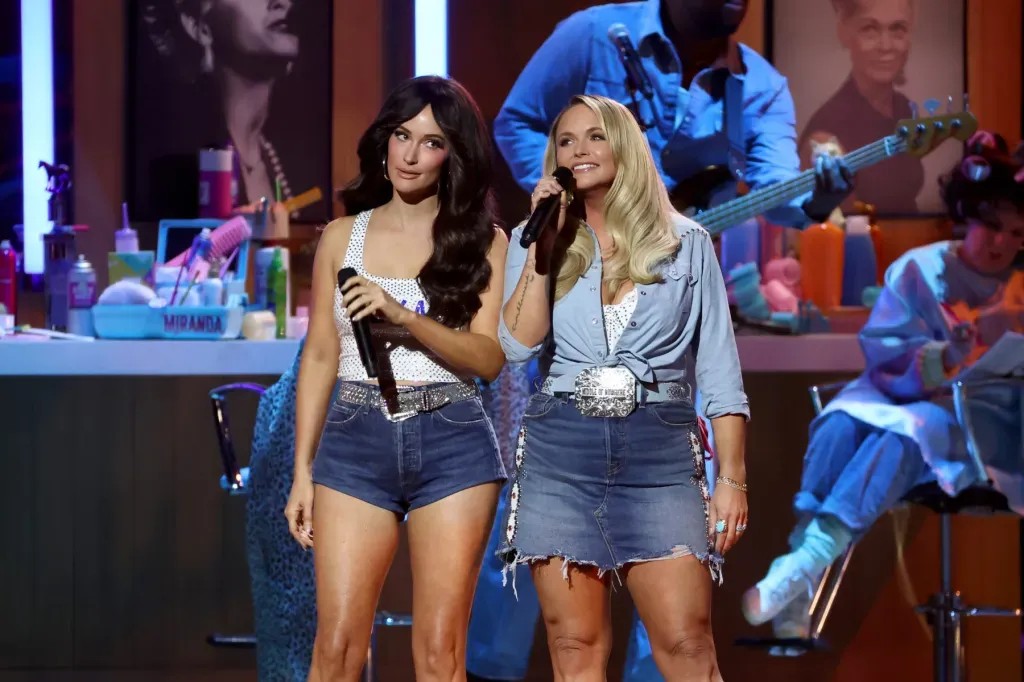
Ella Langley won six trophies at the 60th CMA Awards at Bridgestone Arena in Nashville on Nov. 18, breaking the all-time single-night record of five shared by Johnny Cash, Vince Gill, Alan Jackson and Lainey Wilson. For anyone with exposure to music catalogs, live events or brand sponsorship, the night showed how fast a record-setting sweep concentrates leverage behind one artist while legacy tributes to Dolly Parton and John Anderson quietly re-rate decades-old songs.
Ella Langley did not just win at the 2026 CMA Awards. She rewrote the record book. Langley took home six trophies at the 60th CMA Awards, held at Bridgestone Arena in Nashville on Wednesday (Nov. 18), setting an all-time record for the most wins in a single night. The old mark of five had stood since Johnny Cash set it in 1969, and it survived four serious runs at the plate: Vince Gill tied it in 1993, Alan Jackson in 2002, and Lainey Wilson in 2023. Nobody had ever reached six. Langley did it in one evening.
The sweep itself was not the shock. Everyone expected Langley to run the table, and she did, which is its own kind of story: the rare night when the consensus pick delivered the record instead of the upset. What the show did not telegraph was the tone. It opened as a memorial. Vince Gill and Wilson sang "I Will Always Love You," Parton's 1974 classic, for Dolly Parton, who died in August. Later, Dierks Bentley and Zach Top sang John Anderson's 1983 hit "Swingin'" for Anderson, who died in October. Two deaths, two tributes, and a room full of people who grew up on both songs.
Wilson hosted for the third year in a row and the second straight year as solo host, which makes her the face of the franchise at the exact moment the franchise is looking backward. The 60th anniversary leaned hard on history. Taylor Swift folded a piece of "Our Song," her 2007 hit and her first No. 1 on Billboard's Hot Country Songs chart, into a performance of her current single "I Knew It, I Knew You." Tim McGraw sang "Don't Take the Girl," his 1994 breakthrough and his first Hot Country Songs No. 1. Tucker Wetmore covered Hank Williams Jr.'s 1984 hit "All My Rowdy Friends Are Coming Over Tonight." Brooks & Dunn ran through a medley of their hits.
Read that setlist as a balance sheet and it tells you where country music's money actually sits. Awards shows are marketing infrastructure, and the most valuable inventory on the shelf is often decades old. A prime-time tribute slot historically does for a catalog what a Super Bowl ad does for a new product: it puts a familiar song in front of a huge audience that then goes looking for it, with the promotional cost absorbed by the broadcast. That is why estates, publishers and labels compete for those moments. Parton's catalog, Anderson's catalog, Hank Williams Jr.'s 1984 hit, McGraw's 1994 single: all of it got a fresh demand shock on one night, in front of a national audience, at essentially zero incremental cost to the rights holders.
Six wins in one night is not just a trophy count. In an industry where booking fees, festival slots, brand partnerships and playlist placement typically key off momentum, a record-setting night compresses years of career acceleration into a few hours. Langley now owns a statistic that will follow her into every negotiation for the rest of her career, and it is a statistic nobody else in the genre's history has posted. Cash, Gill, Jackson and Wilson all topped out at five. That is the company she just left behind, and the gap between five and six is the whole point.
Which brings us to the snubs and surprises. Pundits did not guess every category correctly, per Billboard's accounting of the night, but the top-line result was the one thing everyone saw coming. The surprises were in the categories the consensus missed, and that is the normal shape of an awards show: the headline is predictable, the undercard is not, and the undercard is where careers get made. A first-time win in a supporting category can do more for an emerging artist's next 12 months than a favorite's sixth trophy does for hers. The record is a headline. The rest of the ballot is a pipeline.
For anyone who works anywhere near the attention economy, the 2026 CMAs are a clean case study in how legacy and momentum trade off against each other. The night's biggest winner was a current artist at peak heat. The night's emotional center was two artists who died this year. The night's most recognizable songs dated to 1974, 1983, 1984, 1994 and 2007. That is not nostalgia for its own sake; it is a portfolio. Catalogs are the annuity, generating reliable returns long after the artist stops touring. New stars are the growth equity, volatile and expensive but capable of a six-trophy night. The smartest operators in music, and increasingly in media and consumer brands, run both books at once. Langley just proved the growth side still works. Parton and Anderson proved the annuity never stops paying.
This story's Key Insights and Take-aways are locked.
Create a free account to unlock Executive Actions for one credit.
Register to UnlockAlways free for Executives Club members. Join the Club
More in Entertainment

GTA 6 banks $3.8bn in one day, torching every launch record
One game just out-earned every video game launch and every single-day film box office haul in history, and the fallout lands on every media CEO's forecast.

GTA VI Racked Up $3.79 Billion in a Single Day, Topping Every Film Ever
A 13-year wait produced a $3.79 billion day, more than any movie has made in its entire run, and it resets the launch math for every studio, streamer, and brand chasing the same attention.

GTA 6 sells 32.5M pre-sales and $3.79B day one, torches 13-year record
Rockstar's sequel didn't just beat Grand Theft Auto V's 13-year-old benchmark; it reset what a launch can be, with 32.5 million pre-sale copies and $3.79 billion in a single day.