
Elon Musk says money will “stop being relevant” as AI explodes services
Even after SpaceX made him a $1.1T-plus trillionaire, Musk argues robots will out-produce currency needs.

Elon Musk, CEO of SpaceX, told Peter Diamandis via a video clip posted to X that in an AI-and-robots world, goods and services will exceed the supply of money, making currency irrelevant. For decision-makers, the tension is immediate: automation narratives collide with uneven execution and a policy debate over how to cushion job displacement.
Elon Musk is now a $1.1 trillion-plus net worth household name, and yet his latest claim is the opposite of what you’d expect from someone flush with cash. In a video clip shared on X Thursday by Peter Diamandis, Musk argued that “AI and robots are going to make so much stuff and provide so many services that they’ll run out of things to do for humans.” In his view, that abundance changes the math of everyday life: the output of goods and services would exceed the supply of money, effectively creating deflation so severe that “I think money will stop being relevant at some point in the future.”
That framing matters because it is not a generic “future is different” line. Musk’s specific mechanism is straightforward: if robots do the work, then labor becomes cheap and widespread, and if the money supply is not growing in the same way, currency loses its job as the bottleneck for access. In the same exchange, Diamandis pressed him on the irony of a money-less society coming from a man whose wealth just surged. Musk’s response was direct: “Yeah, pretty much.”
Of course, this is not just philosophy. It is an extension of Musk’s moonshots, including ideas he has previously floated about work being completely optional and retirement becoming inapplicable. The broader sci-fi reference is also not subtle: Musk has cited the Culture series of novels by Iain M. Banks as inspiration, where self-described socialist themes show up in a post-scarcity world run by superintelligent AI beings with no traditional jobs. In that world, the system shifts away from scarcity-driven work, replaced by “universal high income” as a way to prevent scarcity anxiety. Musk ties that same theme to his own AI automation thesis.
But there is a glaring real-world wrinkle: the companies closest to Musk’s automation visions have struggled to deliver on parts of the promise. The source points out that Musk has set a goal for 80% of Tesla’s value to come from its humanoid Optimus robots, yet the bots have experienced multiple production delays. That matters for boards and investors because it puts timing risk right next to the narrative risk. If you sell the future as imminent and execution slips, the credibility gap turns into a financial gap.
Meanwhile, Musk’s argument sits inside a bigger policy and economic debate that other tech leaders are actively trying to land. The source notes that OpenAI CEO Sam Altman, Musk’s “rival,” once advocated for universal basic income, including backing a 2024 study that found $1,000 payments to low-income Americans reduced stress and food insecurity. But Altman later moved away from that idea, telling The Atlantic in April that he instead supports “collective ownership.” Across the pond, the U.K. Minister for Investment Lord Jason Stockwood told the Financial Times earlier this year that the government is weighing universal basic income as a support mechanism in areas with high AI exposure, along with careful “soft-landing” plans for industries likely to disappear.
Economists, meanwhile, are not simply debating whether support is needed. They are debating whether any given mechanism is feasible and whether it lands on the right people. Ioana Marinescu, an economist and associate professor of public policy at the University of Pennsylvania, has studied universal basic income as a practical approach to AI-related job displacement, particularly because unemployment insurance benefits often require evidence of prior employment. That requirement can be especially hard for younger entrants to the workforce who are vulnerable to AI displacement. Yet the source also highlights limitations: benefits can be modest for low-income individuals, who may have debt or poverty that caps the real spending boost.
And then there is the power question underneath all of it. Marinescu, as quoted in the source, worries about who pays and who benefits: people who gain from AI might resist paying for the transition costs. In her words, she’s concerned that after the fact, winners may ask, “Well, why do we have to pay for all these people’s problems?” The underlying issue is that today, it is not clear “who wins, who loses,” and executives reading this should treat that uncertainty as a governance problem, not just an academic one.
Even Musk’s own reaction to his trillionaire status underlines that point. When Diamandis asked about Musk’s wealth, Musk demurred, saying SpaceX “just represents some percentage ownership in companies that I built,” not money sitting in a bank account. “The companies are doing lots of useful things,” he added, framing his wealth as the value of company ownership. SpaceX did not respond to Fortune’s request for comment.
For leaders building, funding, and governing in AI-heavy sectors, the strategic stake is obvious: the “money won’t matter” narrative may be directionally provocative, but it also challenges how companies think about wages, pricing, customer behavior, and public legitimacy. If automation accelerates faster than policy and labor systems adapt, the transition could get messy. If it slows, the narrative could lose force. Either way, boards should assume the economic conversation is coming for them next, because Musk’s claim is not just about deflation. It is about who gets compensated when robots run the shop floor, and what happens when the people writing the future are also benefiting from the present.
This story's Key Insights and Take-aways are locked.
Create a free account to unlock Executive Actions for one credit.
Register to UnlockAlways free for Executives Club members. Join the Club
More in Business
Elon Musk became the world’s first trillionaire after SpaceX IPO lifted him past $1T
SpaceX shares jumped, and Musk’s $800B pre-IPO value crossed a trillion, reshaping how investors price “moonshots.”
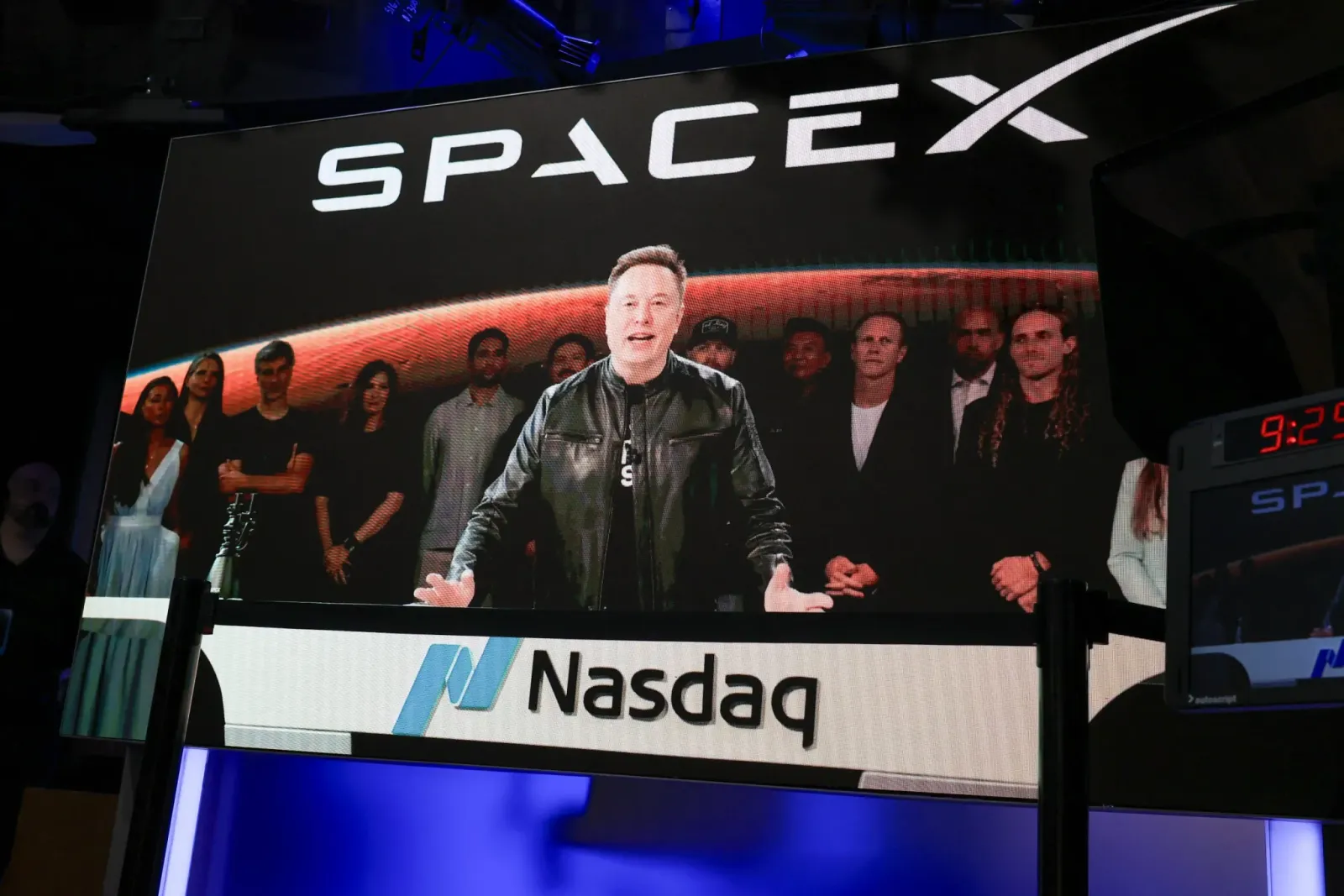
SpaceX stock closes at $161.11 after $2.1T debut valuation shatters expectations
The IPO priced at $135, surged on Nasdaq and Texas, and immediately rewired how executives think about mega-debuts.
SpaceX IPO priced June 12 at $135: Elon Musk crosses $1T as funds pick up the tab
The SpaceX IPO values the company around $1.77T and estimates Musk’s stake at $866.5B, with broad investor ripple effects.