

Esper: Iran war runs to 2027, and 2029 is on the table
The former defense secretary put a 2027 floor and a 2029 ceiling on the conflict, a timeline that resets how long defense budgets, supply chains, and energy markets must plan.

Former Defense Secretary Mark Esper said Friday the war in Iran is "definitely gonna go into 2027" and questioned whether it rolls into 2028 and even 2029, noting it "takes time." For decision-makers, that reframes the conflict from a crisis to manage into a multi-year planning assumption that touches defense budgets, munitions supply, energy pricing, and regional risk exposure.
Former Defense Secretary Mark Esper said Friday that the war in Iran is "definitely gonna go into 2027," and he left the door open to something far longer: a conflict that rolls into 2028 and even 2029. "The question is, does it roll into 2028 and even 2029?" he said, offering a plain explanation for the long runway: it "takes time." That is the whole story in one sentence. Not whether the war ends, but when, and the answer Esper gave is measured in years, not quarters.
The distinction matters enormously. A 2027 floor is not a prediction of a quick, clean exit. It is a statement that there is no near-term off-ramp visible to someone who ran the Pentagon. Esper served as Secretary of Defense from 2019 to 2020, which means he is speaking as an operator who has sat inside the machinery that sustains a war: deployment rotations, munitions drawdowns, allied coordination, congressional notifications. When that person declines to rule out a 2029 end date, planners should treat it as a planning assumption, not a talking point.
For context, the modern American experience with war is almost entirely a story of timelines that outran their authors. The war in Afghanistan ran from 2001 to 2021, roughly 20 years, spanning four presidencies. The Iraq War began in 2003, and the U.S. combat mission there stretched nearly nine years before formally ending in 2011, with a later return. Defense procurement, munitions production, and force readiness are all built on multi-year horizons precisely because conflicts rarely resolve on the schedule their architects advertise. Esper's framing fits that pattern rather than breaking it.
The reported remarks did not lay out operational specifics, so the value here is the timeline itself, and timelines are what capital allocates against. A conflict with a 2027 floor and a 2029 ceiling touches defense budgets, munitions replenishment, energy prices, shipping insurance, and the cost of capital for anyone with exposure to the region. Historically, extended conflicts tend to pull forward defense spending, tighten certain supply chains, and add a persistent risk premium to energy and freight. None of that is a forecast of specific numbers; it is the shape of the pressure.
There is also a political clock. A war that runs to 2029 outlasts the term of whoever is in the White House now, and it outlasts most of the congressional class that would have to fund it. That changes the incentive structure. Authorization votes, supplemental funding packages, and oversight hearings become recurring events rather than one-off decisions. For an administration, the conflict stops being a crisis to manage and becomes a line item to defend, year after year, in front of a public that eventually stops treating it as new.
For executives outside the defense sector, the practical read is duration risk. Contracts with multi-year horizons, from logistics to insurance to energy hedging, are typically priced on assumptions about how long instability persists. If the working assumption shifts from months to years, the correct response is not panic but repricing: revisit force majeure language, stress-test freight and fuel assumptions, and ask whether regional exposure is hedged for a longer window than the last planning cycle assumed.
What would confirm or break the timeline? Watch the funding. Supplemental requests, munitions production contracts, and allied burden-sharing commitments are the clearest signals of whether governments are planning for a sprint or a decade. Watch the language from the Pentagon and allied capitals, which tends to shift from "weeks" to "as long as it takes" before budgets do. And watch the calendar: every year the conflict persists makes the next year's extension cheaper politically, which is exactly how long wars become permanent.
Esper's point was not dramatic. It was procedural. Wars take time, and the people who plan them know that better than the people who announce them. The question he raised, whether this one runs to 2028 or 2029, is the kind of question that belongs in board risk committees, not just Sunday shows. The answer will not arrive in a single speech. It will arrive through budgets, contracts, and the quiet accumulation of decisions that assume the war is still there next year.
This story's Key Insights and Take-aways are locked.
Create a free account to unlock Executive Actions for one credit.
Register to UnlockAlways free for Executives Club members. Join the Club
More in Politics

Cybersecurity Was an Afterthought for Decades. AI Is Now Sending the Bill
The internet's vulnerable code was never fixed, and AI is finding it faster than anyone can patch it, turning decades of technical debt into a live balance-sheet risk.

Hannity vows to name GOP lawmakers skipping votes before the majority expires
A prime-time host is turning the House attendance sheet into a public scoreboard, and Speaker Mike Johnson is sitting right next to him while the Republican majority runs out of days.
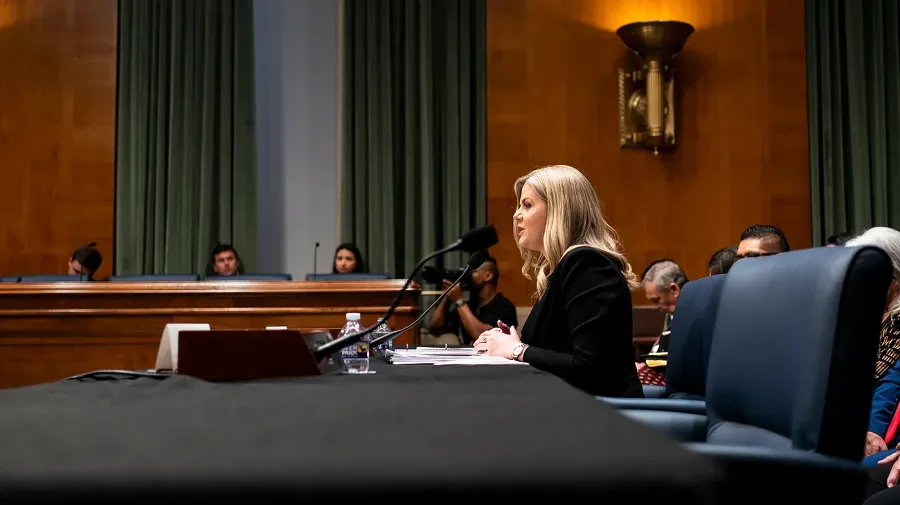
White House yanks FDA nominee, blindsiding senators and extending a six-month vacuum
Heidi Overton's abrupt withdrawal leaves the FDA without a confirmed commissioner six months after the last one resigned, and the Senate committee that would vet a replacement found out at the last minute.