
Hannity vows to name GOP lawmakers skipping votes before the majority expires
A prime-time host is turning the House attendance sheet into a public scoreboard, and Speaker Mike Johnson is sitting right next to him while the Republican majority runs out of days.

Fox News host Sean Hannity said Friday night he will broadcast the names and phone numbers of Republican lawmakers who miss votes in the lame-duck session, making the threat while interviewing Speaker Mike Johnson (R-La.). For anyone managing a coalition on a shrinking clock, the episode is a live case study in what happens when a thin margin meets a megaphone.
Sean Hannity is about to turn the House Republican attendance sheet into prime-time television. The Fox News host said Friday night that he will broadcast the names and phone numbers of GOP lawmakers who skip votes during the lame-duck session, a vow he made while interviewing Speaker Mike Johnson (R-La.) on his program. His argument to Republicans was blunt: use the weeks of your majority that remain, because the new Congress begins in January and the power to set the agenda goes with it.
"They were hired to be public servants," Hannity said during the segment, according to The Hill. That single line is the whole case. Hannity is not arguing about ideology or a specific bill. He is arguing about showing up, and he is promising to make the cost of not showing up personal, by name and by phone number, in front of the largest audience in cable news.
To understand why that lands, you have to understand the lame duck. After an election but before the new Congress is sworn in, the House and Senate typically return for a compressed stretch of work. The incentive structure inside that window is famously weak. Members who lost their races or chose to retire have no next campaign to answer to. Members who won are already thinking about committee assignments in the next Congress. Travel back to the district competes with floor votes. Historically, this is the stretch when attendance gets soft and leadership's vote-counting gets hard, which is exactly the gap Hannity is aiming at.
The math makes it worse. Modern House majorities have often been narrow enough that a handful of absences can flip an outcome, which means a Speaker does not just need his conference to agree, he needs it to physically be in the building. Vote counting in the House is a headcount business: leadership's whips track who is on the floor, who is in transit, and who is a maybe. When the margin is thin, an empty seat is functionally a no vote. That is why a host reading names aloud is not just embarrassing, it is operationally dangerous for the Speaker's schedule.
And that is the real tension in the segment. Hannity was not interviewing a backbencher. He was interviewing the person whose job is to deliver those votes. Johnson's position is structurally awkward: he needs every member he can get, and he also needs those members to not feel publicly hunted by an ally. Media pressure has moved legislators before, and a prime-time call-out is one of the few tools that can reach a member's constituents faster than a leadership whip can reach the member. But pressure applied from outside can also harden resistance, particularly among lawmakers who already feel they owe the party nothing.
Zoom out and the story is bigger than one host and one chamber. Hannity is effectively volunteering to be an enforcement mechanism for a party that cannot enforce much on its own right now. That is a notable shift in how accountability gets manufactured in Washington: not through a leadership PAC, not through a committee chair, but through a broadcast. The names and numbers promise turns a private whip count into public shaming, and public shaming has a way of changing behavior, at least in the short term.
The stakes for the remaining weeks are concrete. Whatever Republicans want to finish before January has to move through a chamber where the clock is short, the calendar is crowded, and the attendance risk is real. Every missed vote is a day burned. Every day burned narrows what is still possible. And the members Hannity is targeting are, by definition, the ones with the least to lose from ignoring him.
For leaders in any organization running a coalition on a deadline, the lesson is uncomfortable and portable. A thin margin does not just mean you need agreement, it means you need presence, and presence is a logistics problem as much as a persuasion problem. When you cannot guarantee attendance, you either shrink the ask to what your reliable core can carry, or you find a way to make absence expensive. Hannity just volunteered to be the expense. Whether Johnson wanted that help is a different question, and one he did not have to answer on Friday night.
This story's Key Insights and Take-aways are locked.
Create a free account to unlock Executive Actions for one credit.
Register to UnlockAlways free for Executives Club members. Join the Club
More in Politics

Cybersecurity Was an Afterthought for Decades. AI Is Now Sending the Bill
The internet's vulnerable code was never fixed, and AI is finding it faster than anyone can patch it, turning decades of technical debt into a live balance-sheet risk.
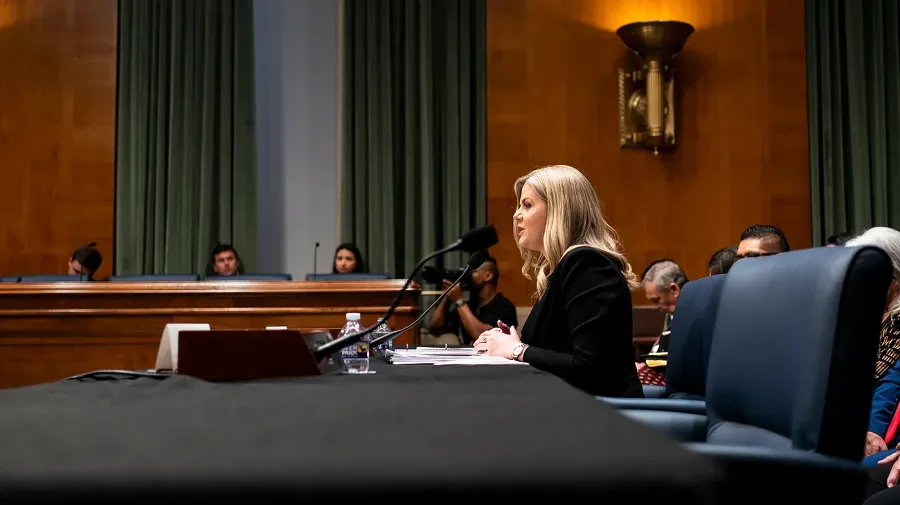
White House yanks FDA nominee, blindsiding senators and extending a six-month vacuum
Heidi Overton's abrupt withdrawal leaves the FDA without a confirmed commissioner six months after the last one resigned, and the Senate committee that would vet a replacement found out at the last minute.

Motsepe Hands Infantino All 54 African Votes, With Rival Diallo in the Room
CAF's president used African football's biggest stage in Abuja to lock 54 votes behind Gianni Infantino, a blunt message to Philippe Diallo and Kozo Tashima about where the numbers already sit.