
Motsepe Hands Infantino All 54 African Votes, With Rival Diallo in the Room
CAF's president used African football's biggest stage in Abuja to lock 54 votes behind Gianni Infantino, a blunt message to Philippe Diallo and Kozo Tashima about where the numbers already sit.
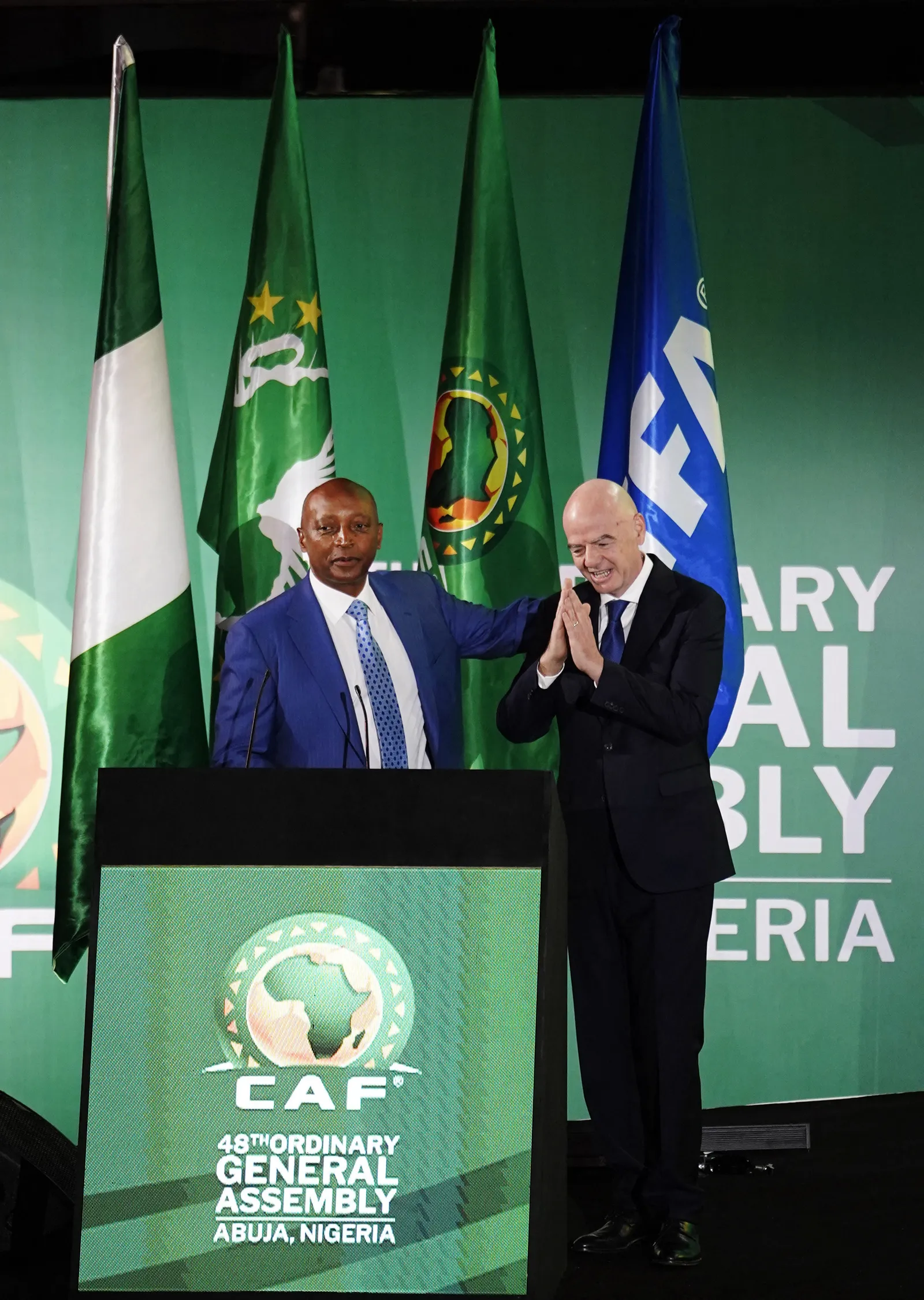
Patrice Motsepe, president of the Confederation of African Football, declared in Abuja that all 54 CAF member associations support Gianni Infantino's re-election as FIFA president, saying so at a general assembly attended by rival candidate Philippe Diallo. The public endorsement hands the incumbent the largest single bloc in world football governance before the campaign has properly begun, forcing both challengers to build coalitions elsewhere and fast.
Patrice Motsepe did not wait for a private room. Speaking in Abuja on Saturday at the Confederation of African Football's ordinary general assembly, the CAF president said all 54 of the body's member associations back Gianni Infantino's bid for re-election as FIFA president. Sitting in that same gathering was Philippe Diallo, the French football chief running against Infantino. Motsepe said it anyway, out loud, with the rival in attendance. That is not a leak or a whisper from a corridor. It is a headcount, announced on the record.
Fifty-four is the number that matters. FIFA presidential elections are decided by its member associations, one vote each, and Africa is the largest single bloc in the room. Declaring all 54 for the incumbent is roughly a quarter of the electorate locked in before the contest has properly started. For Diallo, and for Kozo Tashima, the former Japan Football Association president who is the third candidate, the arithmetic just got harder in the most visible way available. The source report notes the trio will learn whether they have what they need to proceed; Abuja has already answered part of that question for one of them.
Start with the challengers, because their problem is now structural. Diallo runs French football, which gives him a foothold in the European game and a natural argument about the sport's traditional heartland. Tashima is a former head of the Japanese federation, which gives him credibility across Asian football and a story about the game's fastest-growing commercial markets. Both are respectable CVs. Neither comes with 54 votes attached. Motsepe's declaration means the two challengers must now assemble their coalitions from a standing start against an incumbent who begins with a floor already built.
For context on why this lands so hard: FIFA's member associations, more than 200 of them, each hold one vote at Congress, and confederations have historically functioned as blocs rather than loose collections of independents. Regional bodies coordinate, caucus, and in practice often move together. Africa's 54 is the biggest of those blocs, which makes its president a broker with real weight. When that broker stands up and commits the whole bloc in public, he is not offering a preference. He is removing ambiguity, and ambiguity is the only thing a challenger can exploit early.
Motsepe's own calculus is not mysterious. A South African mining billionaire who has led CAF since 2021, he carries a mandate built on African football's standing: money, tournament places, infrastructure, and a seat at the table where those things get decided. Aligning with the incumbent is the oldest play in institutional politics. Access beats romance. A president who is likely to win anyway is worth being owed by, and a public endorsement delivered early is worth more than a private one delivered late. Doing it in front of Diallo converts a diplomatic gesture into a demonstration of control.
The record Infantino would run on is the reason the gesture is easy to make. Under his presidency FIFA expanded the World Cup to 48 teams from 2026, a format change that widens the door for confederations outside the traditional European and South American core, and the organisation channels development money to member associations through programmes such as Forward. Whether or not those policies produced Saturday's declaration, they are why it costs Motsepe little to make. In football governance, incumbency pays out in slots, grants, and committee seats, and those are the currencies smaller federations actually spend.
The counterweight is that endorsements announced at a general assembly are cheap until nominations close and ballots are cast. Rival camps will read Abuja as a signal to organise elsewhere, and the confederations outside Africa now become the real battleground. Fifty-four votes do not decide an election alone. They do mean the incumbent starts with a base that challengers must match from zero, which changes how much time and political capital each of them has left to spend on persuasion rather than introductions. For Diallo, whose base is European football, and Tashima, whose base is Asian football, the pressure is to turn regional familiarity into formal backing quickly.
Strip away the football and this is a governance story with a familiar shape: an incumbent with a large, loyal bloc, two challengers who need to build coalitions from scratch, and a public display engineered to make the contest look settled before it starts. Anyone who sells to, sponsors, or regulates sport should read it as a live case study in how bloc politics converts into institutional power, and how quickly a single sentence at the right podium can reset a race. The vote itself is still to come. The count, as of Saturday in Abuja, is not.
This story's Key Insights and Take-aways are locked.
Create a free account to unlock Executive Actions for one credit.
Register to UnlockAlways free for Executives Club members. Join the Club
More in Politics

Cybersecurity Was an Afterthought for Decades. AI Is Now Sending the Bill
The internet's vulnerable code was never fixed, and AI is finding it faster than anyone can patch it, turning decades of technical debt into a live balance-sheet risk.

Hannity vows to name GOP lawmakers skipping votes before the majority expires
A prime-time host is turning the House attendance sheet into a public scoreboard, and Speaker Mike Johnson is sitting right next to him while the Republican majority runs out of days.
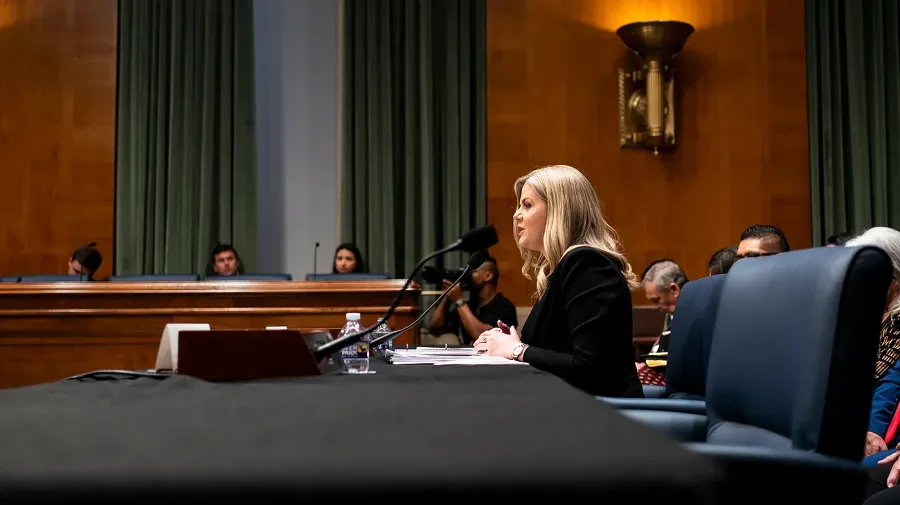
White House yanks FDA nominee, blindsiding senators and extending a six-month vacuum
Heidi Overton's abrupt withdrawal leaves the FDA without a confirmed commissioner six months after the last one resigned, and the Senate committee that would vet a replacement found out at the last minute.